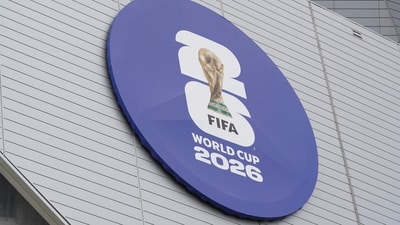
Indian football fans may finally be spared a FIFA World Cup blackout, with former AIFF general secretary Shaji Prabhakaran claiming that negotiations for the 2026 tournament’s broadcast rights in India have been completed.
The development comes less than three weeks before the FIFA World Cup begins on June 11 in the United States, Canada and Mexico. India had still not received an official confirmation of the broadcast, raising fears that the marquee tournament could miss Indian television and streaming platforms despite its global scale.
Official broadcaster still not named
Prabhakaran said on X that the World Cup would “finally be broadcasted” in India and added that an official announcement on the broadcast partner could arrive next week.
“For the football fans in India, the 2026 FIFA World Cup will finally be broadcasted. The negotiation is complete, and we can expect the official announcement of the broadcast partner by next week. The WC 2026 will be fully accessible in India,” he wrote.
However, FIFA has not yet made a formal announcement. No Indian broadcaster or streaming platform has officially confirmed the acquisition of rights either. That makes the development a major indication of progress rather than a fully confirmed rights announcement.
The uncertainty had grown because of a prolonged commercial deadlock. FIFA officials had reportedly visited India earlier this month as talks continued over the media rights package. The gap between FIFA’s valuation and Indian broadcasters’ assessment of the tournament’s commercial return had become the central issue.
Reports had indicated that FIFA’s initial asking price was around $100 million, later reduced to nearly $60 million. The Reliance-Disney/JioStar side reportedly offered about $20 million, while Sony stayed away from bidding due to concerns about commercial viability.
Why the delay became serious
The delay had created an unusual situation for one of the world’s biggest sporting events. The World Cup runs from June 11 to July 19, leaving broadcasters with very little time for advertising sales, marketing, distribution planning and viewer communication.
The legal route had also opened. The Delhi High Court had issued notices to the Centre and Prasar Bharati on a petition seeking steps to ensure Indian viewers could watch the tournament, especially through free-to-air platforms such as Doordarshan or DD Sports. The petition reportedly argued that the FIFA World Cup had been notified as a sporting event of national importance under Indian broadcasting law.
The issue also exposed football’s complicated position in India. The sport has a passionate audience, but cricket remains the dominant commercial force. Broadcasters have had to weigh global prestige against late-night timings, advertising recovery and subscription potential.
For Indian fans, though, the commercial debate now appears close to a resolution. Unless the final announcement brings an unexpected twist, the 2026 FIFA World Cup is likely to be available in India after weeks of uncertainty.