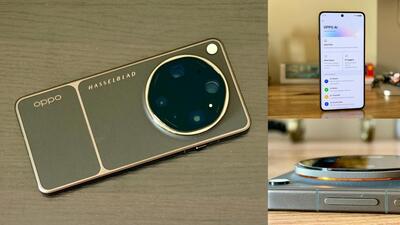
The quartet that’ll dominate the superphone conversation for the foreseeable future, is now complete. With the Oppo Find X9 Ultra joining the Samsung Galaxy S26 Ultra, the Xiaomi 17 Ultra, and the Vivo X300 Ultra in the Indian market, it is time for the wallet to re-evaluate what a flagship phone truly is. In Oppo’s case, there is the specificity of marking a substantial leap from the impressive Find X9 Pro, which I had pegged as an ‘elite photography phone’ in my analysis late last year. The key Hasselblad partnership figures prominently for the Find X9 Ultra, as it did for the Find X9 Pro.
None of these phones shy away from the reality that you’ve to pay top money to acquire one. The Oppo Find X Ultra is priced at ₹1,69,999 and certain offers bring it to a more competitive ₹1,36,999. In comparison, the Samsung Galaxy S26 Ultra which has been around since the turn of the year now costs ₹1,30,999 onwards, while the very impressive Xiaomi 17 Ultra is priced at ₹1,39,999 and the Vivo X300 Ultra demanding you part with at least ₹1,59,999 and as much as ₹2,09,999 for the complete photography kit. Photography enthusiasts will draw benefit from the camera advancements, while there will be a certain flaunt value to these phones in some circles.
The Oppo Find X9 Ultra is in largely the same ballpark as the Vivo 300 Ultra in terms of weight (235 grams versus 232 grams respectively) but somehow feels a smidgen heavier than those numbers would suggest. Some of it could be to do with perception because the Find X9 Ultra is the thickest of the bunch, at 9.1mm for the Tundra Umber version—that is because of the Armour Shield architecture and vegan leather layers adding visual and perceptible substance. Two very likeable elements, including the orange camera key on one side spine, and the very noticeable orange ring (at least once you look closely) around the substantial camera island.
Speaking of which, while the camera island is circular, the glass lens has a curved hexagonal shape, which looks a bit unusual and something that’ll play on your mind. If you pay weightage to aesthetics, that is.
The reason you’ll be buying the Find X9 Ultra is the quad camera setup — a 200-megapixel Hasselblad ultra-sensing main camera which is also the largest 200-megapixel sensor in any smartphone, a 50-megapixel ultra wide camera, a 200-megapixel 3x ultra sensing telephoto, and a 50-megapixel 10x optical zoom telephoto. The 3.2 megapixel multispectral pixel sensor cannot be discounted from the conversation. And that’s the underlying sentiment with the current generation ultra phones, the cameras make the strongest case, and the phone is simply an add-on.
For the fact that Oppo begins its pitch with the main cameras that is the largest sensor of its kind in a phone (at least as far as megapixel counts go), but worth noting that the Xiaomi 17 Ultra’s 1-inch sensor still has a overall footprint advantage over this 1/1.2-inch sensor. There are two things that needs addressing—this potentially has the maximum light context for image processing algorithms to work with and secondly, optimisation will need to be spot on, else we risk returning back to 2022 when many phones largely had this bad habit of over brightening everything for the sake of richer photos. There will be tremendous mileage to be drawn from the 200-megapixel telephoto with 3x optical zoom, but you may end up relying more on the 50-megapixel telephoto that goes up to 10x zoom.
And this really is the unique sensor proposition that sets the Find X9 Ultra apart from the ultra competition. The Galaxy S23 Ultra was the last phone before this to have a 10x optical zoom lens. Oppo’s ensured that approach returns, and with a much larger sensor as well (1/2,75-inch compared with the 1/3.52-inch from the past), along with 20x lossless magnification. I’ve to say the Find X9 Ultra does surpass every other ultra phone at this time when you’re using this sensor—there is no mess of digital zoom or AI algorithms unrealistically altering images.
There are different perspectives to photography aesthetics and overall tonality, and you may prefer a camera maker or phone’s set over another. That said, the Find X9 Ultra delivers absolutely stunning detailing across lighting, without having to enable the Hi-Res mode that would output 200-megapixel images. The biggest advantage of this large sensor in conjunction with the large aperture is a beautiful background blur effect. You’ll almost immediately notice how little apparent AI detail or colour tweaking infusion happens with the Find X9 Ultra’s photos, compared with a couple of the ultra rivals (you can guess which ones I’m referencing).
That said, many photos tend to look over-brightened (not over-exposed at the sensor level, but excitable processing) and that takes away a realism for the moment while impacting colours across the canvas. one would hope updates fix that. Secondly, the 20x lossless magnification relies heavily on Oppo’s AI to make things work, and things don’t look quite tight — text isn’t AI-ed correctly, and many photos look a tad too sharp and artificial.
I would peg the Find X9 Ultra on the same level of brilliance as the Xiaomi 17 Ultra with low light photo detailing and realism. But the Find X9 Ultra does take the lead in such lighting at 10x optical zoom, though those specific photography comparisons may make for rare scenarios.
All this is before you get a flavour of Oppo’s party piece, the Hasselblad Master Mode, that turns off all AI processing for the sake of realism and the camera optics doing all the hard work to replicate a sense of the moment. It is equally easy to mess up photos here if you aren’t entirely comfortable with the manual controls, but those who consider themselves a notch more advanced than casual photography enthusiasts, this would be par for the course.
This is when I peg Leica’s photography tonality on the 17 Ultra and Hasselblad’s tuning on the same level of personal likability — just wish Hasselblad made this more approachable the way Leica has. In a way, this also snapshots the ultra smartphone space as it stands, with differing tonalities and optimisation directions by Leica, Hasselblad and Zeiss, while Samsung has taken a more AI centric direction to photography without a camera partner.
I’d said earlier that you’re likely to approach the Oppo Find X9 Ultra as a camera with a very powerful smartphone bolted on for good measure. Even on that front, this is elite-level performance, with Qualcomm’s Snapdragon 8 Elite Gen 5 with the singular spec of 12GB memory and 512GB storage. comfort and likability for ColorOS 16, I’ll leave to your judgement, but there are very subtle elements that must be appreciated—the Flux Home Screen with adaptive icons and folder options, a new rendering engine that for starters makes transition animations better, and the subtle-ish infusion of AI functionality where its relevant.
Most relevant for those who carry or use multiple devices that need to be synced to a certain extent, the Find X9 Ultra’s Quick Share for Android supports transfers for Apple devices, including iPhone and iPad. Then there’s the O+ Connect for Mac, which is more than a larger screen replication of your phone, but a very useful file manager and data transfer solution. A document sitting on the phone that needs a quick edit? This is the route to take.
That level of performance is well matched in terms of battery longevity as well, with Oppo’s adoption of the silicon carbon tech allowing for higher capacity and higher densities than mere increase in mAh numbers. This is, for reference, a 7050 mAh battery, which is larger than the Xiaomi 17 Ultra, the Samsung Galaxy S26 Ultra and many flagships outside the ‘ultra’ ring too. You’re looking at close to 2 days of usage, even with enthusiastic camera usage for photos and videos in that time.
None of the four ‘Ultra’ super phones are the same, each with their unique personality traits and eccentricities. Vivo and Zeiss’ approach is to build on excellent optical sensors on the X300 Ultra with the potential of additional lens accessories. Xiaomi has brought its top-tier game with the 17 Ultra, with Leica’s optimisations worth their weight in gold (and it seems to be the deepest camera maker and phone maker commitment among the troika), something I had also experienced with the edition Xiaomi 17 Ultra By Leica before it’s formal announcement as the Leica Leitzphone powered by Xiaomi. Samsung believes algorithms can make up for everything that a camera maker may try to bring to the table, and they may have a fair point as their Galaxy S26 Ultra has quite effectively showcased thus far.
The Oppo Find X9 Ultra sits somewhere in the first group, with much more focus on a camera partnership with Hasselblad to build on what is without doubt a fine optical hardware stack. It has a distinct visual appeal too, particularly with the vegan leather finish. It must be said, while no phone is perfect, the Oppo Find X9 Ultra finds itself lacking almost nowhere in terms of the specs or experience. The choice, ultimately, resides with you.