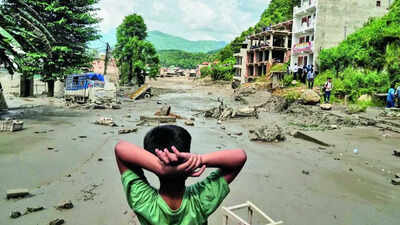
The Himalayan corridor, particularly Rasuwagadhi, devastated by the flash flood had served for more than 260 years as one of Nepal’s key trans-Himalayan arteries, carrying traders, pilgrims and armies before becoming a major gateway for Chinese electronics, garments, footwear and electric vehicles entering the country.Long before trucks climbed Bhote Koshi valley, mule caravans carried rice and other grain from Nepal north to Gyirong, where traders exchanged them for Tibetan salt and wool. Salt, highly valued in Nepal’s middle hills, travelled farther south towards India. Newar merchant communities also settled in Tibetan trading towns.The corridor had great strategic importance. Gorkha (Nepal district from which the community derives its name) captured Nuwakot in 1744 partly to control the lucrative Tibet trade. Nepalese troops later used the route during invasions of Tibet in 1788 and 1791 before Chinese and Tibetan forces counter-attacked in 1792. Jung Bahadur Rana built the Rasuwagadhi fort at the frontier while preparing another invasion in 1855. The 171-year-old fort still stood beside the modern Rasuwagadhi-Gyirong customs crossing.Political changes after 1950 and new motor roads gradually ended the caravan economy, but trade through the mountain gap only changed form. Rasuwagadhi had in later years become an unlikely gateway for Nepal’s EV boom. More than 6,500 Chinese electric cars, jeeps, vans and minibuses entered through the crossing in 2025-26, Rasuwa Customs figures showed. Vehicles awaiting clearance regularly packed the customs area, turning the narrow Himalayan settlement into a temporary automobile depot.That concentration of vehicles and cargo had also become a disaster risk. The July 2025 flood swept away numerous newly imported EVs and cargo vehicles. In the latest deluge, hundreds of 40-foot shipping containers parked along Timure riverbanks were dislodged and swept downstream, acting like floating battering rams as they struck bridge pillars, road embankments and power transmission towers.The flood also destroyed Miteri Sanghu, or Friendship Bridge, across Lhende/Koshi river. Rebuilt after 2015 earthquake and repaired after the 2025 flood, the bridge lost its supporting abutments within seconds, severing the physical Nepal-China border link — the same passage through which salt and wool once came down and rice went up.