
New Delhi: On June 12, Bafana Bafana’s listless 2-0 loss to co-hosts Mexico led to widespread derision over the World Cup’s expansion to 48 teams and mockery via memes. A failed free-kick routine towards the end of the game summed up the gulf in quality on show.
Defensive midfielder Yaya Sithole — who gifted the first goal to Mexico before being sent off for a clumsy foul — drew the bulk of the social media ire. The obvious pun potential around his surname hasn’t helped his cause.
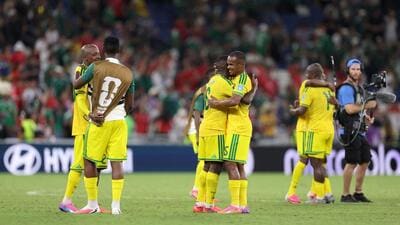
On June 25, South Africa redeemed themselves from meme material to homegrown heroes. A dogged 1-0 win over South Korea in Monterrey confirmed Bafana Bafana’s place in the knockout stages for the first time.
It wasn’t as assured as the Springboks’ back-to-back Rugby World Cup titles or as pretty as the Proteas’ WTC triumph. Mainstream South African newspapers appear tempered by focusing on a siege mentality instilled by head coach Hugo Broos — who hopes to have shut up his critics following six months of poor form.
But the viral celebration videos, street parades and Zulu chanting from around South Africa tell a different story, one of relief and jubilation after decades of disappointment. Bafana Bafana’s unlikely ascent feels extra special, perhaps due to the unique socio-economic place football holds among the South African public.
Historically, cricket and rugby were for whites only, deeply linked to colonialism and apartheid power structures via posh private schools and exclusive members’ clubs. Hence, those sports are targeted by affirmative action selection policies, or ‘transformation’, in South Africa today.
Despite being represented by all-white squads in FIFA events, football within South Africa moved away from its colonial origins and captured the attention of the marginalised — particularly the black African majority living in dusty townships, segregated from affluent white neighbourhoods within major cities.
Amid the exclusionary practices of the ‘whites only’ sports, football represented a form of symbolic resistance as an anti-apartheid football governing body was founded and worker-led professional clubs emerged from these townships.
Soweto in Johannesburg gave rise to the Kaizer Chiefs and the Orlando Pirates, while Mamelodi in Pretoria brought forth the Mamelodi Sundowns. Games were characterised by resourceful dirt pitch preparation in the absence of proper grass or open spaces, rewarding fast-paced technical play and creativity to break free from opposition cul de sacs.
The three clubs remain the most popular in South Africa today. The Pirates and the Chiefs contest the Soweto derby, which attracted over 100,000 fans in attendance at the FNB Stadium in February. In May, 51,000 flocked to Pretoria’s Loftus Versfeld Stadium to see the Sundowns contest the first leg of the African Champions League final— which they went on to win.
Crucially, the three clubs also serve as a homegrown talent pipeline to Bafana Bafana — 16 of the 26 squad members at the World Cup play for either the Pirates or the Sundowns. This includes seven of the starting lineup that beat South Korea, and all three substitutes. The legacy of township football is also apparent: 23 squad members are black.
This flies in the face of conventional wisdom within football, which states that sending all your best players to European leagues is a better barometer for success. After all, it hadn’t translated to much success for Bafana Bafana — who have only played in four World Cups and last won the Africa Cup of Nations in 1996.
But this reliance on homegrown talent to boost team chemistry and tactical clarity has been a hallmark of Hugo Broos’ tenure. After South Africa failed to qualify for the 2021 AFCON, Broos spearheaded a heavy focus on younger players who could better showcase their physical prowess and transitional play, forcing turnovers in tight spaces. A stylistic homage to the team’s township roots, with modern adjustments.
Bafana Bafana’s improvement was swift, coming third in AFCON 2023 and eliminating favourites Morocco. World Cup qualifying featured another big scalp, as they finished top of their group above Nigeria. Broos’ siege mentality appears justified now.
The enduring fan memory of Bafana Bafana is Siphiwe Tshabalala’s screamer amid a 2010 group stage exit when they became the first host nation not to make the knockout round — until yesterday. Broos’ boys are rewriting that narrative in unchartered territory. The next potential scalp against co-hosts Canada beckons.