
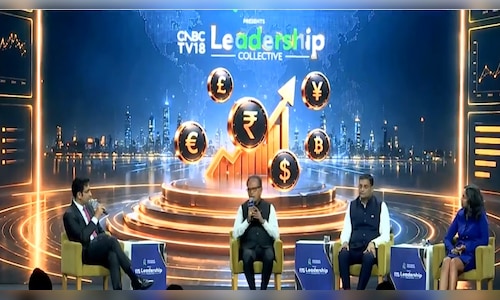
Nilesh Shah, Managing Director of Kotak Mahindra AMC, Navneet Munot, MD and CEO of HDFC AMC, and Lakshmi Iyer, MD and CEO of Bajaj Alternate, called for reforms ranging from omnibus investment structures and digital KYC to easier operating norms and stronger talent policies to make GIFT City more globally competitive.
A central demand from the industry was permitting omnibus investments through GIFT City, allowing private banks, wealth managers and insurance pools to invest on behalf of multiple clients rather than requiring every investor to complete separate registration and onboarding procedures.
According to Shah, many foreign investors interested in India currently face cumbersome processes, including obtaining Indian tax registrations and completing individual compliance formalities.
“Why not give omnibus facilities to private wealth banks and insurance pools, so that they can collect money from their customers and invest via GIFT City into India?” he said.
Shah said omnibus investing is already an accepted practice across several international jurisdictions and argued that India could adopt a similar framework while maintaining safeguards against round-tripping.
He acknowledged concerns around Indian capital moving abroad and returning through overseas structures but said such risks could be managed through carefully selected and closely monitored intermediaries.
Alongside regulatory simplification, executives stressed that India should use GIFT City more aggressively to attract overseas capital, particularly from NRIs.
Munot said India should market itself and GIFT City through a global outreach campaign focused on long-term investors and overseas Indians.
“I think India must do a campaign called ‘Inevitable India’ to attract long-term capital and to attract high-quality talent back,” Munot said.
He described GIFT City as “the best of both worlds” — located in India but functioning as a global financial centre — and said it should become the country’s primary platform for attracting international money.
Munot argued that India should look beyond earlier capital-raising tools such as India Millennium Bonds or Resurgent India Bonds and instead tap the large overseas Indian community through GIFT City.
“This time we should really try getting money from NRIs into the equity market,” he said. “35 million NRI’s is a large number.”
However, he said marketing alone would not be sufficient.
“That story must be backed by ease of investing,” Munot said, urging simpler digital KYC systems, quicker onboarding and wider use of globally recognised custodians and fund platforms.
He noted that GIFT City products still face separate onboarding processes that make them harder to distribute through international fund aggregators and custodians.
Munot said GIFT City could become “the jumping point” for attracting significantly larger global flows as India seeks more foreign capital.
Lakshmi Iyer said GIFT City had made considerable progress and was no longer viewed as an unfamiliar concept, though operational challenges remained.
“Today, if you talk about GIFT City, it has arrived,” Iyer said.
She backed calls for easier business processes and supported the push for omnibus investing, while also highlighting talent shortages and high employee churn within GIFT City firms.
Also Read | GIFT City bets on aircraft leasing, treasury hubs to deepen India’s capital markets
According to Iyer, staffing requirements and frequent job switching were creating cost pressures and operational strain.
She suggested policymakers examine threshold-based compliance rules for smaller funds and consider measures to improve talent retention.
Iyer also proposed a branding push for GIFT City, describing it as “Go India Full Throttle”, while noting that the financial centre still has ground to cover before achieving broader global scale.
The executives agreed that GIFT City has made substantial progress in recent years, but said easier investing rules and continued policy responsiveness will be critical if India wants the centre to become a meaningful gateway for global and NRI capital.