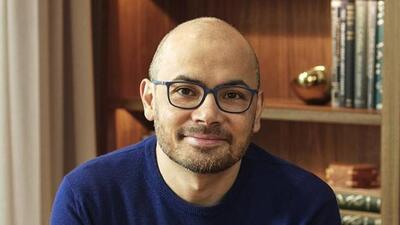
In what is the clearest outline of a vision for Artificial General Intelligence (AGI) yet, Sir Demis Hassabis, Nobel Laureate as well as Co-Founder & CEO at Google DeepMind believes the technology is close, transformative, and too important to leave to market forces alone. The imminence and perceived civilisational significance, which he believes will “prove to be one of the most beneficial and transformative technologies ever invented”, is the reason Hassabis proposes a highly specific regulatory framework.
“At the moment, we are locked in an extremely intense, multilayered commercial and geopolitical race. While these competitive dynamics fuel rapid progress and accelerate the incredible upsides, advances on the frontier are outpacing our understanding of the technology. Nobody in the world knows for sure what is going to happen from here, and even the experts disagree,” Hassabis writes. He calls out the largely unfocused approach towards AI development, where new model capability claims and benchmark comparisons, still define conversations and of course, investments.
He has for long been the subdued voice of reason in an otherwise hype-driven AI industry that’s only too happy to boast about achievements and potential. Hassabis won the 2024 Nobel Peace Price in Chemistry for the AlphaFold. He was also knighted in 2024 for his pioneering services to Artificial Science.
In a sign there may be greater consensus between AI companies on this aspect, OpenAI CEO Sam Altman responded to Hassabis’ post on social media, commenting “this is a thoughtful proposal from Demis”. Hassabis proposes a new standards body for AGI, on the lines of Financial Industry Regulatory Authority (FINRA), specifically with a board that includes independent leading technical experts and open-source representatives.
The contours of regulation
On the question of funding such a body, Hassabis is confident the industry will pitch in, with spin-offs including attracting high quality technical talent and necessary compute resources for large-scale testing in a regulated sector. The key for this body to succeed, will be to ensure innovation while marking responsibility and security as key elements. This will also play a role in collaboration in an otherwise increasingly fragmented world, which will help define safety guardrails and economic considerations.
The current competitive race makes safety difficult. There is commercial pressure to move fast and first, which defines the race between AI companies. There is an underlying geopolitical angle, as nations also define the race for AI supremacy and access to key hardware such as GPUs, or graphics processing units, used for training AI models and building data centres.
“A model would qualify as ‘Frontier-class’ if it meets certain thresholds on a set of benchmarks determined by the Standards Body and regularly updated to keep pace with evolving AI capabilities. Organisations with ‘Frontier Models’ as defined by those benchmarks would be deemed ‘Frontier Labs’, and be encouraged to adopt best practices, such as publishing model cards with technical details, maintaining strong internal cybersecurity, vetting key personnel, and providing sufficient resourcing for safety and security research, and more,” he explains.
An urgent need for definition
At this time, there is no specific definition of frontier models, much as there is no concrete definition of AGI.
“Model assessments should include rigorous scientific evaluations of capabilities in cybersecurity, biological threats and other high-risk domains. Specific agentic AI tests could look for attempts to bypass safety guardrails or signs of deception, and ensure best practices, such as digitally watermarking AI-generated images and generating human-readable output tokens to understand model reasoning,” Hassabis explains.
He fears that capabilities are outpacing understanding of the tech and its potential problems. AI companies are building models and agentic systems that are more powerful than the present ability to fully map, predict, or control their failure modes. “If you stop to think about it, we’ve essentially found a way to make sand think. It’s miraculous,” he balances advancement with a word of caution.
Hassabis views AGI not as any standard tech upgrade, but as a fundamental discovery that’s potentially as profound as discoveries of electricity or fire. He anticipates that it will solve massive global challenges, particularly around clean energy and medicine. The challenges that AGI will inevitably face will be a mix of philosophical and economic. He does note a shrinking window, saying we are in the “foothills of the singularity”, to determine how to best use AGI.