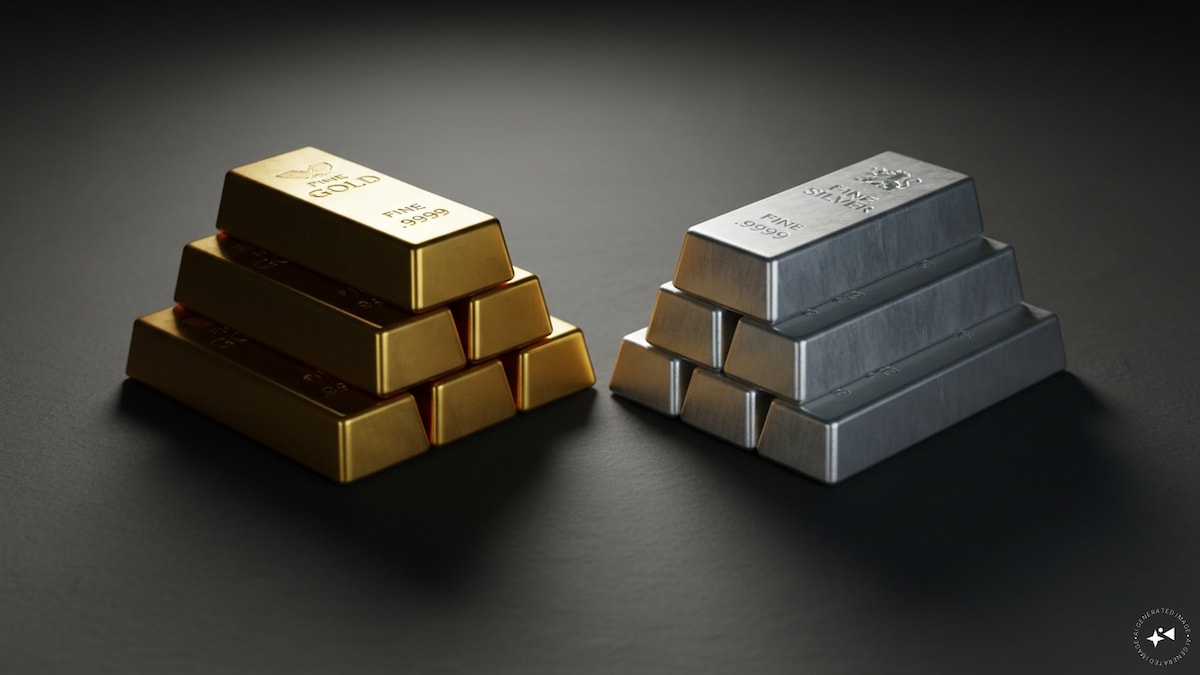
Spot gold slipped about 0.4% to around $4,000.55 per ounce, while COMEX gold futures for August delivery eased to $4,005.70 per ounce, down 0.33% from the previous close. The contract traded between $3,986.50 and $4,025.70 an ounce during the session.
Silver bucked the trend, with COMEX silver rising 0.70% to $56.72 per ounce, after touching an intraday high of $57.13 an ounce.
The decline in gold comes after the metal posted a 2.5% weekly loss last week, its weakest performance in two weeks.
Why gold prices are under pressure
Gold is traditionally viewed as a safe-haven asset during periods of geopolitical uncertainty. However, the recent rise in crude oil prices has shifted investors’ focus towards inflation and interest rates.
Brent crude climbed above $90 a barrel after fresh military action involving the US and Iran intensified concerns over energy supplies. Higher oil prices could keep inflation elevated, prompting central banks to maintain tighter monetary policy.
Several US Federal Reserve officials have also indicated that additional interest rate increases may be required if inflation remains persistent. Higher interest rates typically reduce the appeal of gold because the metal does not generate interest or income.
Markets await key global data
Investors are also watching a busy week of economic data and corporate earnings for fresh direction.
Key US releases, including weekly jobless claims and flash purchasing managers’ index (PMI) data, along with economic indicators from Europe and China, could influence expectations for global interest rates and commodity prices.
Analysts said bullion is likely to remain sensitive to both geopolitical developments and central bank commentary in the near term.
Silver outperforms despite bullion weakness
Unlike gold, silver moved higher on Monday (July 20), supported by bargain buying after a sharp correction last week.
COMEX silver had declined more than 6% over the previous week, making Monday’s (July 20’s) gains a partial recovery rather than a reversal of the broader trend.
Analysts expect both gold and silver to remain volatile as markets balance safe-haven demand against the prospect of higher global interest rates. Continued developments in the West Asia, movements in crude oil prices and upcoming economic data are likely to determine the next direction for precious metals.