
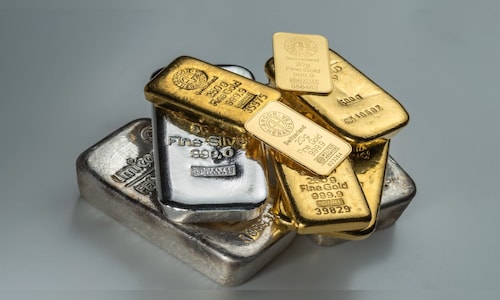
On the domestic front, the June gold futures contract on the Multi Commodity Exchange (MCX) slipped 0.15% to ₹1.51 lakh per 10 grams, while the July silver futures contract edged 0.08% lower to ₹2.50 lakh per kilogram.
Globally, bullion prices remained under pressure.
Spot gold was trading around $4,605 per ounce, down roughly 0.2% in early trade, while US gold futures for June delivery declined about 0.6%. Silver, however, showed slight resilience, hovering near $75 per ounce after recent declines.
Analysts said gold continues to face headwinds from elevated oil prices and a stronger US dollar, both of which have amplified inflation concerns and clouded the outlook for monetary policy. The recent spike in crude prices—driven by tensions linked to the US-Iran situation and supply disruptions around the Strait of Hormuz—has reinforced expectations that central banks may keep interest rates higher for longer.
“Gold prices are extending last week’s decline and are hovering near one-month lows as energy-led inflation risks and hawkish central bank signals weigh on sentiment,” said Manav Modi, commodities analyst at Motilal Oswal Financial Services.
Market participants are also assessing mixed signals on the geopolitical front.
While Iran has put forward a revised peace proposal via Pakistan, uncertainty persists after the US flagged dissatisfaction with the terms, keeping risk sentiment fragile. Reports of disruptions to shipping in the Strait of Hormuz have added to volatility in oil and bullion markets.
Last week, US Federal Reserve Chair Jerome Powell reiterated concerns about rising inflation while maintaining rates, signalling a cautious stance. Other major central banks, including the European Central Bank, Bank of England and Bank of Japan, have also hinted at tighter policy, further dampening the appeal of non-yielding assets like gold.
Analysts note that higher interest rates typically reduce the attractiveness of bullion, as investors shift towards interest-bearing assets such as government bonds.
Going ahead, markets will closely track macroeconomic data, including purchasing managers’ index (PMI) readings from major economies and U.S. labour market data, for further cues on growth and policy direction.
–With agencies inputs