
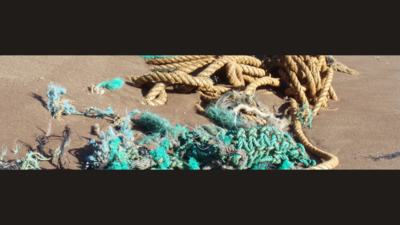
Abandoned fishing nets that once threatened marine life around Hawaii are being turned into electricity through a programme established in 2002. The Hawaii Nets to Energy Program collects discarded nets from fishermen and local removal groups before processing them for combustion at Honolulu’s H-Power waste-to-energy facility. According to NOAA Ocean Today, 832 tons of fishing nets had been used in the programme, generating enough electricity to power more than 300 homes for a year. The initiative also supports efforts to reduce marine debris that damages coral reefs and endangers wildlife across the Hawaiian Islands.
How do abandoned fishing nets threaten marine life in Hawaii
Ocean currents and winds in the North Pacific carry marine debris towards the Hawaiian Islands, where abandoned, lost, and discarded fishing nets accumulate along shorelines and around reefs. NOAA’s Marine Debris Program explains that many of the nets reaching Hawaii come from fisheries outside the islands, creating a persistent problem for local marine ecosystems.According to NOAA Fisheries, derelict fishing gear can become entangled around coral reefs, damaging or breaking coral structures. Nets can also trap marine animals and seabirds, restricting their movement and causing injuries. Animals caught in the gear may suffocate, starve or drown, while discarded plastics can further degrade coastal habitats.The problem extends to the remote Northwestern Hawaiian Islands, where ocean currents transport fishing nets, floats, buoys and other debris from across the Pacific. NOAA Fisheries reports that these materials accumulate around islands and atolls, including Midway Atoll, Laysan Island, Lisianski Island and French Frigate Shoals.The organisation also highlights the ecological importance of the region, whose reefs account for approximately 70% of the United States’ tropical, shallow-water coral reef habitat. These reefs support more than 7,000 marine species, with around one-quarter found only in Hawaii, making the removal of damaging debris an important part of marine conservation efforts.
How are discarded fishing nets collected and recycled in Hawaii
The Hawaii Nets to Energy Program provides a collection and disposal route for derelict fishing nets recovered by the Hawaii Longline Fleet and local removal groups. According to NOAA’s Marine Debris Program, a large collection bin at Pier 38 in Honolulu allows participating groups to deposit the nets without charge.Pacific Ocean Producers maintains and loads the collection bin. Once it is full, the nets are transported to a scrap metal recycling facility operated by Schnitzer Steel Hawaii Corporation, now associated with Radius Recycling. There, the nets are chopped into small pieces suitable for combustion at the Honolulu H-Power waste-to-energy facility.The processed material is then transported to H-Power, where the nets are burned to produce steam. The steam drives a turbine that generates electricity for use on the island of Oahu. NOAA explains that the participating organisations provide the collection, transport and processing services without charge to those using the programme.The arrangement involves several organisations working together across the collection, recycling and energy-generation stages. NOAA’s description of the programme identifies the involvement of fishermen, community removal groups, Pacific Ocean Producers, Schnitzer Steel Hawaii Corporation and the H-Power facility, demonstrating how recovered marine debris moves from collection to electricity production.
How many homes can Hawaii power by recycling discarded fishing nets
NOAA Ocean Today’s Nets to Energy feature provides figures illustrating the programme’s electricity-generation capacity. Its published transcript states that 832 tons of fishing nets had been used in the programme at the time of publication, producing enough electricity to power more than 300 homes for a year.The NOAA includes a further estimate in its fast facts: for every 100 tons of recovered nets, the programme produces enough electricity to power 43 homes for an entire year. These figures describe the relationship between the quantity of recovered material and the electricity generated through the waste-to-energy process.The figures in the Ocean Today feature reflect the information available when that material was published. NOAA’s Marine Debris Program page, updated on 21 March 2025, continues to describe the programme as an established method for converting collected fishing nets into electricity rather than sending them to landfills.The process also forms part of wider marine debris removal work in Hawaii. NOAA Fisheries states that its team has removed 848 metric tons of derelict fishing gear from the Northwestern Hawaiian Islands since 1996. The organisation estimates that derelict fishing gear continues to accumulate in the region at a rate of 52 metric tons per year.
How NOAA removes marine debris and recycles fishing nets in Hawaii
The Nets to Energy initiative operates alongside marine debris collection and removal missions in the Northwestern Hawaiian Islands. NOAA Fisheries teams survey reefs and shorelines, collect discarded fishing gear and plastics, and transport the recovered materials back to Honolulu aboard NOAA ships or charter vessels.According to NOAA Fisheries, the removal work covers locations including Kure Atoll, Midway Atoll, Pearl and Hermes Atoll, Lisianski Island, Laysan Island, Maro Reef and French Frigate Shoals. The debris collected includes fishing nets, buoys, floats and consumer plastics that can damage habitats or threaten wildlife.The Honolulu Derelict Net Recycling Program is supported by NOAA and brings together industry, fishermen, local organisations, and state and federal partners. Fishermen deposit recovered nets in a dedicated collection bin near United Fishing Agency and Pacific Ocean Producers at Pier 38 in Honolulu Harbour before processing for energy generation.NOAA identifies recycling used fishing nets and lines, reducing waste and participating in local beach clean-ups as ways to help address marine debris. The Nets to Energy Program shows how a coordinated collection and processing system can link removing discarded fishing gear to electricity generation while supporting broader efforts to protect Hawaii’s marine environment.