
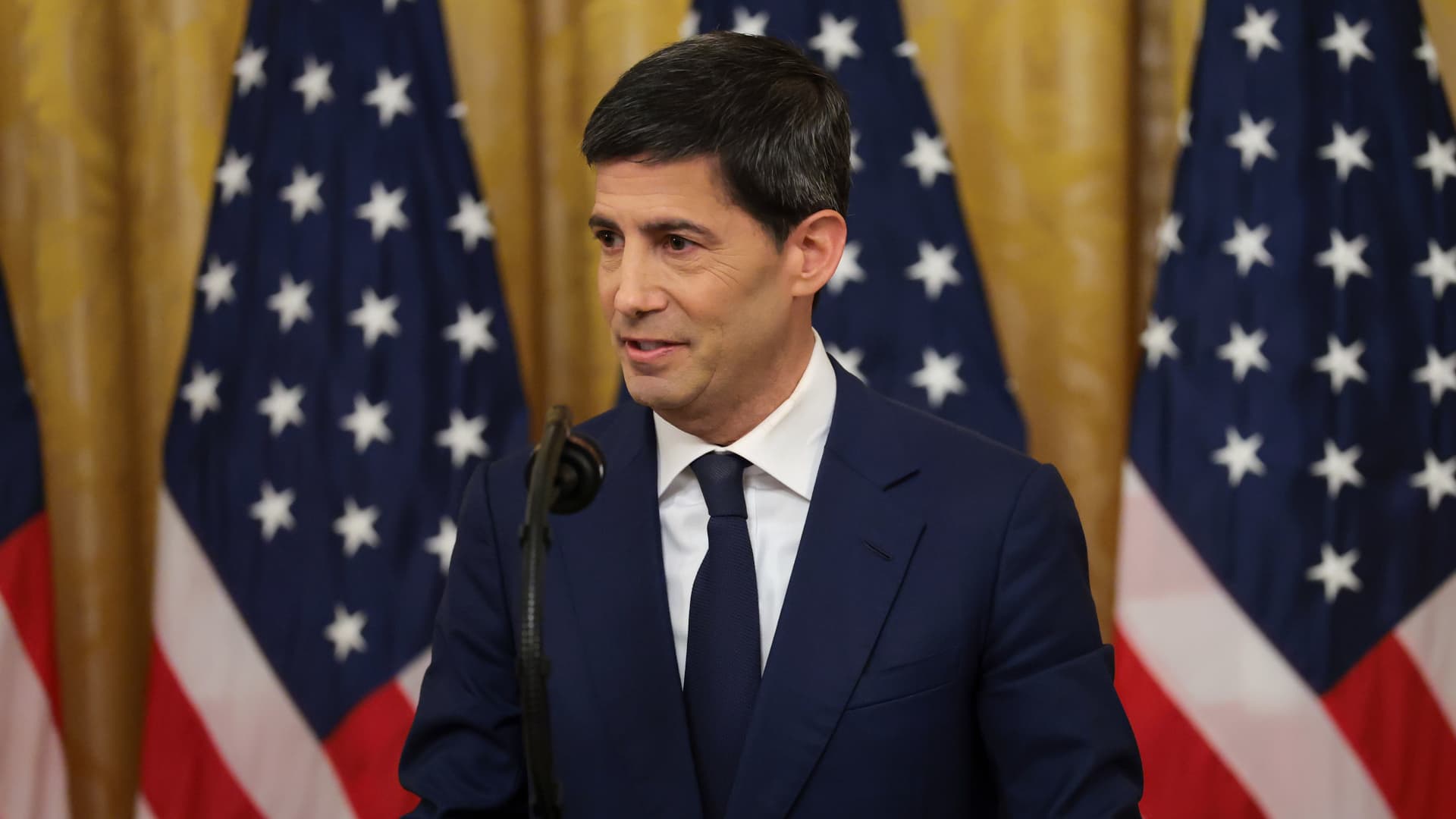
Chairman of the Federal Reserve Kevin Warsh delivers remarks after being sworn in during a swearing-in ceremony in the East Room of the White House on May 22, 2026 in Washington, DC.
Anna Moneymaker | Getty Images
Wednesday’s Federal Reserve statement looked drastically different than those issued after previous meetings, offering one of the first formal signs of the changes new Federal Reserve Chairman Kevin Warsh has promised.
The statement released Wednesday contained around 130 words, down from figures above 300 seen in each of the past two meetings, according to a CNBC analysis of the releases.
Warsh acknowledged a “difference” in the statement early in his first press conference as chair on Wednesday. He said there was no forward guidance, as it was “not well suited for the current policy conjuncture.”
“It’s a bit shorter, a bit simpler and it dispenses with some older language,” Warsh said. “That statement just gives you the facts, as best we can judge it.”
Below is a comparison of Wednesday’s Federal Open Market Committee statement with the one issued after the Fed’s previous policymaking meeting in April.
Text removed from the April statement is in red with a horizontal line through the middle.
Text appearing for the first time in the new statement is in red and underlined.
Black text appears in both statements.
Wednesday’s release contained no information on how members voted, previously a hallmark of releases under former Federal Reserve Chairman Jerome Powell. Instead, Wednesday’s statement indicated only that it was a unanimous vote.
The latest statement also includes less color on how the Fed views inflation and where it could be going next. However, the statement did say that the Fed is committed to having stable prices.
“What Kevin Warsh is trying to do with this statement is not use the statement to give forward guidance, and I think he did a pretty good job with that,” said David Wessel, senior fellow at Brookings, on CNBC’s “Power Lunch.”
Warsh, who took over as chair late last month, has promised a “regime change” at the Fed.