
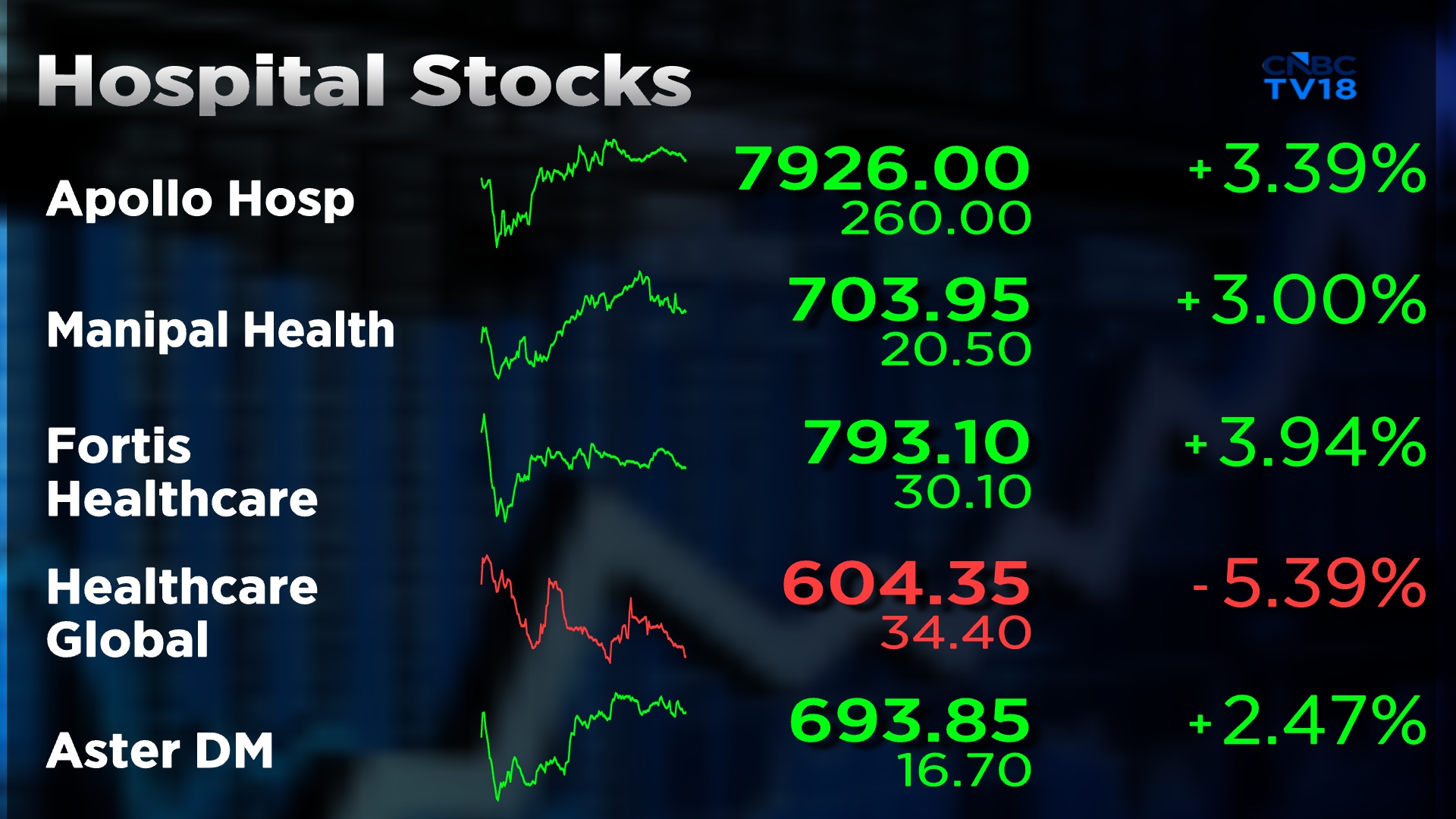
Hospital stocks, other than Healthcare Global Enterprises (HCG), traded higher on Friday, October 9, after the government capped trade margins on all non-scheduled anti-cancer drugs at 30%.
With this move, the government aims to lower cancer drug prices along with patients’ out-of-pocket expenses. Nevertheless, analysts expect a relatively limited impact on hospital profitability.
Shares of Apollo Hospitals were trading 3.4% up at ₹7,926, Fortis Healthcare shares gained nearly 4% to ₹793.10, Manipal Health Enterprises advanced 3% to ₹703.95, and Aster DM Healthcare climbed 2.5% to ₹693.85.
HCG, which has flagged concerns over the economics of supplying certain cancer drugs, was the outlier, falling around 5.2% to ₹605.70.
The government’s decision comes ahead of the Supreme Court hearing on October 12 on high mark-ups in drug pricing. The court had recently questioned how a cancer drug bought by a retailer for around ₹2,700 could carry a maximum retail price (MRP) of nearly ₹27,000.
Also read: Here’s why Colgate-Palmolive shares jumped over 7% on Friday
Government estimates ₹2,500 crore in annual savings
The government estimates that trade mark-ups on non-scheduled anti-cancer drugs average around 170% and can reach as high as 700%. It expects the 30% cap to reduce MRPs by up to 70% for some medicines and save patients around ₹2,500 crore annually.
The cap applies to branded and generic drugs, domestic and imported medicines, and patented and non-patented products. The government has said manufacturers’ selling prices and revenues will remain unaffected, as the intervention targets margins across the distribution chain rather than the prices charged by manufacturers. Companies will also be required to maintain current production levels to ensure availability.
The National Pharmaceutical Pricing Authority (NPPA) had capped trade margins on 42 non-scheduled anti-cancer drugs in 2019. The government said that intervention led to significant price reductions and annual savings of around ₹984 crore.
Also read: HDFC Life shares lead gains among insurance players on Friday; Check other top picks from analysts
HCG flags concerns over drug availability
Earlier today, BS Ajai Kumar, chairman of Healthcare Global Enterprises, told CNBC-TV18 that the economics of manufacturing and supplying certain cancer drugs could become a concern when margins are already low.
He said pharmaceutical companies were reluctant to manufacture some cancer medicines because of low margins, adding that patients already lacked access to several drugs due to unfavourable pricing economics.
Kumar said the impact on the quality of care would need to be assessed and warned that low margins could affect innovation and research and development. He also noted that the details of the proposed measure needed closer examination because bulk purchase prices could differ.
The comments highlight a potential trade-off between making cancer treatment more affordable and ensuring that medicines remain commercially viable to manufacture and supply.
Analysts see limited impact on hospital profitability
Abdulkader Puranwala of ICICI Securities said the 30% trade-margin cap was not new to the market and was preferable to the anticipated 16% cap.
He estimated that the measure could affect hospital earnings before interest, taxes, depreciation and amortisation (EBITDA) by around 1–2%. Other analyst estimates put the potential impact at around 1–4%, depending on hospitals’ oncology exposure and medicine margins.
Puranwala also said he did not expect hospital margins to be affected by curbs on freebies to doctors.
Supreme Court hearing on October 12 in focus
The government’s intervention comes amid broader scrutiny of cancer drug pricing and distribution margins. The October 12 Supreme Court hearing could provide further direction on whether the focus remains on targeted trade-margin rationalisation or moves towards a broader approach to cancer drug price controls.
Kumar said the government’s move could complicate the hearing, given that it had already acted on the issue before the court’s next hearing.