
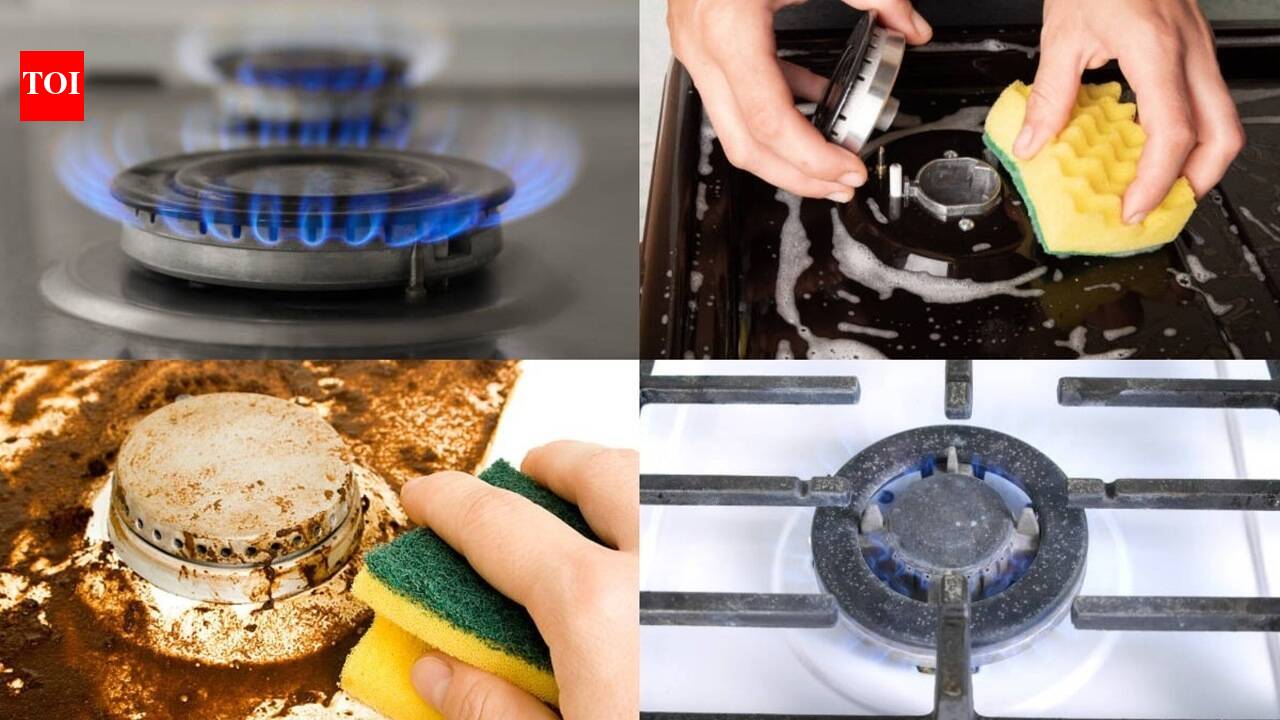
If your tea’s been taking forever to boil lately, or that flame under your kadai looks more yellow-orange than a proper blue, your burner’s probably trying to tell you something. The primary issue is usually the same: grease, food splatters, and grime gradually clogging the tiny holes that regulate airflow. It happens so gradually that most of us don’t even notice until the flame’s noticeably weaker. The good news is you don’t need a service call or a harsh chemical cleaner to sort it out. A few things already sitting in your kitchen can cut through the grime just fine. Here’s how.
Baking soda and vinegar soak
This one’s basically the go-to for any kind of natural kitchen cleaning, and burners are no different. Pop the burner caps off and let them soak in a mix of baking soda and vinegar for 20 to 30 minutes, you’ll see it fizz, and that’s exactly what’s loosening the baked-on grease. After the soak, a quick scrub with an old toothbrush usually takes care of whatever’s left. Just make sure you rinse well and let the caps dry completely before putting them back, any leftover moisture and you’ll have trouble getting the flame to catch.
Lemon and salt scrub
Lemon’s got more cutting power against grease than people give it credit for, especially once you add a bit of salt into the mix. Slice a lemon in half, sprinkle some salt right onto the cut side, and use that to scrub down the burner caps and grates. It cuts through the grime nicely and leaves the kitchen smelling fresh instead of like chemical cleaner. This combo works especially well on the grates and drip trays, where grease tends to pile up the thickest and is honestly the most annoying to deal with.Clearing out clogged burner holesHere’s the thing, a burner can look perfectly clean on top and still burn weak because the tiny flame holes underneath are clogged. That’s actually one of the most common reasons for a sputtering, uneven flame. Grab a fine needle, a straightened-out paperclip, or even an old toothbrush bristle, and gently poke through each hole to clear it out. Do this only once the stove’s completely cool, and go hole by hole rather than scrubbing across the whole surface, otherwise you risk pushing debris further in instead of getting it out.
Baking soda paste for the stubborn stuff
Sometimes a quick soak just isn’t enough, especially if the stains have been sitting there a while. In that case, mix baking soda with a little water to make a thick paste, spread it over the stained spots, and let it sit for 15 to 20 minutes before scrubbing. Giving it that extra sitting time really helps break down the hardened grease. It’s also gentle enough that it won’t scratch up most burner surfaces, which is more than you can say for steel wool or the harsher scrubbers.
Wiping down regularly so it doesn’t get this bad
Honestly, the easiest fix is just not letting the grime build up in the first place. A quick wipe-down of the stovetop and burner caps once they’ve cooled, ideally after every meal, or at least once a day, stops spills from turning into the kind of stubborn residue that needs a proper deep clean later. It sounds too simple to matter, but this one small habit alone cuts down massively on how often you’ll need to reach for baking soda and vinegar.
Disclaimer:
This article is intended for general informational purposes only and is not a substitute for professional appliance-servicing advice. Always make sure the stove is switched off, the gas supply disconnected, and the burner completely cooled before attempting any cleaning. If you notice a persistent gas smell, an irregular flame that doesn’t improve after cleaning, or suspect a leak, stop immediately and contact a qualified technician or your gas provider.