
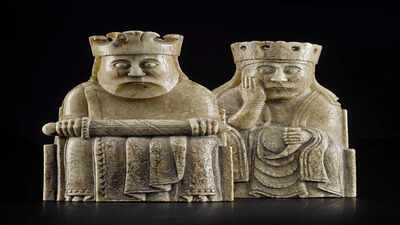
Long before the Isle of Lewis came to be known as a hiking paradise for history lovers, there was a hidden story that had remained concealed for almost seven centuries. In 1831, a resident started clearing some sand on the Uig beach on the western coast of the Isle of Lewis. He was not searching for any precious items, but just clearing the land from sand since winds from the Atlantic Ocean always shape the place. But while digging in a stone cavity in the dunes, he encountered several pairs of bulging eyes gazing back at him.But instead of finding gold or silver treasure, he stumbled upon a trove of 93 elaborately carved figures. These figures were the Lewis Chessmen and resembled humans rather than game pieces. As opposed to contemporary chess pieces, which are abstract in nature, these figures were distinctive in their own right. They comprised kings holding swords, queens touching their cheeks with concern, and warrior-like ‘berserkers’ clenching the top part of their shields in fury. The discovery instantly turned the shores of Scotland into an archaeological marvel in Europe.A luxury trade network concealed in the HebridesThe discovery was shocking in the sense that it refuted the belief that the distant island of Lewis was a place cut off from the rest of the world. As stated by the research paper published in ArcheoSciences, the figures were carved out of walrus ivory, and a few others were made of whale teeth. This material was the equivalent of white gold during the medieval period and could only be extracted from the northernmost point of the Arctic region.It is assumed that the chessmen were created in the 12th century in Trondheim, Norway. In this regard, the book The Lewis Chessmen and the Enigma of the Hoard by Neil Stratford indicates that the discovery of the entire set of chess pieces implies that the artefacts belonged to a travelling merchant selling luxurious goods in the North Atlantic area. Regardless of whether the merchant hid them in a burial site or the items were lost due to the shipwreck, they have been preserved in perfect condition for almost eight centuries by the sand.
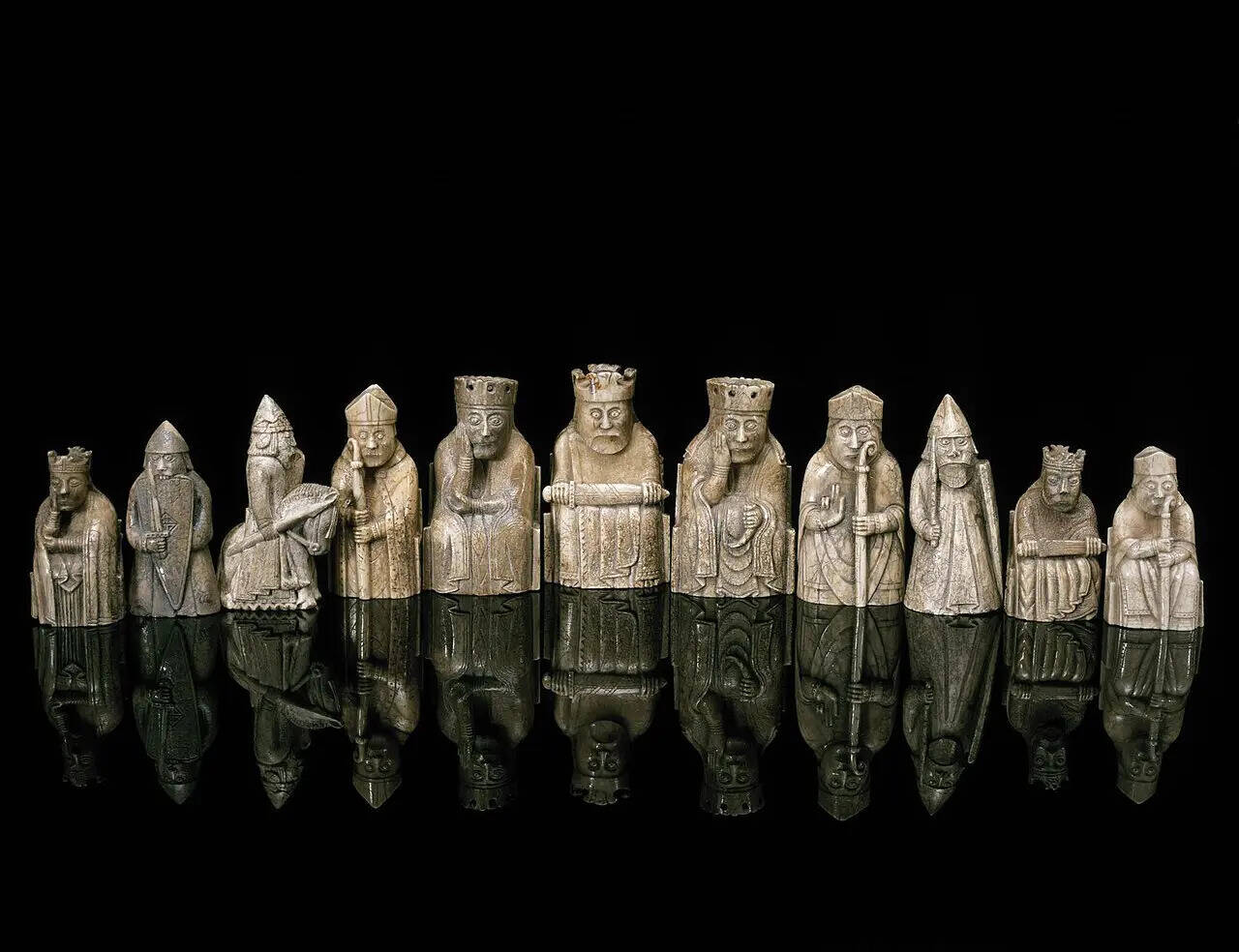
These 12th-century Norwegian-crafted pieces, resembling humans with distinct emotions, revealed a sophisticated medieval trade network. Now housed in London and Edinburgh, their expressive nature continues to captivate audiences worldwide. Image Credits: British Museum, via Wikimedia Commons
The reasons why such expressive-looking figures are still popular around the worldThere is one aspect explaining why the Lewis Chessmen continue attracting attention from various people. The figures seem extremely contemporary, and they display the same psychological characteristics associated with the characters depicted. The expressive appearance of the carvings, the large eyes, and the worried faces of the queens indicate that the artefacts can be viewed not only as ancient relics but also as representatives of the human society.The artefacts are now housed separately at the British Museum in London and the National Museum of Scotland in Edinburgh, where they remain among the most popular exhibits in the museums’ collection. The tale of how this remarkable discovery took place is a perfect illustration of the fact that the longest history is sometimes buried right underneath our feet. Rather than discovering a game, a person working on a sandbank discovered a connection between us and an ancient civilisation that existed in the Atlantic Ocean long ago.A disturbing thought is that even though the owners of these artefacts have been dead for many years, the small replicas of the ivories continue to look back at us with the same wide-open eyes as ever before. This only leads one to speculate about the possible contents lying buried within the sands of an isolated beach.