
By the fall of 1922, Howard Carter was running on borrowed time and fumes. He had spent years sifting through Egypt’s fabled Valley of the Kings with little to show for it, and now he had to sit down with his wealthy British patron, Lord Carnarvon, and make a pitch most archaeologists in his position would not have had the nerve to make: one more season. Carnarvon, who had been funding the increasingly frustrating dig since 1909, agreed, and that choice changed the course of history.A hidden step that changed human historyIt was November 4, 1922, and Carter’s team was clearing debris under old workmen’s huts. It’s the kind of back-breaking, unglamorous work that doesn’t make it into the highlight reel when someone’s tool struck something solid. A stone step. Then one more. On November 5, he was staring at a sealed door that hadn’t been opened in more than 3,000 years. This find led to the discovery of the tomb of Tutankhamun, a burial that had been hidden for more than 3,000 years. The study, The mummy’s curse: historical cohort study, claimed that the tomb had been discreetly hidden beneath the 20th Dynasty workers’ huts in the Valley of the Kings. That’s important because it explains how a royal burial could survive for so long in plain sight. The huts hid the entrance area and helped to hide the cut stone below.The Valley of the Kings was not a remote, untouched wilderness. It was a busy, well-trodden archaeological zone, and yet somehow this had gone unnoticed for millennia.Why did Carter stop instead of just going inThis is the part of the story that doesn’t get enough attention. Carter didn’t just bust through the door. First, he cabled Carnarvon.It might sound too cautious, but we need to remember what was at stake. A sealed door in the Valley of the Kings could be an untouched royal tomb, a looted room or a hidden stash. Carter had to be sure before he touched anything. He also owed his patron the courtesy of knowing that the long, expensive gamble had finally paid off.
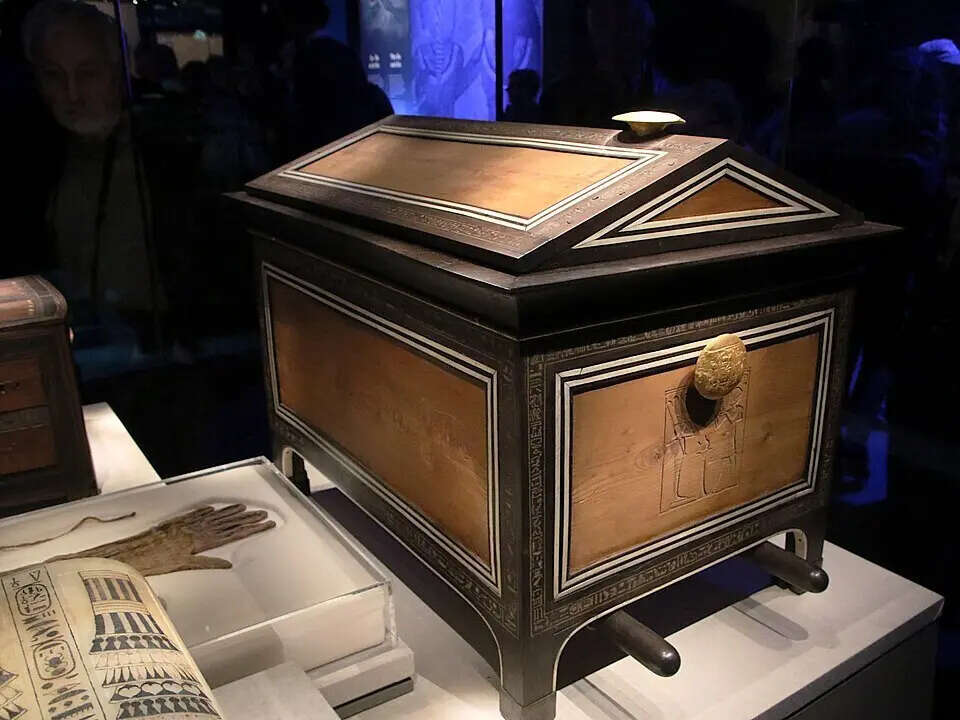
One of the engraved wooden chests found inside Tutankhamun’s tomb.Image Credits: Wikimedia Commons
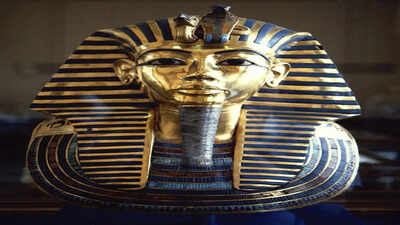
Over 5,000 treasures and almost none of them were touchedWhen Carter and Carnarvon finally broke through, they discovered something neither man had expected. What made Tutankhamun’s tomb remarkable was not its contents. It was that the contents were intact. Gold furniture. Chariots. Statues. Ebony caskets. More than 5,000 objects were packed into chambers as if the burial had taken place only recently and not in 1323 BC. According to the records of The Griffith Institute, the range of objects found throughout the tomb’s chambers is staggering. It was not a cache of a few scattered relics; it was a complete picture of royal burial in Egypt in the late 18th Dynasty, and preserved in extraordinary detail.Photographer Harry Burton documented it all, and his photographs created a permanent visual record of the excavation, allowing the discovery to be enjoyed not only by scholars but by the entire world.The golden mask everyone knows, and what it actually meansMost people’s image of ancient Egypt is the iconic funerary mask of Tutankhamun, that serene, striped gold face that looks back at you. Almost immediately, it became the icon of the whole discovery.Here’s the thing: the mask only became legendary thanks to its context. Looted from a ransacked, half-empty tomb, it would have been remarkable, but discovered in a perfectly intact royal burial, surrounded by thousands of other objects? It was the symbol of a whole civilisation.Why it still matters, a century laterThe discovery of 1922 was not only about making beautiful objects for museums. It changed the way scholars see ancient Egypt forever. Almost all researchers before the discovery had to work from fragments, looted sites, damaged artefacts and incomplete records. Carter’s discovery offered them an intact, sealed, well-documented burial setting. The photographs, excavation notes, and object records provided a research baseline that scholars still refer to today.For the rest of us, it changed something else, too. It made ancient Egypt seem real in a way that ruins and mummies never quite did. Tutankhamun’s tomb was not a pile of rubble. It was a world, frozen in time, waiting to be discovered.