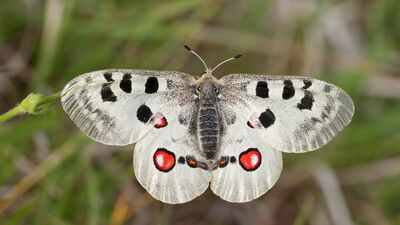
In 1986, Czech conservationists achieved something that once seemed unlikely: they helped bring the Apollo butterfly back. For a while, the recovery looked like a real success story. The population grew beyond 2,000 individuals, showing that careful conservation action could give one of Europe’s rarest butterflies a second chance.But nature rarely stays still. A new long-term study suggests that the same habitat that once supported the butterfly’s comeback later became overgrown, reducing the sunlight and open conditions the species needs to survive. In other words, the Apollo butterfly did not simply recover and stay safe; its future became tied to whether its habitat could be actively managed over time, as reported by Springer.
Why the Apollo butterfly matters
The Apollo butterfly, Parnassius apollo, is one of Europe’s most striking and most threatened butterflies. It is known for its pale wings and mountain habitat, but behind its beauty is a fragile ecological story. Like many specialist species, it depends on very specific conditions, including open, sunny grasslands and the right larval food plants.That makes the species highly vulnerable when landscapes change. If shrubs, young trees or other vegetation take over, the light disappears, the host plant declines and the butterfly loses the habitat structure it needs for breeding and survival.
A rare conservation win
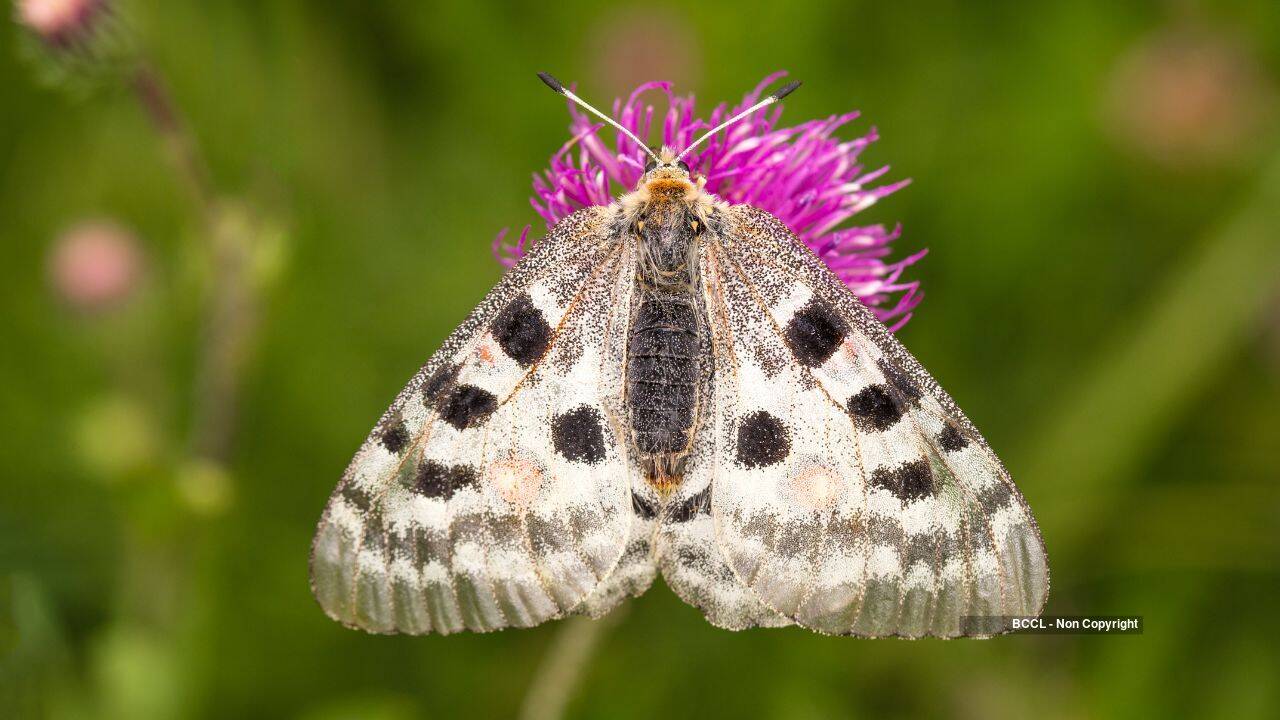
Apollo butterfly
The 1986 recovery in Czechia is important because it showed that targeted conservation can work. At a time when many butterfly populations were shrinking across Europe, the Apollo butterfly was successfully reintroduced and began to build back its numbers.The population eventually crossed 2,000, a milestone that likely gave conservationists hope that the species could maintain a stable foothold. For years, that kind of result would have looked like a textbook example of restoration success.But long-term monitoring tells a more complicated story. Recoveries are not permanent by default. They depend on whether the habitat stays suitable, and that often means ongoing work rather than one-time intervention.
When the habitat changes, the species changes too
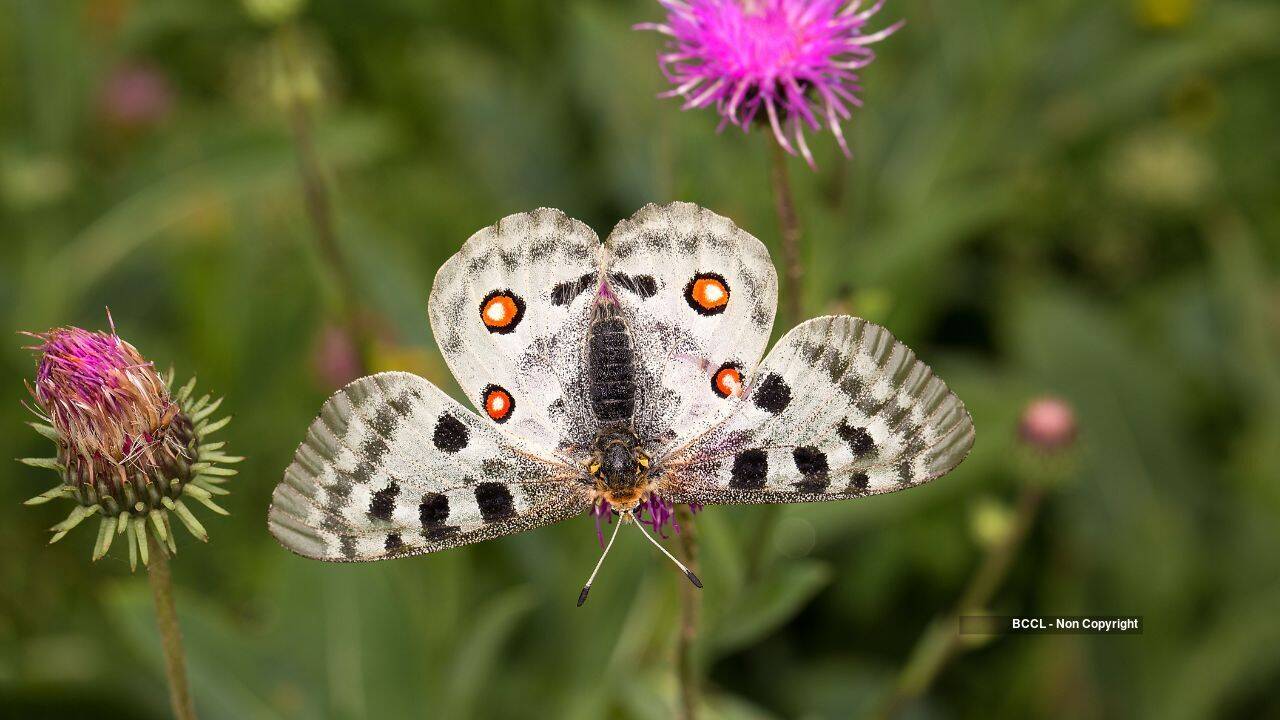
Apollo butterfly (Representative image)
The newer research points to habitat succession as the key problem. Over time, the open butterfly habitat became more overgrown, with shrubs and young trees spreading across the landscape. As that happened, sunlight was blocked out and the conditions shifted away from what the Apollo butterfly needs.This matters because the butterfly’s larval food plant also depends on open, sunlit conditions. Once the vegetation becomes too dense, that food source declines, and the butterfly’s life cycle starts to break down from the bottom up, as per the report.In simple terms, the Apollo butterfly was not just threatened by predators or climate. It was threatened by the very success of natural succession, the process by which abandoned or unmanaged habitats gradually turn into denser vegetation.
Why long-term monitoring is so important
The study is especially valuable because it follows the population over many years, not just a single season or breeding cycle. That long view makes it possible to see how a conservation win can slowly unravel if management stops or becomes too weak.For conservationists, that is a crucial lesson. Reintroduction is only the beginning. If a species depends on open habitat, then keeping the habitat open may be just as important as releasing the animals in the first place.This is one reason the Apollo butterfly has become such an important case study in Europe. It shows that success in wildlife restoration should not only be measured by how many individuals are released, but by whether the landscape remains suitable years later.
The bigger conservation challenge
The Apollo butterfly story also reflects a broader problem in conservation. Many rare species are tied to habitats shaped by human activity, such as grazing, mowing or low-intensity land use. When those activities stop, the land may look more “natural” to us, but it can become less suitable for specialist species.That is especially true in places where open dry grasslands are part of the butterfly’s life cycle. Without management, shrubs and small trees can quickly change the character of the site. That is why some conservation projects now focus not just on reintroducing species, but on actively maintaining the habitat around them.The Apollo butterfly is a perfect example of why that matters. Protecting it is not simply about keeping one insect alive. It is about preserving a whole ecological system of sunlight, host plants and open terrain.
What the new study adds
The study behind this story gives scientists and conservation groups something practical: evidence that long-term habitat management is essential if reintroduced butterflies are going to survive.That can mean clearing overgrowth, maintaining grassland structure and making sure the larval host plant has room to thrive. It also means planning for the future, because even a strong population can weaken if the site slowly becomes unsuitable.For countries trying to save endangered insects, that lesson is highly relevant. A conservation project may look successful for a decade or two, yet still fail if the habitat is not managed as carefully as the species itself.
A story of hope and warning
The Apollo butterfly’s return in 1986 remains a genuine conservation achievement. It shows that species on the edge can recover when people act with enough care, patience and persistence.But the later decline is a warning that recovery is fragile. If habitat conditions change, a population that once seemed secure can slide back toward collapse.That combination of hope and caution is what makes the Apollo butterfly such a powerful story. It reminds us that conservation is not a single victory. It is a long commitment to keeping the right conditions alive, year after year.In 1986, Czech conservationists brought the Apollo butterfly back; its population crossed 2,000 before an overgrown habitat pushed it towards collapse again