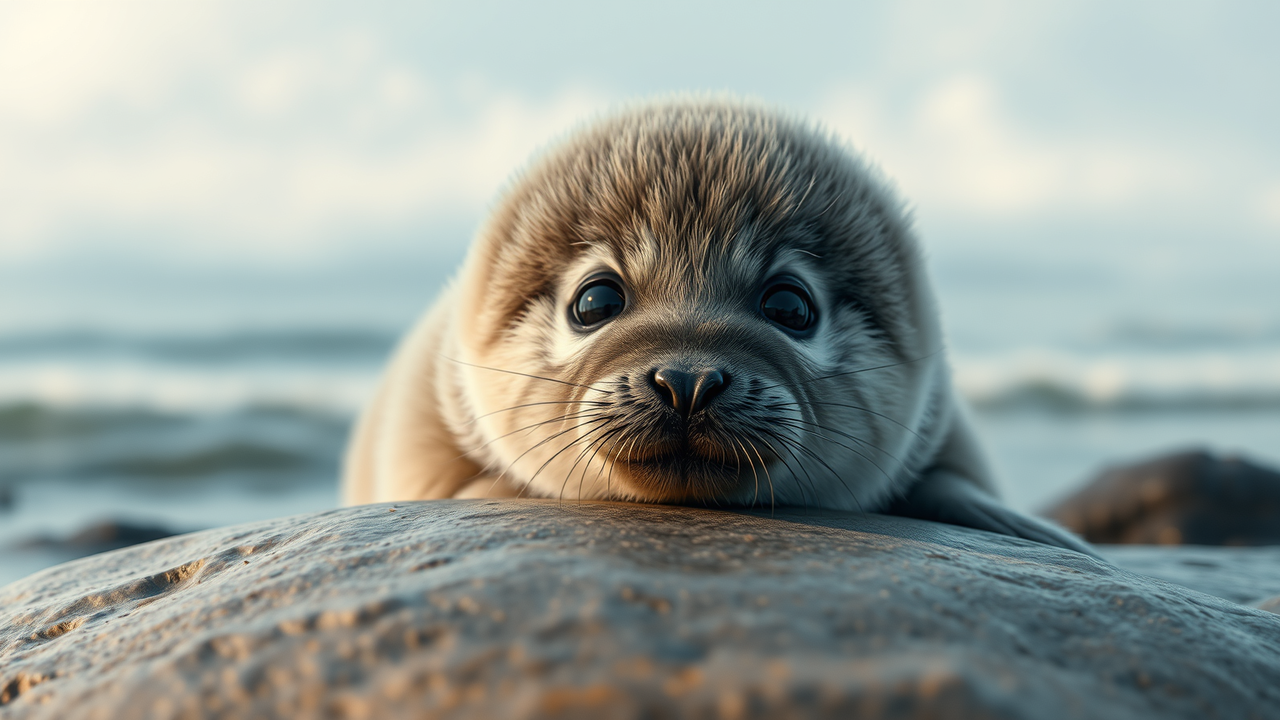
On a quiet evening in May 1987, Jan Bevington was sitting on a beach in the village of Hillswick, on the north-west mainland of Shetland, when she spotted something being washed helplessly up and down in the surf, a newborn common seal pup, abandoned and struggling to survive on its own. At the time, no one on the islands knew how to properly care for a stranded seal pup, so Bevington rang a seal sanctuary in Cornwall for advice and took the animal in herself. That single rescue grew into Hillswick Wildlife Sanctuary, and nearly four decades later, Bevington is still there, still taking in orphaned and injured seals washed up along one of the most remote and storm-battered coastlines in Britain. Over the years, the sanctuary has cared for thousands of seals, becoming an essential refuge for marine wildlife while also educating visitors about conservation and the challenges these animals face from storms, pollution, and changing ocean conditions.
How one rescued pup turned into a permanent sanctuary
According to Hillswick Wildlife Sanctuary’s own account of its history, word of Bevington’s rescue spread quickly through the small island community, and by September of that same year, she was already caring for seven common seal pups, all of whom were eventually released successfully back into the wild. The sanctuary itself is based out of a genuinely historic building in Hillswick known as The Booth, a former Hanseatic trading post dating back to the 1600s that had more recently served as Shetland’s oldest pub before Bevington later opened it as the islands’ first vegetarian café specifically to help fund the sanctuary’s growing work.
The disasters that turned a hobby into a full-time mission
What began as one woman’s personal rescue effort was tested severely within just a few years of the sanctuary’s founding. According to reporting from the Press and Journal, a severe storm in October 1991 left almost a hundred grey seal pups stranded across Shetland’s beaches, and Bevington personally saved 45 of them, though the sheer scale of the disaster meant many additional animals had to be flown out to other sanctuaries elsewhere in Britain. An even greater test came in January 1993, when the oil tanker Braer ran aground at Garth’s Ness on the southern tip of Shetland, spilling 85,000 tonnes of crude oil into the surrounding waters. The resulting rescue operation treated 37 seals and nine otters at Bevington’s centre, and while sadly only two of the otters survived, all but one of the seals recovered, a disaster that ultimately brought the sanctuary enough public attention and support to become a full-time operation and registered charity.
What life at the sanctuary actually looks like today
Nearly forty years on, Hillswick Wildlife Sanctuary continues operating as Shetland’s only dedicated wildlife rescue facility, caring for sick, injured and abandoned seals and otters with a stated goal, in the sanctuary’s own words, of rescue, rehabilitate and release. According to an interview Bevington gave to NorthLink Ferries, the sanctuary has noticed seal pups arriving in noticeably poorer condition in recent years, smaller, less robust and less resilient than in the past, making the job of keeping them alive considerably harder work than it once was. Bevington described preparing what staff call a selkie cocktail, a nutrient mix given to compensate for the mother’s milk these pups have been separated from too early, and recalled a recent case in which three separate pups, all still with their umbilical cords attached, had to be rescued within three days of each other after gulls were already circling them.
How the sanctuary has grown alongside Jan’s own work
The sanctuary’s growth over the decades has closely tracked Bevington’s own life. According to Hillswick Wildlife Sanctuary’s own history page, her husband Pete arrived to help run the centre not long after it was founded, and the couple married the following year, going on to run the sanctuary together ever since. Major infrastructure improvements followed over the years, including a fibreglass outdoor seal pool funded through public donations and a later 450,000 pound redevelopment of the sanctuary’s facilities, funded largely by Shetland’s oil and gas industry alongside the local council, which added a proper seawater pump system and a visitor centre. The sanctuary also began welcoming international volunteers from around the world during the summer months, eventually joining the WWOOF volunteering network to help sustain its year-round work.
Why Bevington’s decades of work have drawn national recognition
Bevington’s long-running commitment to the sanctuary has been formally recognised well beyond Shetland’s shores. According to the Press and Journal, the International Fund for Animal Welfare named her the winner of its annual Marine Rescue Award after more than 27 years of caring for sick and abandoned animals on the islands, and further recognition followed from IFAW at a ceremony held at the House of Lords marking decades of the sanctuary’s work. Despite this recognition, Bevington has remained consistent in describing her motivation in the simplest possible terms, telling the Press and Journal at the time that she does the work purely for the love of it, and that receiving formal recognition for something she never set out to be honoured for came as a genuine surprise.
A lifetime shaped by one chance encounter on a beach
What makes Bevington’s story so striking is how directly it traces back to a single, unplanned moment, a woman sitting on a beach one evening in 1987 who happened to notice a helpless seal pup being tossed by the waves. Nearly forty years later, that same instinct to help has grown into one of Britain’s most enduring wildlife rescue operations, one that has weathered oil spills, brutal winter storms and the ordinary, unglamorous daily work of feeding and nursing hundreds of individual seal pups back to health. For a woman who never set out to build a charity, Hillswick Wildlife Sanctuary stands today as proof of how far a single act of compassion, repeated patiently across decades, can genuinely go.