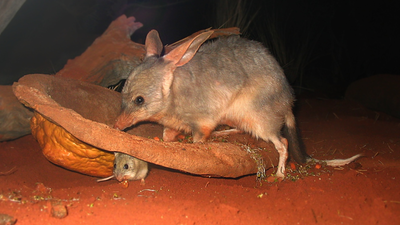
In 1997, conservationists introduced captive-bred greater bilbies to Thistle Island in South Australia, a place the species had never historically inhabited. The release was part of a wider national effort to protect the vulnerable marsupial from introduced predators such as foxes and feral cats. According to the Department of Climate Change, Energy, the Environment and Water, Government of Australia’s Recovery Plan for the Greater Bilby, surveys carried out roughly a decade later found the population had grown and spread across the entire island. Here’s what the plan reveals about this and related reintroduction efforts, along with where things stand today.
How captive-bred bilbies colonised the entire Thistle Island
Thistle Island, off South Australia’s coast, had no historical bilby population before captive-bred animals were released there in 1997. Because the island lacked mainland predators such as foxes and feral cats, the bilbies could establish themselves without the predation pressure that limits mainland populations. Surveys undertaken roughly a decade after the release, cited in the recovery plan as Berris et al. (2019), found that the population had increased and occupied the entire island. The plan holds this up as an example of how predator-free islands can support successful bilby introductions well outside the species’ former range.
128 reintroduced bilbies and their spread across Western Australia
A comparable reintroduction unfolded at Matuwa, a 2,500 square kilometre area in Western Australia jointly managed by the Department of Biodiversity, Conservation and Attractions and Martu Indigenous rangers since 2000. Feral cats have been controlled there through annual baiting and trapping since 2004, and the area is fenced to exclude camels and domestic stock. Between 2007 and 2009, 128 bilbies were reintroduced to Matuwa. Since then, the population has spread throughout most of the intensively managed area and has also colonised adjacent land, showing that sustained predator control can support bilby recovery even outside a fenced enclosure.
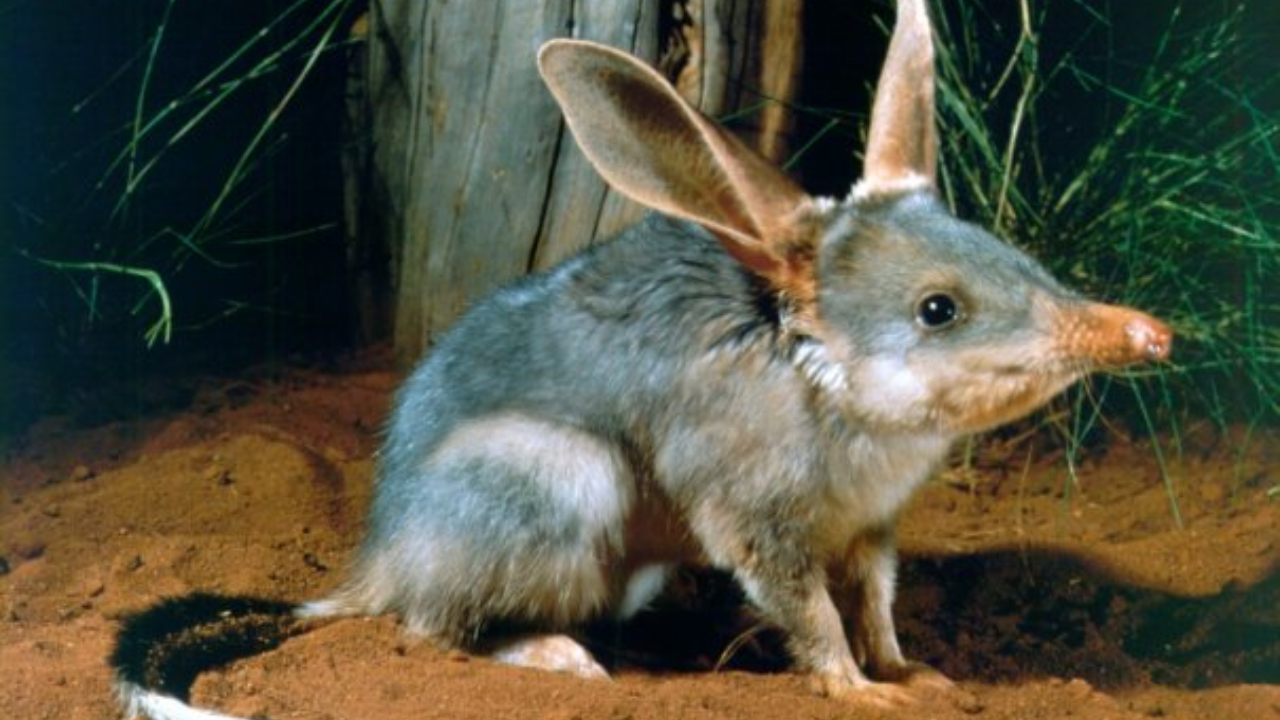
Greater Bilby (Macrotis lagotis) (Image: Wells, Babs & Bett (CALM) and DCCEEW.)
Other sites and the wider bilby reintroduction network
Beyond islands and unfenced managed areas like Matuwa, the greater bilby has been reintroduced to large fenced enclosures across its former range, including Mallee Cliffs National Park, Arid Recovery Reserve, Francois Peron National Park, Scotia Sanctuary, Yookamurra Sanctuary, Mt Gibson Sanctuary, Currawinya National Park, Pilliga State Conservation Area, Sturt National Park and Newhaven Sanctuary. These enclosures, some covering up to 262,000 hectares, exclude introduced predators while still exposing bilbies to natural selection pressures. The combined population across these reintroduced sites is estimated at around 3,000 individuals, helping to restore ecological processes such as soil turnover and maintain genetic diversity across the species’ range.
Why the greater bilby is still listed as vulnerable, and how it’s faring now
Despite successes at Thistle Island and Matuwa, the greater bilby remains listed as vulnerable under the Environment Protection and Biodiversity Conservation Act 1999. Its range has contracted by more than 80 per cent since European settlement, and the species survives largely in the Northern Territory, northern Western Australia, and small, isolated Queensland populations. Predation by foxes and feral cats remains the most significant ongoing threat, alongside habitat loss, altered fire regimes and reduced Traditional Owner land management.A more recent ecological study ‘Digging deeper: habitat selection within the home ranges of a threatened marsupial’ on Thistle Island’s temperate-climate population has since recorded densities as high as 101 bilbies per square kilometre, far above the 0 to 0.2 bilbies per square kilometre typical of arid-zone populations, indicating the island population has stayed well established. More broadly, the Australian Wildlife Conservancy’s latest annual bilby census across its protected sanctuaries in Western Australia, the Northern Territory, South Australia and New South Wales put the total population at 5,330 individuals, an increase of around 2,000 animals on the previous year and more than four times the number recorded in 2021. Together, these findings suggest the wider reintroduction effort is continuing to build momentum even as the species remains formally vulnerable.