
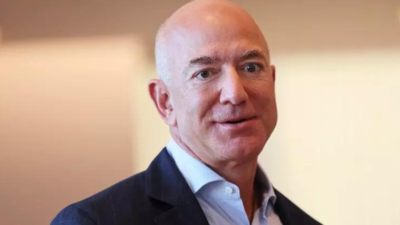
More than two decades ago, Jeff Bezos began building his space ambitions in West Texas. The Amazon founder began buying ranchland near Van Horn in 2004 and, by 2005, had accumulated 165,000 acres to serve as a base for Blue Origin’s private spaceflight operations. The property was originally called Corn Ranch, which is a remote place to develop and test rockets away from population centers.Years later, on July 20, 2021, Bezos launched from the site aboard Blue Origin’s New Shepard rocket on the company’s first human spaceflight. The mission took four people to the edge of space and was a milestone in Bezos’ plans to expand human access to space. The process, from land acquisition in the countryside to flying paying customers, was a long-term project that began long before commercial space tourism was in the public mind.
How Jeff Bezos acquired 165,000 acres in West Texas
Bezos founded Blue Origin in 2000, but the company initially operated with limited public visibility. Its plans became clearer when the Amazon founder began buying land near Van Horn, a small town in Culberson County, Texas.In 2003, local ranchers reportedly began receiving calls from a Seattle-based attorney representing an unnamed buyer interested in purchasing their property. The buyer was willing to make substantial offers, and some landowners eventually agreed to sell.By 2005, Bezos had accumulated 165,000 acres in the region, creating a large private property that would later expand further. He named the property Corn Ranch and subsequently revealed his plans to establish a spaceport there.The location offered a sparsely populated desert environment for rocket launches and testing. Bezos explained that the project was part of his broader ambition to develop the technology needed to send people into space and eventually enable them to live and work beyond Earth.In 2005, John Conoly, then a longtime Culberson County judge, expressed confidence in the project.“I have every confidence in the world he will do what he says he will do,” Conoly told The Associated Press. “I know he’s going to have some of the best minds for this project. He doesn’t do things halfway or second class.”
Blue Origin launches its first human spaceflight in 2021
The West Texas property eventually became the launch site for Blue Origin’s New Shepard spacecraft. On July 20, 2021, the company completed its first crewed flight, carrying Bezos, his brother Mark Bezos, aviation pioneer Wally Funk and 18-year-old Oliver Daemen.The rocket lifted off from the company’s private spaceport, then the crew capsule separated from the booster and continued toward the edge of space. The passengers experienced several minutes of weightlessness before the capsule returned to Earth under parachutes.The flight lasted approximately 10 minutes. The crew crossed the Kármán Line, commonly recognised as the boundary of space, before landing safely in the West Texas desert.The mission also marked several milestones. Funk, aged 82, became the oldest person to travel to space at the time, while Daemen became the youngest. Jeff and Mark Bezos also became the first siblings to fly into space together.“Today was a monumental day for Blue Origin and human spaceflight,” said Bob Smith, then chief executive of Blue Origin. “I am so incredibly proud of Team Blue, their professionalism, and expertise in executing today’s flight. This was a big step forward for us and is only the beginning.”
Jeff Bezos’ long-term vision for commercial spaceflight
Blue Origin’s first crewed mission was part of a wider effort to develop reusable rockets and make space travel available beyond government astronaut programmes. The company had already conducted uncrewed New Shepard flights, testing its rocket and capsule systems before carrying passengers.In November 2015, Blue Origin successfully landed a rocket booster vertically, demonstrating an approach that could allow parts of a launch vehicle to be reused. New Shepard was designed for suborbital flights, while the company’s larger New Glenn rocket was intended to support missions into Earth orbit and beyond.Bezos has described his ambition as creating a future in which millions of people could live and work in space. The company has also pursued projects involving lunar exploration and rocket engines.But commercial space tourism has been questioned on affordability and access. Most early passengers have been well-heeled, so the question remains whether private spaceflight can ever be broadly affordable.