A single homemade bunk bed built in an Idaho garage in 2012 has grown into a large volunteer movement focused on one simple goal: making sure children have a proper place to sleep. According to Sleep in Heavenly Peace (SHP), the organisation that grew from founder Luke Mickelson’s first bed-building effort, what began as a small Christmas project has expanded to more than 400 chapters across the United States and Canada. Over the years, volunteers have built and delivered hundreds of thousands of beds to children in need, turning a personal act of service into a wider effort to address what the organisation calls child bedlessness.
How one garage project began
The story started in December 2012, when Mickelson decided to spend part of Christmas building bunk beds for children who did not have beds of their own. The first project took place in his garage in Twin Falls, Idaho. Mickelson and people close to him built beds and prepared to deliver them to local children. One of the people who joined that first effort was Jordan Allen, Mickelson’s childhood friend. Allen later recalled that the group initially saw the activity largely as a woodworking project. That changed when they delivered one of the beds to a young child who had been sleeping on the floor.The experience showed them that a basic piece of furniture could have a much larger meaning for a child and family facing difficult circumstances. The first beds were simple, handmade bunk beds. But the idea behind them was straightforward: children should not have to sleep on floors because their families cannot afford a bed.
From a few volunteers to an organisation
The initial projects continued beyond that first Christmas. Mickelson and Allen kept building beds, with volunteers joining them and helping with deliveries. By the end of 2013, the effort had developed enough momentum for Mickelson and others to formally establish Sleep in Heavenly Peace as a nonprofit organisation.Its central message became “No Kid Sleeps on the Floor in Our Town.” The model was designed around local participation. Rather than relying only on a central organisation to build and distribute every bed, SHP developed chapters that could organise volunteers, collect materials, build beds and identify families who needed them. That chapter-based approach allowed the original Idaho project to be replicated in other communities.
How the bed-building model works
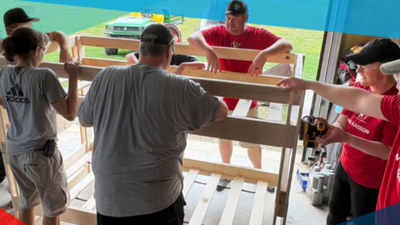
The organisation’s work involves more than assembling wooden frames. Volunteers help build beds, prepare mattresses and bedding, and participate in deliveries to families. Local chapters also work with community groups, businesses and donors to obtain the materials and funding required for the programme. The result is a process in which people can contribute at different stages, from helping construct a bed to providing bedding or assisting with delivery.SHP’s growth demonstrates how the chapter model has allowed the project to spread well beyond its original community. The organisation now has more than 400 chapters across the United States and Canada, according to its website.
Bunks Across America brings chapters together
One of the organisation’s largest annual initiatives is Bunks Across America, which brings SHP chapters together for concentrated bed-building and delivery efforts. The 2026 event ran from September 5 to 12, with SHP aiming to involve 15,000 volunteers across 250 chapters and build more than 12,000 beds during the week.The event has grown considerably over the years. In 2025, the seventh annual Bunks Across America involved 209 chapters and nearly 13,000 volunteers, who helped build more than 10,000 beds. SHP said that by then, more than 300,000 children had received beds since the organisation was founded in 2012. The annual campaign gives volunteers a common period in which to work towards the same objective, while individual chapters continue their work throughout the year.
Why a bed can mean more than furniture
The organisation’s original experience also shaped the way its volunteers view the programme. During one of the first deliveries, volunteers encountered a child whose sleeping arrangement was little more than a pile of clothes on the floor. When the newly built bunk bed was assembled, the child’s reaction became a defining moment for those involved.For SHP, the purpose of the programme therefore extends beyond providing a physical object. A bed can give a child a dedicated sleeping space and provide a sense of comfort and security within the home. That idea has remained central to the organisation as it has expanded.
An idea that kept growing
The contrast between SHP’s beginnings and its current scale is considerable. What started with Mickelson building beds in his garage has developed into a network of hundreds of chapters and thousands of volunteers. The organisation’s 2025 campaign alone recorded 10,075 beds built, 12,955 volunteers and 48,476 volunteer hours. The growth has also changed the nature of the original idea. It is no longer simply one person building a bed for one child; it is a community-based system that allows people across different cities and states to take part in the same mission. Fourteen years after the first garage build, the project continues to revolve around the same basic need that inspired it in 2012: ensuring that children have a bed of their own.What began with one Idaho garage and a handful of volunteers has since become a network spanning hundreds of communities, with nearly 396,000 beds delivered, according to the organisation’s current figures. The numbers have grown dramatically, but the underlying idea remains remarkably simple: take some wood, bring people together and build a child a place to sleep.