
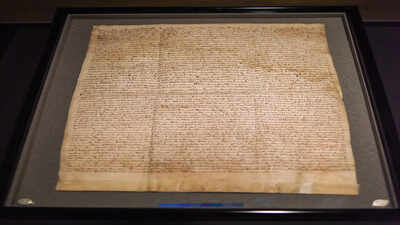
The most significant discoveries in history are not necessarily made using dust, ancient tombs, or even multimillion-dollar purchases. Indeed, one of the most incredible discoveries that Professor David Carpenter has ever made happened while he was sitting on his couch. Clearly showing that history is right before us all along, Carpenter was browsing the Harvard Law School online archives on his computer when he came across a particular document.HLS MS 172 was safely stored in a folder labelled “stained copy.” It was considered an insignificant late copy of the celebrated charter from the Middle Ages and was valued only slightly above curiosities. Harvard University purchased it as far back as 1946, for merely $27.50, which at the time could buy you a good lunch, certainly not the foundation of Western civilisation.It did not take long for Carpenter to recognise what his vast experience had taught him. Instead of a low-grade replica, he detected clear signs of authenticity that proved this document was the original royal manuscript. Not only was it ancient parchment, but it also seemed to transport him to 1300, the year King Edward I set out the privileges of his subjects. The initial perusal soon transformed into a thorough examination once Carpenter understood how valuable, at around $27 million, the document purchased for only $27 was.Digital investigation that brought about global shockerSuch a groundbreaking discovery as this one was by no means a result of chance but a product of highly methodical and technologically sophisticated investigation. It became evident to Carpenter that Harvard Law School’s “copy” of Magna Carta, whose originality has been proven beyond all doubt, was extremely important for historians because it is one of only seven 14th-century manuscripts remaining.The identification process involved more than just looking at a screen. Once Carpenter raised the alarm, the physical manuscript was brought out of its climate-controlled storage for a closer look. Scholars utilised ultraviolet light and spectral imaging to peek through the centuries of “stains” that had caused previous curators to dismiss it. These technical tests confirmed what Carpenter suspected from his couch: the ink, the parchment, and the royal bureaucratic style were all authentic.
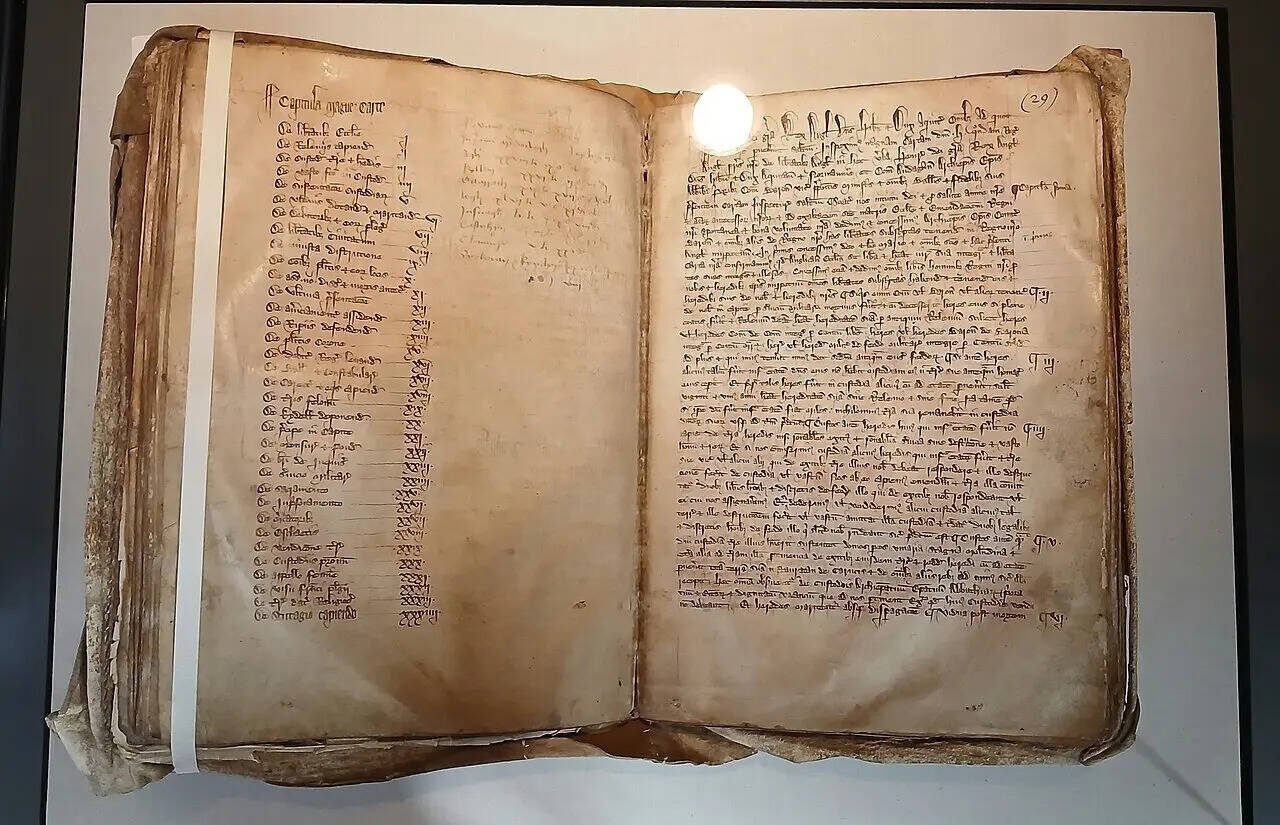
Initially dismissed as a stained copy, advanced digital and spectral imaging revealed its authenticity, proving it to be one of only seven surviving 14th-century versions. This discovery is reshaping medieval legal history. Image Credits: A.-K. D., via Wikimedia Commons
David Carpenter is written about in an esteemed biography of King’s College London, where it states that the discovery of the manuscript in 2023 had completely changed the way in which we viewed medieval legal history. It is clear that the modern era is not just forward-thinking; it can help us discover things from the past. The finding of the famous “stolen copy” in an American library proves that you do not need to travel far and wide to view one page.Why did the “stained copy” remain unrecognised for eighty years?Perhaps, you may ask how it was possible that such an important finding remained undetected in the archives of Harvard University, which is famous for its rich collection of ancient documents. The main reason why the manuscript remained unrecognised for almost eighty years can be considered the fact that it was extremely damaged, stained, and seemed to be another fragment of ancient legal papers. Indeed, without specific knowledge of royal administration and the Latin language of the thirteenth century, it was difficult to guess about its real value.This revelation has caused libraries all over the world to reevaluate their idea of the “lower tier.” If the most important legal document in history can be hidden in an ordinary file folder costing only $27, what else is being overlooked? Found in Harvard, this document serves as an inspiration to archivists everywhere, proving that our archives are not simply artefacts of bygone papers, but a complicated jigsaw puzzle waiting to be seen from a fresh perspective and connected by high-speed Internet.Today, manuscripts are not mere pieces of paper. They are crucial documents stored safely within the vaults of Harvard University, proving that specialised knowledge becomes important in the face of endless information. David Carpenter worked overnight at his home not only to save one manuscript but also to guide a piece of history back into its rightful path. Sometimes, priceless treasures do not lie hidden in the earth; sometimes, they are discovered using nothing but a laptop computer.