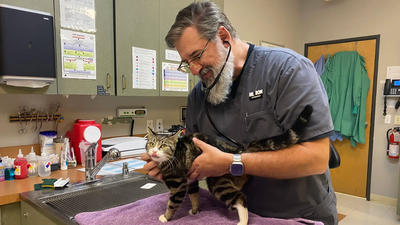
In August 2023, Oregon veterinarian Ron Titterington left a stressful executive job that paid $150,000 a year to begin what he calls “soft retirement.”Three years later, working flexible relief shifts on his own terms earns him nearly twice as much as his former corporate salary while giving him a much better work-life balance.Titterington, 59, shared his career change in an interview with Business Insider’s Jane Ridley.His decision reflects a growing trend among experienced veterinarians looking for better work-life balance as burnout and staff shortages continue across the industry.
From childhood dream to clinic owner
Titterington’s passion for caring for animals began in fourth grade after an injured dog was hit by a car outside his family home late at night. He sat in the back seat comforting the dog while his father drove to an emergency veterinary clinic.Although the dog did not survive, the experience inspired him to become a veterinarian.He started working part-time in kennels and veterinary clinics while in eighth grade before earning a Doctor of Veterinary Medicine and Surgery degree in 1992.Titterington first bought a small 1,500-square-foot clinic. Over the next 16 years, he expanded it into a 10,000-square-foot practice with more than a dozen employees.Although he loved treating animals, especially performing emergency C-sections on large dogs with big litters, the pressures of running a business became overwhelming.Managing taxes, employee benefits, marketing, and city permits created constant stress and left him with less time to care for animals.
Corporate role leads to burnout
A corporate company later bought Titterington’s clinic. Tired and burnt out, he even considered leaving veterinary medicine to train as a high school science or maths teacher.He recalled telling his wife Kathleen, who is also a veterinarian: “I think I’m done with veterinary medicine; I don’t have much of a taste of it in my mouth anymore.”After taking more than a year to think about his next step, Titterington returned to the profession in 2016 as chief of staff at a pet care HMO. He later became chief of medicine, earning the same $150,000 annual salary as before.Although most of his work was in senior management, he still performed orthopedic surgeries and consultations, especially during the pandemic when staffing shortages became worse.The demanding position often meant 10-hour workdays and weekend shifts, leaving little time for himself.
Family illness changes priorities
Everything changed when Titterington’s father was diagnosed with cancer. Realising his demanding schedule stopped him from supporting his father, he resigned from his executive job in August 2023 without a clear long-term plan.“This job isn’t feeding me,” Titterington remembered thinking. “It’s overwhelming and doesn’t allow me to be a son.”He began working as a relief veterinarian, taking temporary shifts through an app called Roo, which connects independent veterinarians with clinics needing extra staff.The platform lets him choose when and where he works, giving him the freedom to accept or decline jobs.“I get to decide my own schedule and can say ‘yes’ or ‘no’ to whatever job or location I’m offered,” Titterington said. “It feels great not to be at the top of the heap with all the responsibilities that come with it.”
High demand boosts income
An industry-wide shortage of veterinarians has created strong demand for experienced relief workers, especially those with surgical skills.Titterington said clinics regularly ask him to work more days, but he limits his schedule to maintain a healthy work-life balance.The career change has also greatly increased his income.“It’s not job satisfaction, it’s job enjoyment. I’m also delighted to be paid almost twice as much as I did in my past, high-pressure positions,” he told Business Insider.Working alongside newly qualified veterinarians has also been rewarding. Titterington said younger colleagues value his decades of surgical experience, while he continues learning new techniques from them.“I feel like I’m that quiet, confident person at the back who says, ‘OK, we’ll get that done and go from there,'” Titterington said.With his father’s health now stable and his father living independently, Titterington and his wife spend more time outdoors. He plans to continue working flexible relief shifts instead of fully retiring from veterinary medicine.