
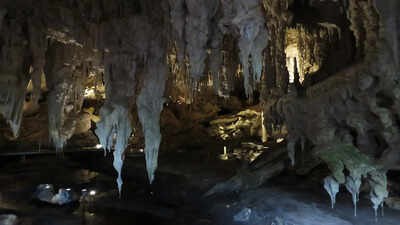
Buried within the limestone formations in the far south-western reaches of Western Australia is a place where one could feel as if time stood still. The Mammoth Cave, which sounds like it should be home to gigantic prehistoric beasts, has certainly done justice to its reputation for well over a century. But with the arrival of the new millennium, something curious began to happen within the cave.Mammoth Cave was holding another page of history for quite some time – the one with the history of ancient huntsmen and the animals hunting them. The cave became a sort of time capsule in which gigantic marsupials, ranging from kangaroos to some really unique species of animals, met their demise through traps that nature had created. These findings were not confined to being under the rock but were discovered and brought forth to become the foundation for scientists to trace back thousands of years of Australia’s geological history. With increasingly sophisticated methods available to us today, we uncover increasingly fascinating insights about past creatures.The arboreal kangaroo mysteryWhat makes Mammoth Cave particularly interesting from a scientific point of view is the unusual species living inside the cave. We think of kangaroos as animals residing in vast territories on open plains. And yet, there seems to be proof indicating something else about kangaroos that lived in the area of Mammoth Cave in times long past. A study in Royal Society Open Science proves the existence of an arboreal kangaroo.
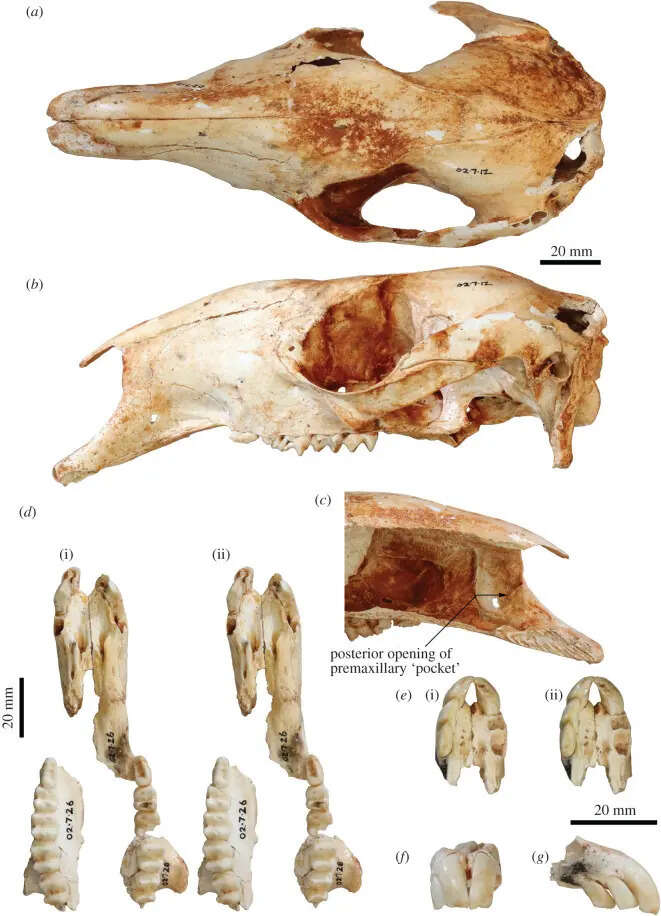
Western Australia’s Mammoth Cave reveals ancient secrets, including evidence of arboreal kangaroos and long-beaked echidnas, suggesting a past humid climate and rich ecosystem. Image Credits: The skeleton of Congruus kitcheneri, a semiarboreal kangaroo from the Pleistocene of southern Australia study (Fig 1)
Apart from its usual inhabitants, this cave was home to something quite bizarre. Besides well-known fossils, scientists discovered traces of long-beaked echidnas, which are usually associated with the mountainous regions of New Guinea. According to the findings reported in ZooKeys journal, the presence of these creatures in Western Australia proves the region’s former richness and its humid climate, which was different from today’s environment. These fossils allow us to reconstruct an ecosystem with thick forests and “mega” animals.A new episode in early human historyFor many years, Mammoth Cave has been known for its leg bone of a kangaroo, which had marks, apparently, left by butchering. This evidence supported the theory of ancient hunting when primitive humans had fights with megafauna. However, advanced methods of microscopic analysis helped scientists to clarify this case. It became necessary to investigate these specimens again in order to establish how these butchery marks appeared on the bones.The latest findings are explored in the thought-provoking research about Australia’s First Peoples in the Royal Society Open Science journal. This study suggests a much more sophisticated relationship between humans and these ancient bones. Instead of just being hunters, the First Peoples of Australia may have been the world’s first palaeontologists. The “cut marks” on some bones were actually made after the bones had already fossilised, meaning people were finding, collecting, and perhaps even trading these fossils as items of social or spiritual value.The Mammoth Cave stops being just an “abattoir” and instead turns into the source of narratives. This cave seems to suggest that ancient humans, like us today, were fascinated by the discovery of such massive bones. The Zygomaturus might have been used for their mystical or utilitarian purpose and would carry the history of the territory with them wherever they went. Ultimately, one might say that it serves as a reminder that our interest in ancient animals was inherent even at the dawn of our time on Earth.These days, Mammoth Cave remains as much a symbol as it is an ancient home to the many remains buried within. This cave is a reminder that the earth beneath our feet is anything but silent. Regardless of whether we’re looking at the bones of a kangaroo that used to hop through trees or an ancient tooth revered as sacred, the secrets of the Western Australian underworld continue to surface.