
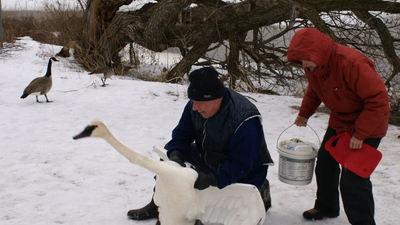
For more than four decades, Ontario volunteer Beverly Kingdon has devoted her life to helping bring one of North America’s most recognisable waterbirds back from the brink of extinction. After joining a provincial restoration programme in the early 1980s, Kingdon and her late husband, Ray, helped raise trumpeter swans for release into the wild. Her contribution is part of a remarkable conservation story: from just 69 birds recorded in the contiguous United States in 1932, the North American population has grown to more than 63,000. Her story was highlighted by The Weather Network in June 2026, while BurlingtonToday and the Trumpeter Swan Society have also documented the work of volunteers behind the recovery. The trumpeter swan, North America’s largest native waterfowl species, was once widespread across the continent. However, decades of commercial hunting for feathers, skins and meat, alongside the destruction of wetland habitats, caused its numbers to collapse. In Ontario, the species had disappeared by the late 19th century, with the last recorded bird shot at Long Point in 1886.
How a small breeding programme helped bring the swans back
The turning point came in 1982, when retired Ontario Ministry of Natural Resources biologist Harry Lumsden launched a provincial restoration programme. He sourced eggs and breeding birds from existing populations in Alaska and the Rocky Mountains, then enlisted landowners and volunteers to raise young swans in captivity before releasing them into suitable habitats.Kingdon and her husband became some of the programme’s earliest volunteers. Their involvement began in 1989, when Beverly responded to an appeal for support for the restoration effort. Lumsden encouraged the couple to build a pond and provide a safe environment for captive breeding pairs.They owned a 200-acre property in Chisholm Township, near North Bay, where they eventually raised young trumpeter swans for release. Their contribution was part of a wider network of private landowners, scientists and conservationists working to rebuild the provincial population.
The winter refuge where she continued her work
Much of Kingdon’s later conservation work was centred on LaSalle Park Marina in Burlington, along Lake Ontario. Its relatively sheltered waters provided an important winter refuge for trumpeter swans when surrounding areas froze.For years, she and other volunteers helped monitor the birds, protect them from hazards and support conservation efforts. Fishing equipment, discarded lead tackle and overhead power lines were among the dangers facing the swans. Young birds raised in captivity also needed to develop the skills required to forage and migrate successfully.One milestone came in 1993, when a swan named Pig Pen, born to captive-raised parents, became the first trumpeter in more than a century to migrate south and arrive at LaSalle Park. The development demonstrated that the restoration programme was beginning to produce birds capable of surviving beyond captivity.
A conservation success story, but challenges remain
The recovery has been substantial. According to Trumpeter Swan Conservation Ontario, the provincial population exceeded 3,000 birds in its 2025 census, with the population now considered self-sustaining. Across North America, estimates have risen to more than 63,000 birds, according to Ducks Unlimited.However, conservation work has not ended. Lead poisoning, habitat changes, pollution and disturbance continue to threaten wild populations. Researchers and conservation groups also monitor the birds’ health, breeding patterns and movements to ensure their recovery remains sustainable.In 2023, Kingdon and her late husband were publicly recognised at LaSalle Park, where commemorative signage was unveiled to acknowledge their contribution to the restoration programme. For Kingdon, the return of the trumpeter swan represents decades of volunteer work that helped repair damage caused by earlier generations. The birds that once disappeared from Ontario’s skies have returned, and her story is a reminder that long-term conservation often depends on individuals willing to devote years of their lives to protecting wildlife.