
After AI-driven markets such as Taiwan, Korea and parts of China attracted significant capital over the past year, investors are beginning to assess whether massive AI investments can generate sustainable returns, potentially prompting a rotation back into India.
At the same time, both investors argue that India’s long-term investment case will depend on addressing deeper structural issues. While stable oil prices, a resilient rupee, and strength in select manufacturing and healthcare businesses support the near-term outlook, questions about employment generation, competitiveness, and premium valuations relative to other emerging markets will need to be addressed for a sustained rally.
This is an edited transcript of the interview.Q: Indian markets have fallen less than many peers despite recent volatility. Has India’s time come, or does the AI trade continue despite the recent confusion?Paroda: I think the AI trade, especially as the US market is digesting these initial public offerings (IPOs), remains the key factor. Many of these companies will be able to raise capital. What is less clear is how they will perform in the aftermarket. If there is a wobble in the aftermarket, investors will begin questioning the capex assumptions going into next year.
So, the AI trade is heavily dependent on how these IPOs perform over the next month or so in the US market.
Q: Foreign institutional investor (FII) selling continues, with around ₹40,000 crore of net outflows this month. Yet small- and mid-caps continue to do well. How do you read this divergence?Chadha: Absolutely. If we look at the past two years, we first had the overhang of US tariffs, then the West Asia conflict, and over the last six months, the market narrative has largely been about the AI trade. Markets such as Korea, Taiwan and parts of China benefited at India’s expense.
What we are seeing now is some rolling over of the AI trade. These markets have done exceptionally well, and portfolios have become heavily skewed towards AI-related names. Ahead of the upcoming IPOs and fundraising activity, investors are stepping back and evaluating when they will start seeing returns on nearly a trillion dollars of Sansera Engineering.
As the AI trade takes a breather, India becomes a natural beneficiary, and that is where some of the market strength is coming from. Oil remains below $95 despite the West Asia conflict, which is positive. The work done on the rupee and foreign exchange reserves is also positive.
Longer term, however, the key issue remains competitiveness. AI is real. India has long benefited from the demographic dividend, but if job creation does not keep pace, does that dividend become a liability? Those are the questions investors are asking.
Q: Are you suggesting that the AI frenzy may pause, creating room for markets such as India to outperform?Chadha: Yes. Given the strong returns generated by the AI trade over the last six months, it is highly likely that it takes a breather.
Even in China, several leading internet companies and Association of Southeast Asian Nations (ASEAN) consumer internet names are down 30-40% year-to-date because the AI trade has sucked oxygen out of other sectors. As AI enablers pause, other parts of the market get some life again, and India stands to benefit.
The longer-term structural questions I mentioned earlier remain unanswered.
Q: So, with a stable rupee, softer crude prices and a moderating AI trade, can India outperform?Chadha: Over the next couple of months, yes, I think India can outperform even at the index level.
However, much of the action is happening beneath the index. In our portfolios, we own several mid-cap manufacturing companies and healthcare names. These are areas doing well.
We view this decade as somewhat similar to the 1990s, when conglomerates gave way to private banks and IT services companies. New businesses will emerge, and the composition of the index will change over the coming decade.
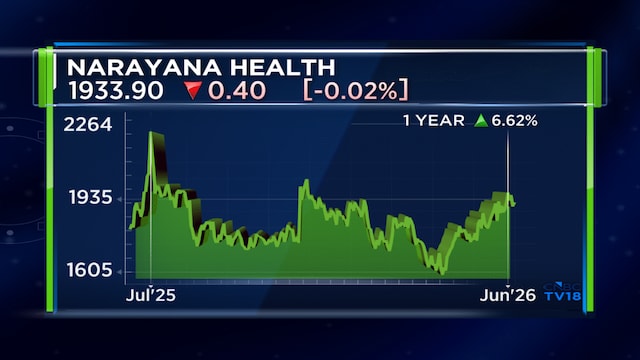
Q: Can you name a few stocks in your portfolio?Chadha: Some names disclosed in our fact sheets include Narayana Health, an auto ancillary company, and Infosys. We have been anchoring investors in Narayana Health since the early days in 2015.
 Q: India is also building significant data centre capacity. Are there investment opportunities emerging from that theme?Chadha: Yes. There are capital goods companies supplying to data centres and firms that are part of the broader data centre ecosystem. Those names should benefit from the ongoing build-out.
Q: How do you interpret the recent volatility across asset classes? Is it simply profit-taking or investors making room for large IPOs?Paroda: For large allocators, there is certainly a need to make room for large issues. AI has been sucking oxygen out of the market, and investors are reducing existing positions to create capacity for these IPOs.
Once the capex and fundraising phase is complete, the spotlight will shift to these AI companies. They will have to demonstrate revenue growth and margin expansion to justify current valuations.
Until now, many of these companies were private, and scrutiny was limited. As they enter public markets, investors will assess them more closely. That could create opportunities in non-AI segments as well.
India should benefit from this. Over the last two to three years, companies in Taiwan saw revenue growth accelerate from around 10% to 50-60%, largely due to AI. Indian companies continued growing in the high teens, but without an AI boost. If investors begin questioning the sustainability of AI growth, capital could return to India’s high-growth companies.
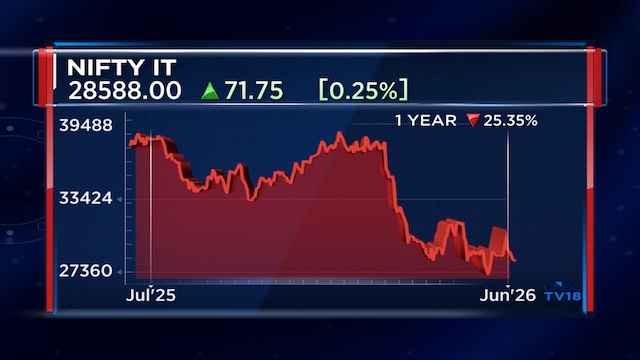
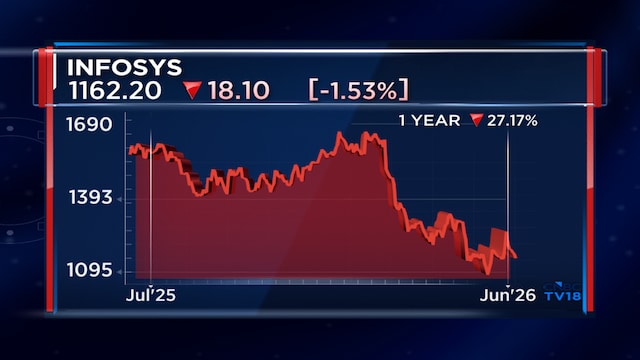
Q: If money does return to India, will it flow back to traditional IT companies?Paroda: We have been underweight IT because we believe AI is real. While companies such as Infosys can grow the AI-related portion of their business, we remain concerned about the legacy part of the business.
If companies like Infosys can demonstrate stronger top-line growth, those stocks can rebound. Over the next 12 to 18 months, we should get a clearer picture of whether Indian IT services companies can become meaningful participants in the AI story and deliver better growth.
 Q: Investors often question why India trades at such a large premium to other emerging markets. Does that come up in your discussions?Chadha: Absolutely. This comes back to the point about demographics. A favourable demographic profile is an advantage, but if employment generation is inadequate and new consumers are not being created, then investors will ask why India deserves such a premium relative to other markets where growth rates are improving.
Another question concerns competitiveness. Compare Indian companies with Chinese companies. Many Chinese businesses have achieved scale, are globally competitive in technology and trade at a fraction of the valuation, while returns on capital are improving.
Watch the full conversation here

These are legitimate questions. Beyond the short-term fluctuations in market indices, these structural issues need to be addressed if India is to sustain a long-term rally.
Catch all the latest updates from the stock market here