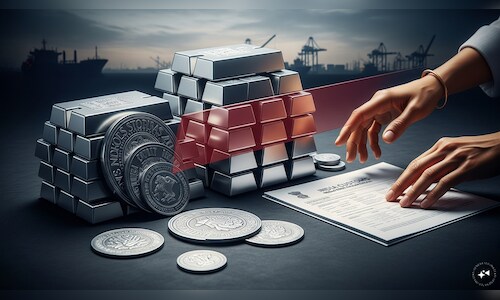
The move follows last week’s increase in import duties on gold and silver to 15% from 6%, part of a broader effort to contain precious metal inflows and support foreign exchange reserves amid elevated global commodity and oil-related pressures.
Under the new rules, imports of 99.9% pure silver bars and semi-manufactured forms will now require approvals. Together, these categories account for over 90% of India’s silver imports.
India meets more than 80% of its silver demand through imports. FY2025–26 shipments reached a record $12 billion, up sharply from $4.8 billion a year earlier, while April imports rose 157% year-on-year to $411 million, according to trade data.
Market impact
Market participants expect tighter availability in the domestic market, particularly for bullion products, with pricing likely to adjust quickly to the new supply structure.
Chirag Thakkar, chief executive of Amrapali Group Gujarat, said reduced inflows would tighten supply conditions and potentially push silver back into premium territory after a recent discount phase.
Expert view: Routed supply, wider spreads
Jateen Trivedi, VP Research Analyst – Commodity and Currency at LKP Securities, said the policy does not block imports but redirects them through authorised channels.
“The silver import restriction doesn’t mean India has shut the door, it means the entry is now guarded. Supply isn’t stopping, it is being channelled only through nominated agencies like RBI banks, DGFT-approved entities, jewellers via the bullion exchange,” he said.
He added that pricing dynamics will shift as physical availability tightens. “The MCX–LBMA spread is the key metric to watch, as it captures the premium domestic buyers are paying over global prices.”
On global markets, Trivedi said the impact on silver benchmarks should remain limited, though trade routes may adjust across regions. He highlighted alternative channels such as UAE CEPA TRQ potentially influencing regional pricing in hubs like Dubai and Hong Kong.
He also noted that listed refiners and silver ETFs in India could see pricing adjustments as they become key access points in a constrained physical market.
“The broader signal is not just about silver,” he said. “Two policy steps in a short span point to forex management. The objective is to reduce dollar outflows and support reserves. Silver is the channel, but the driver is external account stability.”
Trade profile
Silver is used across jewellery, investment products and industrial applications such as solar panels and electronics. Investment demand has strengthened in recent years, with inflows into silver ETFs rising to record levels.
India sources most of its silver imports from the UAE, Britain and China.