
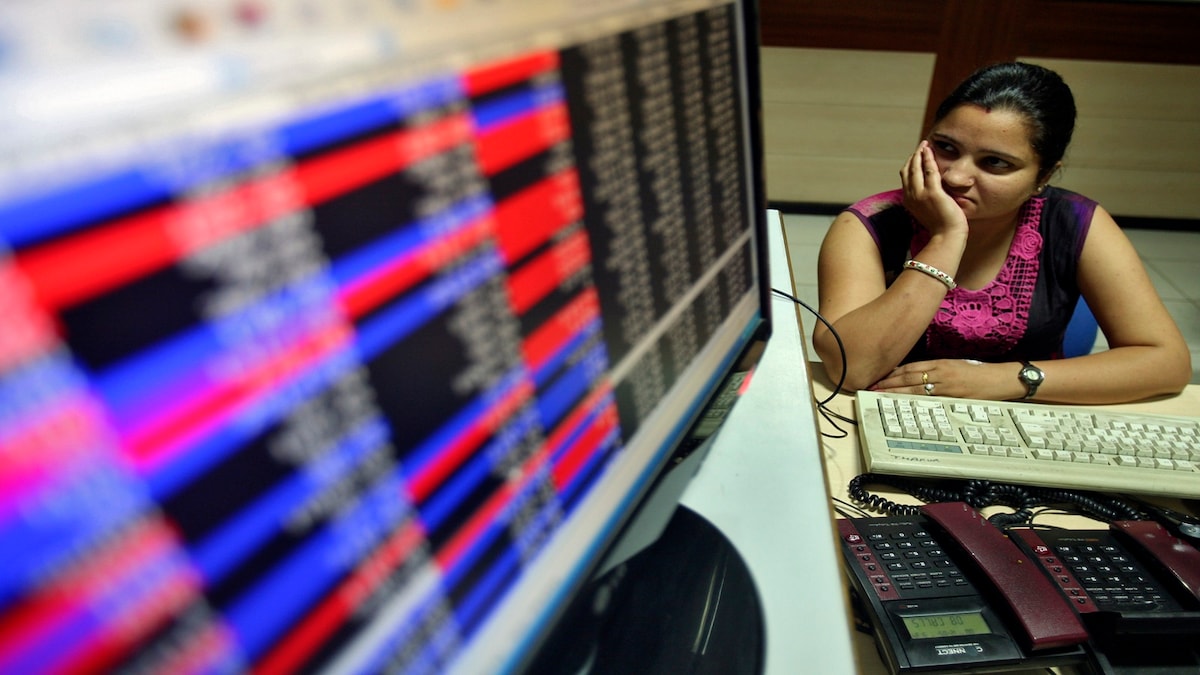
The world’s most populous nation is home to more than 130 million retail stock traders, with a median age of 32. Their appetite for higher-risk bets had fuelled an options trading boom, raising concerns about financial stability and spurring tighter rules from the authorities.
But there are signs speculative activity has migrated, with younger traders increasingly using broker financing instead of costlier options. Ishan Tanna, a 26-year-old Mumbai banker, is one such trader.
Tanna used to sell options but now borrows from brokers to boost returns on “swing trades.” by using margin trading facility (MTF), which lets investors borrow against purchased shares to buy more stock.
Leverage offered for the MTF is at an all-time high of about $15 billion across the nation, up 50% year-on-year. Though a fraction of India’s $602.9 billion cash equity market, it equalled roughly a day’s turnover, exchange data showed.
“The MTF segment typically attracts aggressive retail traders,” said Devarsh Vakil, head of prime research at Mumbai-based HDFC Securities, one of the top three brokers in the segment.
Size of such credit extended by his firm has more than doubled over the last 15 months, with Vakil noting that traders previously active in single-stock futures have increasingly migrated to MTF after tighter derivatives rules.
Tanna looks to benefit from short- to medium-term market moves, with leverage amplifying returns. He picks stocks in the Nifty 500 index and typically takes positions averaging ₹5 lakh.
Brokers in India charge investors 9-18% to fund their equity bets with top brokers planning to further reduce the rates to attract more clients, two market sources said.
LEVERAGE, BUT CAREFULLY
The repercussions from the changing landscape in the retail world are being felt across global markets. Deeply-leveraged retail investing has also sparked alarm in South Korea, leading to regulators moving to cool speculative fever.
“Parallels of India’s MTF boom with South Korea lies in the fintech-driven democratization of debt and the ’fear of missing out’ that plagued retail investors in both markets,” said Manishi Raychaudhuri, founder and CEO of Emmer Capital Partners.
The shift in India comes as its markets regulator — the Securities and Exchange Board of India — has prioritised deepening the country’s cash equities while nudging traders away from equity derivatives.
Infosys has proposed widening funding avenues for leveraged cash trades and it is additionally considering allowing more instruments as collateral, internal documents reviewed by Reuters show.
However, the regulator remains wary of excess leverage, two regulatory sources said, and in May it rejected a proposal from broker bodies to reduce collateral requirements, internal documents showed.
“Initial margins collected by brokers from clients prevent excessive leverage and avoid systemic risk build up,” SEBI said in the document.
SEBI did not respond to Reuters request for comments on expanding the segment and whether the regulator sees any emerging risks.
To be sure, options still offer far higher leverage, allowing large positions with relatively little upfront capital.
Margin trading remains far smaller than the 99.5 trillion rupees deployed in derivatives but is expected to be among the fastest-growing segments.
“The risks are obvious – while margin trading enhances profits, it inflates losses as well,” Raychaudhuri said.
”Particularly during times of enhanced volatility in the market, margin trading raise the market’s volatility further.”
BOOMING BUSINESS
Ashish Nanda, chief digital business officer, at Kotak Securities, the second largest broker in the segment, said the firm expects MTF to grow at a compounded annual rate of 20-25% while derivatives (segment) to grow at about 10%.
Indian retail traders using MTF have rallied around India’s beaten-down IT services sector.
HDFC Bank and HDFC Bank, both down more than 30% this year, are among the most heavily bought stocks using MTF, alongside banking heavyweight HDFC Bank, per exchange data. All three stocks were most heavily sold by foreign investors.
Such contrarian bets could prove to be among the first tests of whether growing margin trades will add to the volatility in India’s markets and whether retail investors can withstand the risks of doubling down with borrowed money.
Siddhartha Gadhwal, 29 year old, Indian-startup founder, plans to use MTF to take an outsized bet on India’s IT stocks.
”The sector has crashed but it’s going to recover,” said Gadhwal, who plans to combine about 300,000 rupees($3,119.72) of his own money with leverage to build a position of roughly 2 million rupee ($20,798.13) on India’s IT services sector.
($1 = 96.3650 Indian rupees)