
India’s refining sector is drawing global attention as the country expands capacity, boosts fuel exports and positions itself to process a wider range of crude grades, including discounted Venezuelan oil.
The focus on India’s refining strength intensified after US Secretary of State Marco Rubio visited Reliance Industries‘ Jamnagar refinery, highlighting its scale and strategic importance.
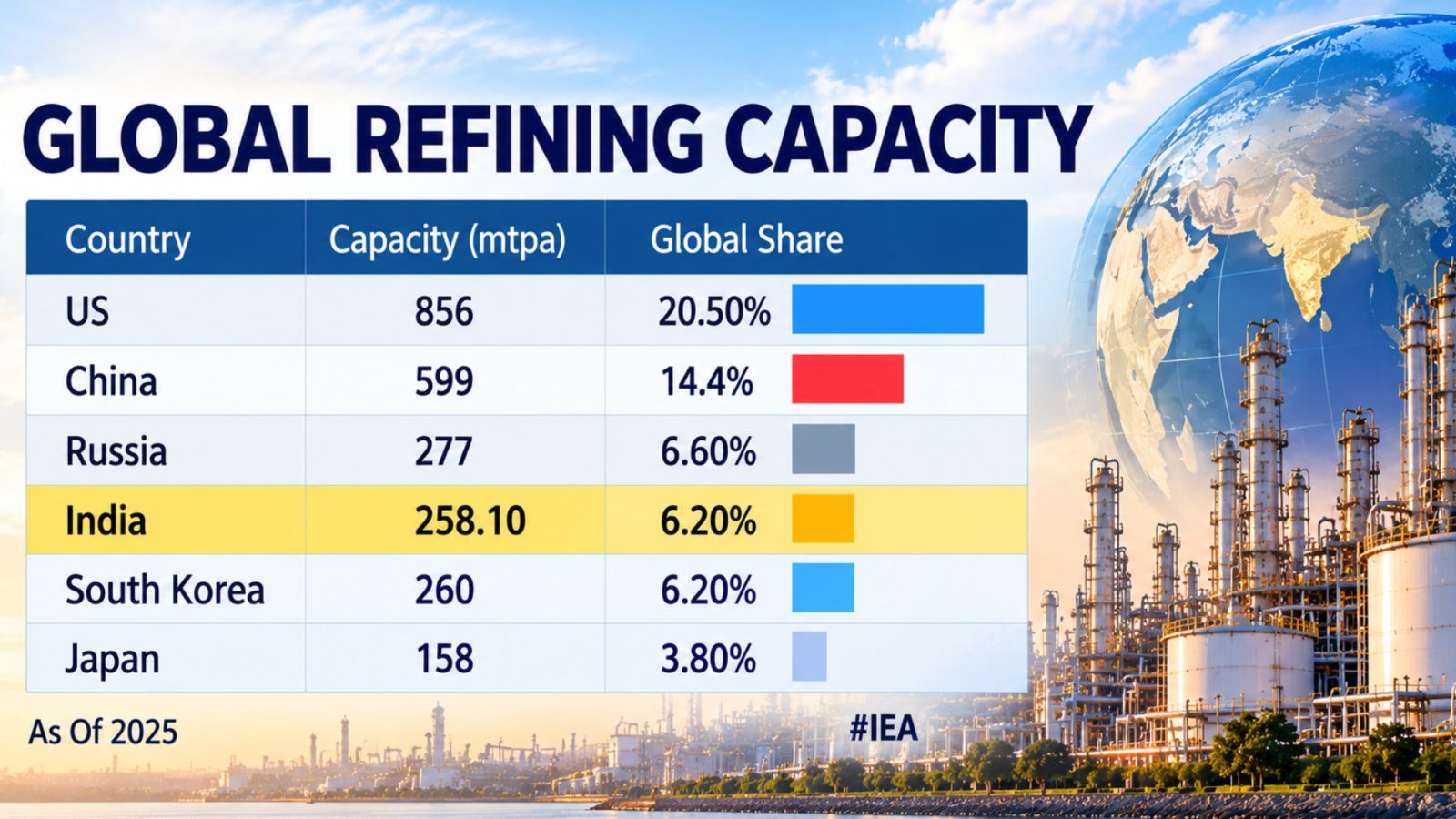
India imports nearly 90% of the crude oil it consumes, but has built one of the world’s largest refining industries. According to International Energy Agency (IEA) data, India has the world’s fourth-largest refining capacity at 258 million tonne per annum (mtpa), behind the United States, China and Russia. This accounts for about 6.2% of global refining capacity of 4,170 mtpa.
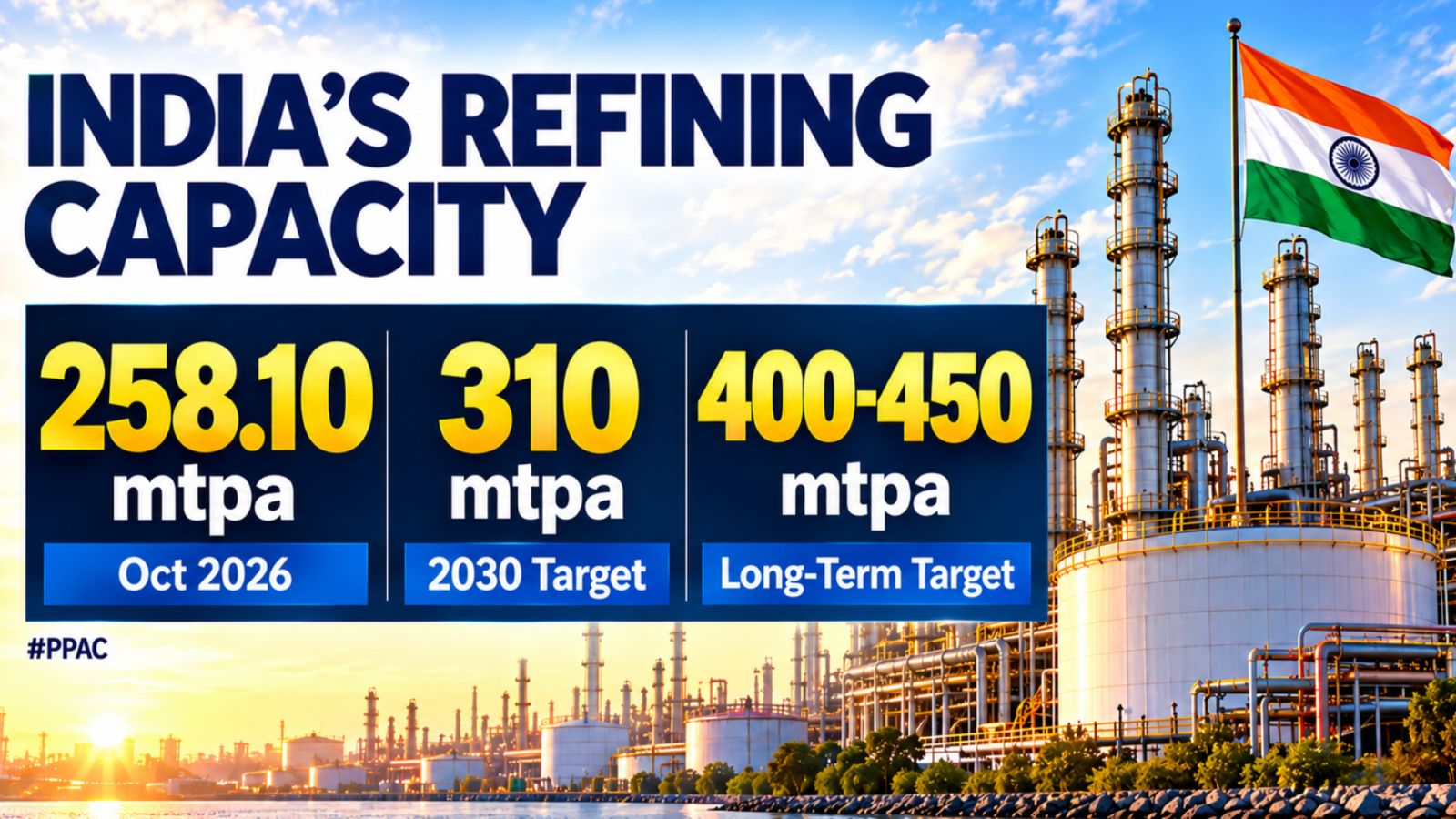
The government plans to increase capacity to 310 mtpa by 2030, with a longer-term goal of 400-450 mtpa.
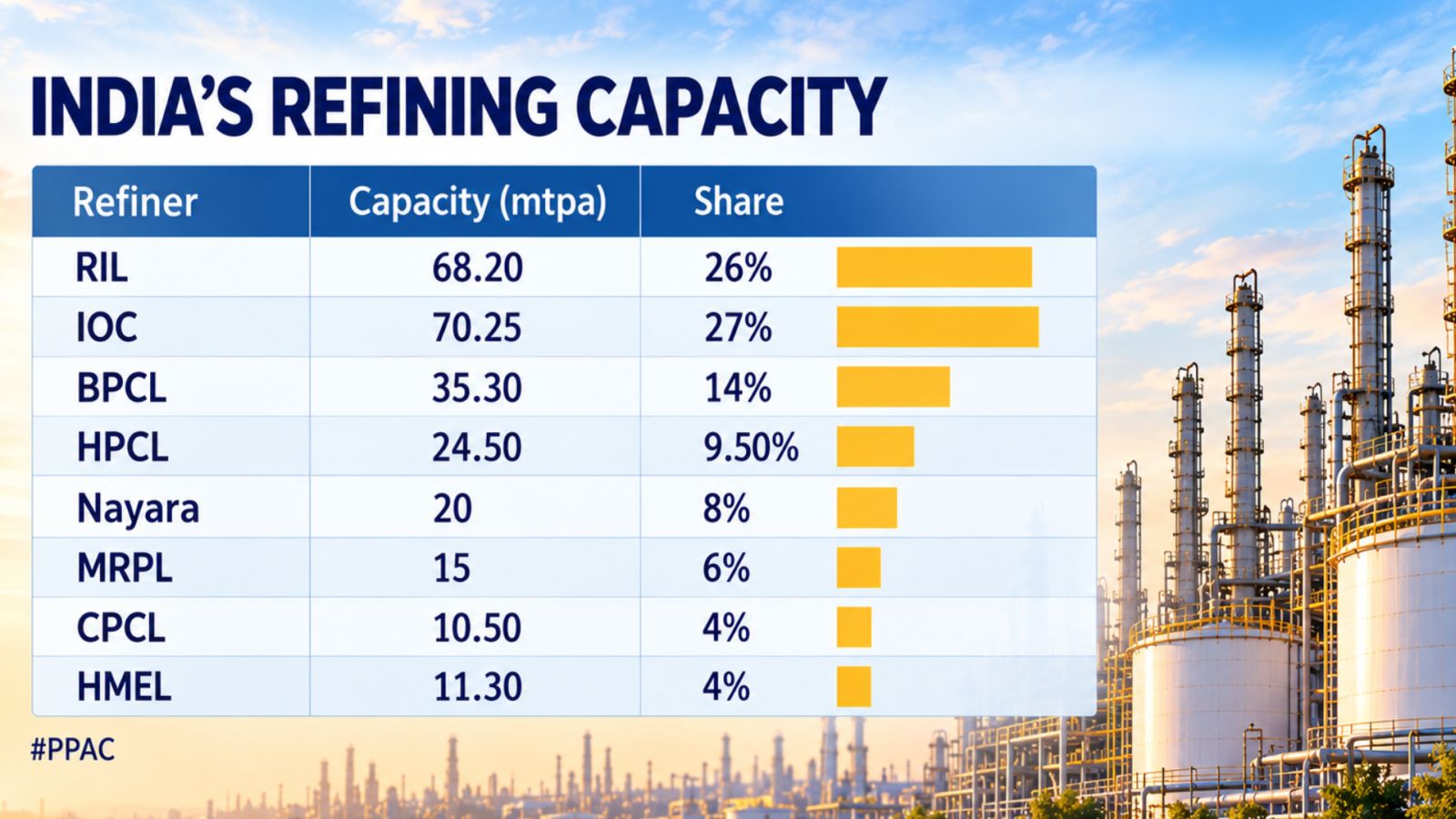
At the centre of India’s refining story is Reliance Industries’ Jamnagar complex, which can process more than 1.4 million barrels of crude per day. According to Jefferies, the complex is one of the world’s largest and most complex single-site refineries, with capacity equivalent to around 1.5% of global refining capacity.
Rubio’s visit comes as Venezuela raises crude production and India evaluates opportunities to source more oil from the country. Venezuelan crude is heavy and sour, making it difficult to refine for many plants. However, highly complex refineries such as Jamnagar can process these barrels efficiently, potentially turning discounted crude into a refining-margin advantage.
According to Energy Intelligence, Reliance is currently the only Indian refiner capable of processing large and sustained volumes of Venezuelan crude at Jamnagar. In May 2026, Venezuela accounted for nearly 10% of India’s crude imports.
The economics, however, remain dynamic. Venezuelan crude was reportedly offered at discounts of about $16 per barrel to dated Brent and Russian Urals in March 2026, although that discount has narrowed in recent months. Long shipping distances from South America, sanctions-related uncertainty and differences in crude quality complicate the economics. An S&P assessment in January 2026 cautioned that Venezuelan crude was not a like-for-like replacement for Russian barrels and that switching supplies might not be favourable for India from a cost perspective.
India’s growing refining footprint is also strengthening its position in global fuel markets. According to the IEA, Russian refinery throughput fell to 3.8 million barrels per day in September, its lowest level in 20 years and 30% below a year earlier. Kpler data showed India’s diesel exports increased to 596,000 barrels per day in September, compared with an average of 482,000 barrels per day during 2026, helping meet global demand.
With refining capacity set to expand further and export opportunities increasing, India’s role in the global energy market is expected to grow. How much of that opportunity it captures will depend on crude prices and discounts, shipping costs, sanctions and refiners’ ability to process different crude grades efficiently.
For more, watch the accompanying video

India’s refining capacity expansion puts Jamnagar at centre of global energy trade
Catch all the latest updates from the stock market here
NOTE TO READERS
Disclosure: Network18, the parent company of CNBCTV18.com, is controlled by Independent Media Trust, of which Reliance Industries is the sole beneficiary.