Sports unite the world. And there are no two ways about that. However, not many countries preserve their athletes and their major achievements like Israel does. A simple visit to the World Jewish Sports Museum would leave you spellbound by the attention to detail and the way the country truly appreciates its sportspersons. The tour of the Museum lasts about 45 minutes to 1 hour, and by the time one is done with walking through a gallery of trophies and sporting memorabilia, one realises how the tour is more than just achievements, it is about knowing the history of Israeli sport and how the athletes have always been a language of identity, resilience and nationhood.
Most museums around the world celebrate victories; however, this one on the outskirts of Tel Aviv celebrates journeys and the hardships athletes have faced throughout their careers.
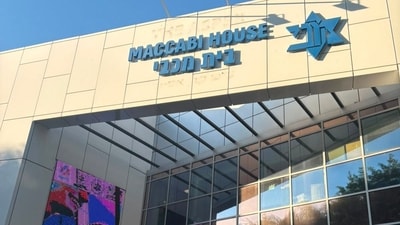
Located within the Kfar Maccabiah complex near Tel Aviv, the World Jewish Sports Museum is the first institution in the world devoted completely to documenting and highlighting Jewish sporting history. The Museum, which was opened four years back in 2022, traces the astounding story of Jewish athletes and sporting organisations across the continent. Every gallery inside the building asks the same question in different ways: what can sport reveal about people?
The answer is hidden in the hundreds of carefully curated artefacts. Olympic medals, jerseys, trophies, and athletes’ personal belongings are displayed as chapters. As soon as the visitors enter the building, they can see the windsurfing board with which Gal Fridman won Israel’s first Olympic gold medal in Athens in 2004.
Moreover, the Museum features competition memorabilia from judoka Yael Arad (Israel’s first Olympic medal winner at the 1992 Barcelona Games), historic trophies won by Maccabi Tel Aviv, and treasured possessions belonging to internationally celebrated Jewish athletes from several countries.
The museum explains the social and historical circumstances in which that excellence emerged. One gallery examines the role of Jewish sports clubs in Europe before the Second World War. Another explores the lives of athletes during the Holocaust, presenting deeply moving accounts of individuals whose sporting abilities sometimes became instruments of survival, while reminding visitors of the countless sporting careers that were extinguished by persecution.
The role of technology
Technology also plays an equally important role inside the museum. Interactive digital installations, films and multimedia presentations ensure that visitors do not simply read about the past, but they experience it. Perhaps the greatest achievement of the museum lies in demonstrating that sport is not merely about competition. It is about memory.
Interactive touchscreens allow visitors to browse biographies of athletes from different countries and generations. Digital maps trace the spread of Jewish sporting clubs across continents. Archival footage recreates historic competitions, while multimedia installations immerse visitors in defining moments of sporting history.
Recent displays have explored how Israeli athletes and sporting communities responded during periods of national crisis, highlighting sport’s ability to unite people even in the most difficult circumstances.
The World Jewish Sports Museum succeeds because it understands that artefacts acquire meaning only when they are connected to people and context. A medal without a story is merely metal. A jersey without a narrative is simply cloth.
How India can learn
The Museum in Israel should be an eye-opener for India and show how much more the nation needs to do for its athletes. The country today is producing Olympic medallists at an unprecedented pace, and young athletes continue to redefine what is possible.
Ironically, even as Indian sport moves confidently into the future, much of its past remains unaccounted for. Yes, there are archives maintained by federations, but there is no single institution that tells the complete story of Indian sport with the scale, imagination and accessibility it deserves.
Milkha Singh, PT Usha, Anjali Bhagwat, Abhinav Bindra, Gagan Narang, and the hockey teams of the past deserve a lot more. Imagine a museum in India whose galleries house Dhyan Chand’s hockey stick, Milkha Singh’s running spikes, PT Usha’s racing bib, Abhinav Bindra’s Olympic equipment, Mary Kom’s boxing gloves, Anjali Bhagwat’s rifle, and Neeraj Chopra’s javelin, alongside the cricket bats of Indian legends.
India’s sporting heritage deserves this kind of storytelling. Sporting achievements often disappear from public memory within days of the next tournament. Museums resist that memory loss.
If the country wishes to become not only a sporting power but also a nation that values its sporting history, it must begin preserving memories with the same seriousness with which it pursues medals.
After all, trophies celebrate moments. But stories build a strong sporting culture.