
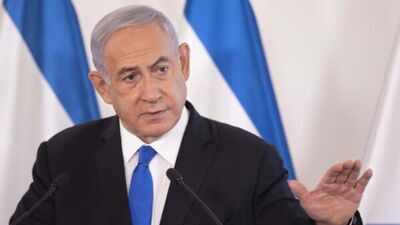
Israelis will head to the polls on October 27 in the country’s first general election since the October 7, 2023, Hamas attack that triggered a multi-front war in Gaza, Lebanon and Iran.The vote is shaping up to be one of the most consequential in Israel’s recent history, with Prime Minister Benjamin Netanyahu seeking another term despite polls suggesting his coalition could lose power.Yet Israel’s fragmented political system means pre-election surveys rarely tell the full story, and coalition negotiations after the vote often determine who ultimately becomes prime minister.Here’s a look at what the polls show, how Israel’s electoral system works, who Netanyahu’s main challengers are and what’s at stake in the election.
What do the polls show?
According to news agency Reuters, successive opinion polls indicate Netanyahu is heading into the election on the back foot, with surveys predicting his bloc could fall short of retaining power.The October 7 Hamas attack dealt a major blow to his image as Israel’s security leader, while public confidence in his leadership remains weak despite broad support for military operations against Hamas, Hezbollah and Iran.At the same time, the polls do not point to a clear alternative government. Israel’s coalition-based politics means even a party that finishes first may struggle to form a majority, leaving smaller parties in a powerful bargaining position.Netanyahu, Israel’s longest-serving prime minister, has repeatedly defied political setbacks in the past, making coalition arithmetic just as important as the popular vote.
How do elections work in Israel?
Israel elects the 120-member Knesset through a nationwide system of proportional representation. Rather than voting for individual candidates, Israelis cast ballots for political parties, which receive seats in proportion to their share of the national vote. Any party crossing the 3.25 per cent electoral threshold wins representation in parliament.No single party has ever secured an outright majority in the Knesset, making coalition governments the norm.After the results are declared, parties negotiate alliances to reach the 61-seat majority needed to govern. As a result, smaller parties often become kingmakers, extracting policy concessions or cabinet positions in return for their support.The upcoming election is also unusual because Netanyahu’s current Knesset is among the few in Israeli history to complete its full four-year term after years of political instability between 2019 and 2022.
Who are Netanyahu’s main rivals?
Former military chief Gadi Eisenkot has emerged as one of Netanyahu’s strongest challengers. Having lost a son during the Gaza war, Eisenkot has projected himself as a security-focused leader while portraying himself as a political outsider with a reputation for integrity.Former prime ministers Naftali Bennett and Yair Lapid are also seeking a return to power.The two previously joined forces to oust Netanyahu in 2021 by assembling a diverse coalition that included liberal, conservative and, for the first time, an Islamist Arab party. That government lasted 18 months before collapsing.Another prominent challenger is former defence minister Avigdor Lieberman, once a close Netanyahu ally.Lieberman has since become one of the prime minister’s fiercest critics, accusing him of being too soft on Hamas before breaking with his government.Netanyahu’s own alliance includes his Likud party, Bezalel Smotrich’s Religious Zionism, Itamar Ben-Gvir’s Jewish Power and support from ultra-Orthodox parties, while the opposition also includes Arab parties and the left-wing Democrats led by former general Yair Golan. Party lists can still change before the September nomination deadline.
What are the key issues in the election?
October 7 accountability: Opposition parties are demanding an independent commission to investigate the failures that allowed Hamas’ October 7, 2023, attack, arguing that accountability should be the next government’s first priority.Netanyahu’s government has rejected that approach and instead backed a politically appointed inquiry, while also facing scrutiny over its past policy toward Qatar, which had provided financial support to Gaza.National security: Israel’s military strategy has undergone a major shift since October 7, with prolonged operations in Gaza, Lebanon, Syria, the West Bank, Iran and against Yemen’s Houthis replacing the country’s traditional doctrine of short wars.The sustained deployments have intensified debate over military readiness, manpower shortages and the long-term economic and diplomatic costs of fighting on multiple fronts.Religion and military service: Mandatory military service for ultra-Orthodox Jews remains one of the country’s most divisive political issues. Netanyahu’s allies favour preserving broad exemptions for religious students, while most opposition parties want to end them. The debate has widened into broader questions over the role of religion in public life and Israel’s national identity.Cost of living: Although security dominates the campaign, economic concerns remain central for many voters. Israelis continue to grapple with high living costs, expensive housing and rising household pressure.Defence spending has surged since 2023, adding another layer to the debate over balancing national security with domestic priorities