
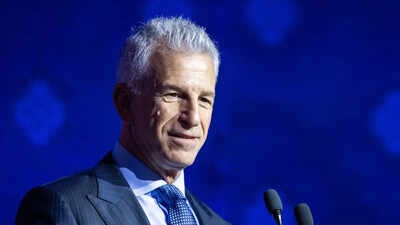
Israel is showing little sign of backing down from its threats of another military confrontation with Iran, with former Mossad chief David Barnea now openly calling for a third war to topple the Islamic Republic’s regime.As caretaker Prime Minister Benjamin Netanyahu reportedly pushes US President Donald Trump for fresh strikes, Barnea has argued that Israel must seize the right moment to bring down Tehran’s leadership, even if it means going to war again.Former Mossad director David Barnea, speaking at the ELNET conference in Jerusalem on Monday, said Israel should be prepared for another war against Iran, arguing that a diplomatic agreement with Tehran would never hold.He said Iran’s nuclear ambitions remained fundamentally military in nature and that bringing down the Islamic Republic’s regime was the only way to permanently eliminate the threat.“We need to act with speed and determination in order to bring about the fall of this regime. If this means going to war again, then that is what we need to do,” Barnea said.Asked when Israel should act, he replied, “My answer is at the moment when it is possible.” He added that the decision to go to war involved weighing multiple factors and that Israel should strike when circumstances allow.Barnea also warned that a nuclear-armed Iran would threaten countries beyond Israel, saying, “It is today against Israel, tomorrow against Europe.”The calls for renewed military action have also exposed divisions within Israel over the urgency of another offensive.Netanyahu has reportedly told senior ministers and security officials that an operation against Iran is “unavoidable” and is pressing Trump to support a fresh campaign.According to Channel 13, an unnamed senior Israeli military officer said Israeli and US central command had already shared and approved operational plans, with the timing now dependent on Trump’s decision.However, Netanyahu’s position is being challenged by Gadi Eisenkot, leader of the Yashar party and a former IDF chief of staff. Speaking at a party meeting on Monday, Eisenkot said he did not see an immediate Iranian threat that required military action before a new government was formed.“I do not currently see a direct and immediate threat to the State of Israel that requires action before a government is formed,” he said, according to Channel 12.Eisenkot identified Iran’s remaining stockpile of 440 kg of enriched uranium as the country’s most serious nuclear threat, arguing that Israel should focus on ensuring it is destroyed or removed.Meanwhile, Trump has shown little appetite for immediately approving another military campaign, despite mounting pressure from Netanyahu.In an interview with Axios on November 19, the US president said he was “not rushing into any decision” on Iran and indicated that he would revisit the possibility of fresh strikes after the beginning of the new year. Trump is weighing whether to give the ongoing naval blockade and economic pressure more time to force Tehran into concessions.However, the military option remains on the table. In an interview with Fox News on Sunday, Trump said he was inclined to order fresh strikes against Iran after the New Year if negotiations failed to produce an agreement.He also issued a warning to Tehran over a possible attempt to breach the US naval blockade, saying, “I hope they do, they’ll all be at the bottom of the sea like the rest of the navy.”The difference in approach has left Israel pushing for earlier military action while Washington weighs diplomacy, economic pressure and the risks of another full-scale confrontation.