
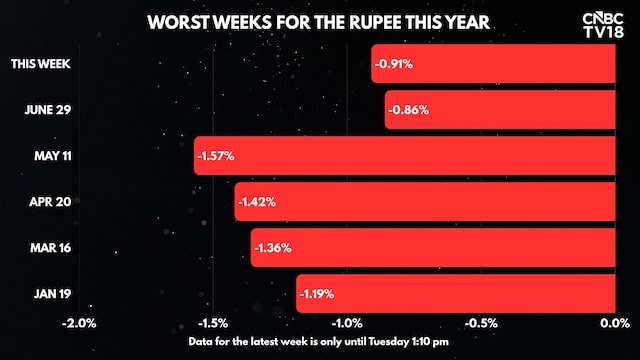
The changes are based on the closing price on the last trading day of the week.
The immediate trigger for the rupee’s weakening is clear: the resumption of hostilities in West Asia.
It’s interesting to note that the first time the rupee fell below 96 to the American greenback, crude oil prices were expected to rise to $120 a barrel. Brent Crude is currently at $81.4 a barrel, but the rupee has slid back below 96.16 to the dollar.
Markets caught off guard
Currency dealers say the speed of the rupee’s decline reflects how quickly market positioning has changed.
According to SBI Research, India has attracted at least $15 billion of capital inflows over the past month. Foreign portfolio investors have invested $7.1 billion since June 8, with nearly 87% of that (around $6.2 billion) flowing into debt markets after the government’s tax changes. Yet the rupee didn’t recover much, and the trade has started to unravel.
Many importers had stayed away from hedging, expecting the rupee to strengthen further as crude prices cooled and foreign inflows gathered pace. Exporters, meanwhile, were comfortable selling dollars forward, betting that the currency would remain stable.
Moreover, the July 13 meeting
between Finance Minister Nirmala Sitharaman, RBI Governor Sanjay Malhotra, and executives from the country’s top banks was interpreted by some dealers as a sign that policymakers were monitoring the pace of foreign currency inflows. There was no official statement linking the discussions to the rupee.
With oil prices surging again and the dollar regaining strength, importers are rushing to buy dollars to lock in costs. At the same time, exporters have also turned buyers amid fears of further volatility. The simultaneous scramble for dollars has intensified pressure on the domestic currency.
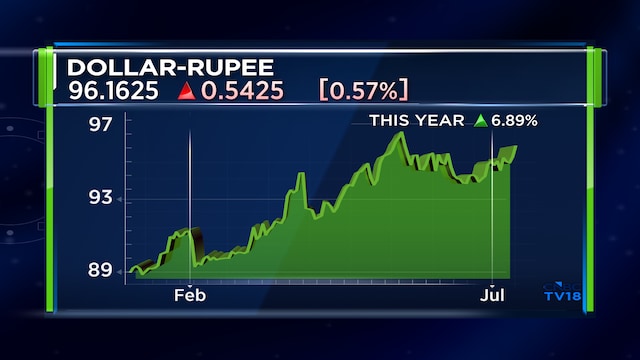
Data as of 1:48 pm on July 14
The answer may partly lie in the Reserve Bank of India’s intervention strategy
The central bank had built sizeable short forward positions earlier this year while managing volatility in the currency market.
Data available until May showed the RBI had a net short position of around $20 billion in one-month forward contracts. As commodity prices eased in late June and early July, a significant part of those positions appears to have been unwound, according to SBI Research.
Essentially, the RBI absorbed the incoming dollars rather than allowing the rupee to appreciate sharply.
What could determine the rupee’s next move?
For now, traders say the rupee’s trajectory will depend on whether geopolitical tensions ease, where crude oil prices settle and whether the recent flight to the US dollar persists. If oil prices remain elevated and investors continue to seek safety in dollar assets, pressure on the rupee could continue.
On the other hand, steady foreign capital inflows, the much-awaited deposits from non-resident Indians (NRIs) into the FCNR(B) accounts, and the RBI’s active management of the foreign exchange market could help contain volatility.
Read more: Five charts explain how India-Australia trade has changed since PM Modi’s last visit