
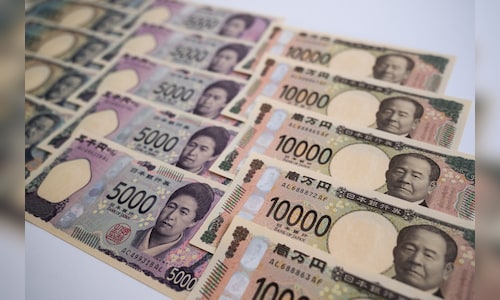
According to a Bloomberg report, which cited the reserve data released by the Japanese finance ministry earlier this month, the country’s foreign security holdings in May slumped by $77.11 billion from April to $1.31 trillion.
The drop in holdings of foreign reserves, which was the largest on record, was attributed to ministry intervention in the currency market to salvage a falling yen, among other factors.
Ministry intervention in the month until May 27 was a record 11.73 trillion Yen ($73.4 billion).
The security sales may sour matters for Washington, which has recently become more focused on the stability of the US government bonds. US Treasury Secretary Scott Bessent had earlier this year cautioned that the volatile Japanese bond market could spill over into Treasuries.
Japan is the largest holder of US foreign securities.
About 70% of Japan’s foreign reserves are estimated to have been invested in US Treasuries, according to market participants. The Federal Reserve’s custody holdings of Treasuries also showed that Japan likely used US securities to fund its recent yen purchases.
A senior official from the Japanese finance ministry, speaking on the sidelines of the Group of Seven meeting of finance ministers in Paris last month, told Bloomberg that the authorities were aware that selling their holdings of US government bonds could lead to a decline in the yen.
“Japan went ahead with the intervention. So, it’s natural to interpret that to mean Washington is willing to tolerate some risk of higher US yields,” Koichi Fujishiro, an economist at Dai-ichi Life Research Institute, told Bloomberg.
While speaking at the parliament earlier this month, the country’s finance minister, Satsuki Katayama, said that bold actions — which in normal parlance refers to foreign exchange (FX) intervention – were permitted under the joint FX statement held by both countries.
She warned speculators that appropriate action would be taken in response to currency movement.
The report indicated that foreign currency reserves had fallen to $1.09 trillion by the end of May, which provides an ample amount for Japan to extract from if it needed to further intervene.
The foreign currency deposits remained stable at $162 billion.
The price of 10-year treasuries declined starting at the end of April, hinting that a decline in the valuation of Treasury holdings would contribute to the fall in foreign securities.
Fujishiro said that if Japan were to sell a large number of 10-year Treasuries, it could disrupt supply and demand in the market, sparking attention from Washington.
However, the US has not been much vocal about Japanese actions to support the Yen; Bessent had instead declared a volatile foreign exchange as undesirable, signalling approval of Japan’s measures aimed at fixing disorderly market moves.
He further expressed his confidence in Bank of Japan (BOJ) Governor Kazuo Ueda, hinting that the US might want increased Japanese interest rates to assist in lifting the yen.
The BOJ lifted its benchmark interest rate by 25 basis points (bp) to 1%, the highest level since 1995. The rise aimed to fight rising inflation caused by skyrocketing fuel prices amid tensions in the Middle East.
The central bank is expected to further hike the rates in December this year.
In 2024, Japan spent around $100 billion to support the Yen in two phases: first from late April to early May and second in early July. The BOJ raised rates towards the end of July.
However, higher borrowing costs alone may not be sufficient to alleviate the pressure on the yen, which could warrant further government intervention if the yen came under further strain.
The yen was trading at 161.65 against the dollar, almost a four-decade low at the close of trading in Tokyo on Monday, June 22.
Washington’s view on Tokyo’s actions could be revealed later this month when the US Treasury Department publishes its semi-annual foreign exchange report.
In its foreign exchange report released in January, Japan was listed among ten economies whose currency practices and macroeconomic policies merited scrutiny on its monitoring list of major trading partners.
“I think Washington also views excessive yen depreciation as undesirable,” said Fujishiro, adding that the US viewed a weak Yen as requiring repeated government intervention and hence larger sales of US Treasuries.