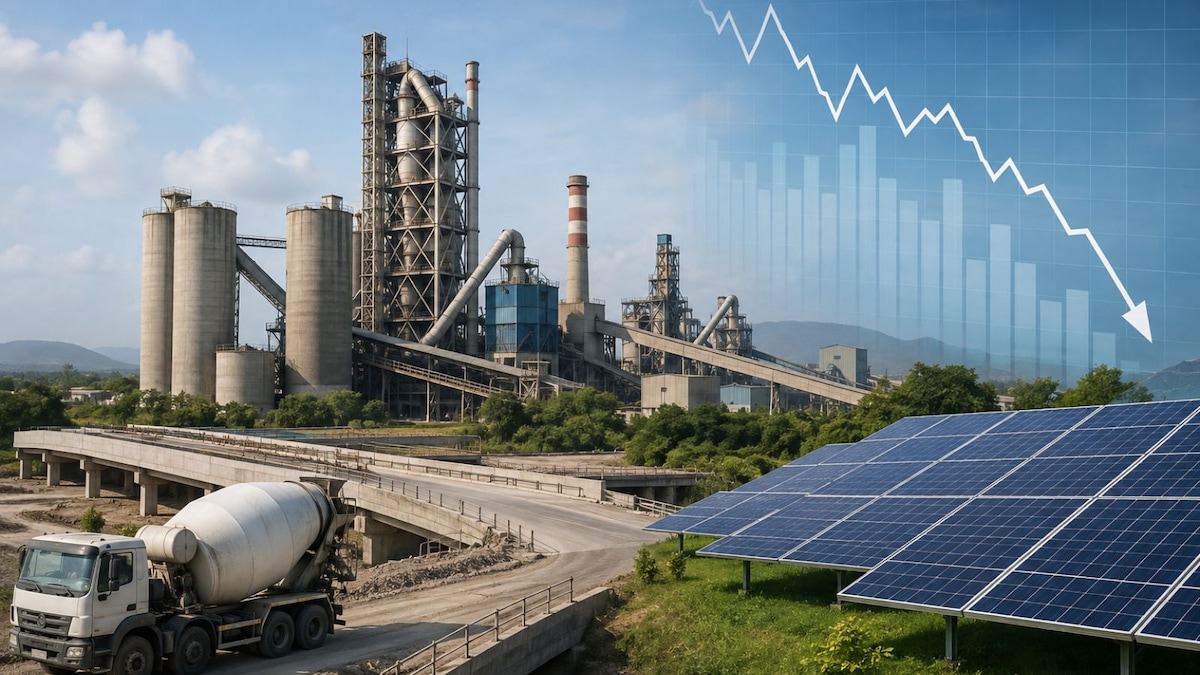
The cement manufacturer posted a net profit of ₹108 crore for the quarter ended June 30, 2026, down 28.1% from ₹150 crore in the corresponding quarter last year.
Revenue from operations, however, increased 9.4% year-on-year to ₹1,905 crore from ₹1,741 crore, indicating that the company recorded higher sales during the quarter despite the pressure on earnings.
The decline in profit was primarily driven by weaker operating performance. Earnings before interest, tax, depreciation and amortisation (EBITDA) fell 16.9% to ₹258.7 crore from ₹311.2 crore in the year-ago period.
EBITDA margin, a measure of operating profitability, narrowed to 13.6% from 17.9% a year earlier. The decline indicates that operating costs increased at a faster pace than revenue growth during the quarter, impacting the company’s ability to convert higher sales into operating profit.
The performance reflects the broader challenges faced by cement manufacturers, where demand growth has been accompanied by pressure from input costs, particularly fuel and energy expenses.
Agrani Cement investment update
JK Lakshmi Cement also provided an update on its investment in Agrani Cement.
The company said the Mine Developer and Operator (MDO) contract for limestone mines in Assam was cancelled by Assam Mineral Development Corporation Ltd (AMDCL) during FY26.
Following the cancellation, JK Lakshmi Cement had derecognised its investment and the related mining rights in its FY26 financial statements.
The company said it has initiated legal proceedings to recover the ₹130 crore paid under the transaction and has filed a petition before the Delhi High Court.
JK Lakshmi Cement said it remains confident of recovering the amount based on legal advice and its assessment of the transaction documents.
Expansion plans remain a key focus
The company continues to invest in expanding its manufacturing capacity and strengthening logistics infrastructure.
JK Lakshmi Cement said it is constructing a railway siding at its Durg cement plant at an estimated cost of ₹325 crore. The project is being funded through ₹225 crore of debt, with the balance financed through internal accruals. The first phase of the railway siding has already been completed.
The company is also undertaking a major capacity expansion at the Durg facility.
The expansion includes the addition of a 2.3 million tonnes per annum (MTPA) clinkerisation line and three grinding units with a combined cement capacity of 4.6 MTPA.
The project, estimated to cost ₹3,000 crore, will be funded through a mix of debt and internal resources and is expected to be completed by March 2028.
The expansion is expected to strengthen the company’s production capacity and support future growth as demand for cement continues to be driven by infrastructure development, housing and construction activity.
Renewable energy investments gain momentum
JK Lakshmi Cement is also increasing its focus on sustainability and reducing dependence on conventional energy sources.
The company said it is implementing a project to increase the Thermal Substitution Rate (TSR) at its Sirohi cement plant from 4% to 16% in a phased manner. TSR refers to the replacement of traditional fossil fuels with alternative fuels in cement manufacturing.
Renewable power accounted for 49% of the company’s power mix during the quarter.
Separately, the company’s board approved an investment of up to ₹20.5 crore in STLC RE 1 Ltd, a special purpose vehicle created for renewable energy procurement under the group captive model.
Through this investment, JK Lakshmi Cement will participate in the development of a 29 MW AC/42 MWp DC solar power plant along with a 28 MWh Battery Energy Storage System (BESS) for its integrated cement plant at Sirohi, Rajasthan.
The company will acquire at least a 26% equity stake in the SPV by December 31, 2026.
Outlook
JK Lakshmi Cement said cement demand is expected to remain supported by continued infrastructure spending and institutional project activity.
However, the company highlighted that volatility in fuel prices remains a key challenge. Geopolitical tensions in West Asia have contributed to uncertainty around crude oil and pet coke prices, which are important inputs for cement production.
Despite these near-term challenges, the company said the long-term outlook for the cement sector remains positive, supported by healthy demand fundamentals, capacity expansion opportunities and efforts to improve operational efficiency.
The company continues to focus on balancing growth investments with cost optimisation initiatives to improve profitability over the long term.
Also Read: Navin Fluorine Q1 profit doubles to ₹243 crore as revenue, margins surge