
Arvind Tiku Chairman and Founder of Juniper Green Energy said, “We are the only company probably out there with a mixture of about 83% of wind, solar, wind-solar hybrid (WSH), and firm & dispatchable renewable energy (FDRE). We are only 17% of plain vanilla solar, because of which we think that we have got better pricing. Our payment cycle is just 21 days. We have just carved a niche out there to be a high impact a player in the industry.”
According to the management, this mix allows the company to secure better tariffs and maintain shorter payment cycles.
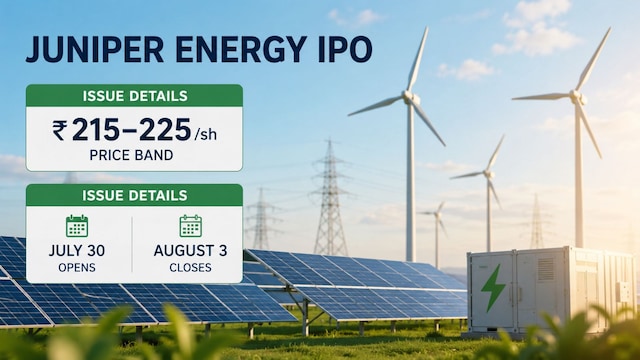
The company, which plans to raise ₹1,800 crore through its initial public offering, expects its operational capacity to increase from around 2.4 GW currently to 6 GW by the end of FY28. It is targeting 10 GW of capacity by FY30 as more of its contracted projects are commissioned.
The company also expects demand for FDRE projects to rise as power buyers increasingly seek reliable renewable electricity beyond daylight hours. These projects combine solar, wind and battery storage to provide power when demand is highest, particularly during the evening.
Chief Executive Officer and Whole Time Director Ankush Malik said the company has already doubled its operational capacity over the past year and remains on track to meet its expansion plans. “We expect to reach the 6 gigawatts by FY28, which is the scheduled commissioning date as per the PPAs we have signed,” he said.
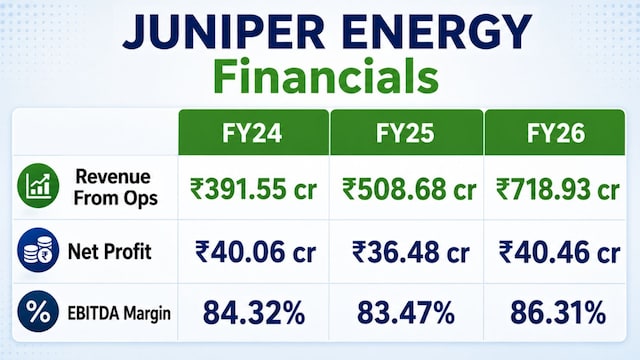
On the balance sheet, Juniper Green Energy’s net debt stands at around ₹9,400 crore. The management said leverage appears elevated because a large number of projects are still under construction and have yet to start generating revenue.
Among India’s top 10 renewable independent power producers (IPPs), Juniper Green Energy had a total capacity of 7,910.20 MW across 50 projects as of June 30, 2026.
The company plans to use the IPO proceeds to repay ₹683.20 crore of debt and invest ₹728.60 crore in its subsidiaries for debt repayment.
For the entire discussion, watch the accompanying video
