

Hello Espresso lovers! It’s barely been a few hours since we bid a teary farewell to Bappa, and the city feels completely different. Speaking of tears, they don’t seem to stop for the bulls either. Another week, another forgettable week, and the market seems to have resigned itself to fate, as most of the suffering is currently due to things beyond its control. Seven straight weekly losses for the Nifty. Need we say more?
Mark Twain once said, “We must not let sentiment interfere with business.” Unfortunately, over the last two days, questions over business completely overturned the sentiment around one sector. That too, with one piece of paper that was not even law, just a proposal. The IRDAI draft regulations on distribution norms, which set commission caps, proposed a ban on dark patterns, among many other steps, have set the cat among the pigeons for most insurance companies and banks that offer such services as well.
You have to feel for PB Fintech. The stock was perhaps the only fintech player that made some money, if not more, for its investors during the five years of its listing. Then comes a draft regulation, and the stock refuses to leave the lower circuit. Starts with 10, barrels down to 15, 20, 23, 26, 28, 30, 32, and eventually ends 36% lower on Thursday. That’s more than one-third of its value wiped out in a single session. It was the biggest single-day fall on record for PB Fintech. This was also the fastest journey for a stock that was at its 52-week high the previous day to a 52-week low. At one point on Friday, the stock even slipped below its listing price of ₹1,150. Some people and funds like HDFC MF have had the jigra to nibble at lower levels. Whether that pays off or not, only time will tell.
It was not just PB Fintech. Another stock also bore the brunt of these proposals. It’s called Turtlemint. In the story of the hare and the Tortoise, the Tortoise was slow and steady and hence won the race. Unfortunately, the fall in Turtlemint was neither slow nor steady. Consistent, for sure. 20% on Thursday, another 20% on Friday. IPOed just three months ago, it was struggling around its issue price and then came this fall. Sub-₹100 now. Down 43% from its IPO price of ₹152. That one draft proposal wiped out nearly ₹1.5 lakh crore market cap of these companies, including banks, insurance, and distributors. Which brings me to the question? Insurance nahi karwaya tha kya? How about an accidental insurance plan for stocks that decline by such an extent in a single day? Will definitely increase insurance penetration and coverage for sure! Policy for thought.
While these insurance stocks are on their way down, treasury yields are on their way up. So much so that every morning when you wake up to see their rates, they are drastically higher than what they were when you went to bed. From sub-5% at the start of the week, the US 10-year is now at 5.2%, the 30-year is at 5.5%, levels last seen in 2007 and 2004, respectively. The total global debt, according to the International Institute of Finance, is now at $365 trillion, or in rupee terms, ₹35,000 lakh crore. Yes, read that again. The bond buyback operations have been sub-par, and JPMorgan believes that yields could go even higher from where they are currently. Chris Wood of Jefferies told us that beyond a point between 5% and 6%, the Trump Administration may resort to “fixing yields”, a step that has not happened yet, but the market will have a squinty eye towards that for sure.
If there ever were a list of overnight sensations made for this year, the Strait of Hormuz would feature right on top of the pile. Even a Bollywood love triangle would end in three hours. This hate fest will now be entering its eighth month. I did not add a shape to it because there are just too many characters. The US, Iran, Israel, all the Gulf countries led by Saudi Arabia, the Houthis, Yemen, and then the occasional appearance from Lebanon, it’s a hotch-potch that has roiled the global energy markets. The problem is, there is never consistent messaging. The US first wanted the war to ensure a regime change in Iran, then it shifted to ensuring Iran does not have a nuclear weapon, then it shifted to ensuring the Strait of Hormuz remains open (which was already open before the war). Eight months later, there is no end to what was claimed to be won in four days.
Iran has been giving contradictory messages of its own. While they have maintained that talks will happen only once their conditions to end the war are agreed upon by the US, last week saw a change in stance. Unconfirmed reports claimed threats from an IRGC official that the regional conflict could widen further, even into the Indian Ocean, now reports are claiming that a proposal has been sent to the US to reopen the Strait of Hormuz in seven days if the US clears the naval blockade of Iranian ports. One can only hope that, when you’re reading the Espresso the same time next month, you are not reading about the same situation in West Asia, or hopefully, not reading about it at all because things have returned to normal. Aapke muh me Biryani!
All of this has given birth to the Pied Piper of the global markets. Oil. Now you may wonder, wasn’t it always the case? It may have been, but now the stakes are way too high for the markets to ignore the movement in oil prices. We started the year expecting the Fed to cut rates thrice. Then the war happened, oil prices went up, inflation went up, and what started as three rate cuts has already become one rate hike, with possibly one, or maybe even two more to come this year. With oil moving higher, yields have moved higher, and the mounting debt burden is becoming increasingly unsustainable. Even if the Strait of Hormuz opens tomorrow, is there enough oil to bring prices down? As Akshay Kumar said in Ajnabee (2001), everything is planned – for now, everything is about oil. It’s the Pied Piper that the markets have followed for a better part of this year. It’s too slippery a slope to be on. Fisal jaoge to ludhakte hue jaoge.
This week also belonged to the NSE. The largest stock exchange of the country is finally a public company after a decade-long wait! But there have been two other listings this week that have grabbed the spotlight in contrasting fashions. One is Hero Motors. Listed at a discount to its issue price of ₹84, but has since moved one way. 17% on the day of its listing, followed by two straight 20% upper circuits. From listing at a discount, it has nearly doubled from its issue price. The other is SS Retail, IPO price of ₹424, listed at a premium, ended day 1 nearly 80% higher than the issue price, but then has come off sharply. It’s already down 18% from its post-listing high of ₹888, which is more than double its issue price. I guess we have the answer to where the money is moving.
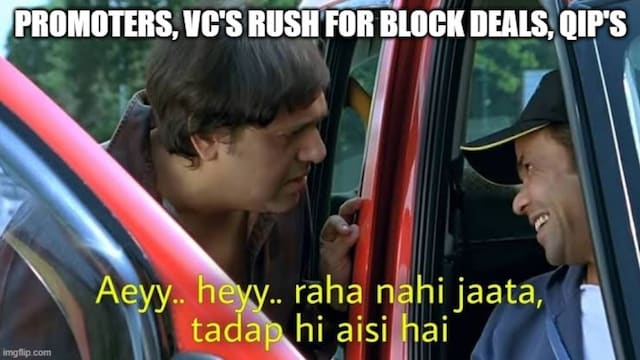
Change is the only constant. So are IPOs. And so is the fundraising via block deals and the QIPs. In all the drama surrounding bond yields, inflation and the insurance rout, nobody has spoken about the continuing primary market activity and the fundraising via blocks and QIPs. There are still six mainboard IPOs that are open for subscription, at least seven major block deals took place on Wednesday, 4-5 others on Thursday, and many more throughout the course of the week. There are at least four more IPOs that will open for subscription over the course of the next week as well. The one thing we know? Block deals will stop after next week, at least for the time being, as companies go into a silent period after the end of the quarter ahead of the earnings season. Expect a rush before Wednesday.
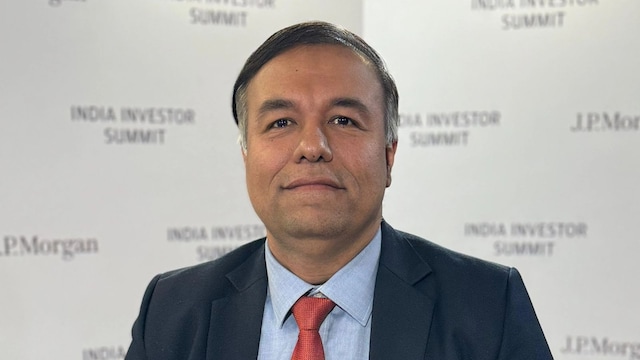
Rajiv Batra of JPMorgan believes that liquidity is moving beyond just the top 50 and top 100 stocks to the top 500 names. He expects investor appetite to remain subdued till the end of October and early November, after which he expects the Nifty to move back to the 27,000 mark, as the bear case probability has reduced. He is positive on the real asset economy, which, as per him, could act as a hedge against inflation, and on grid capex, wires and cables sector too. He views private banks as both a growth and value opportunity.
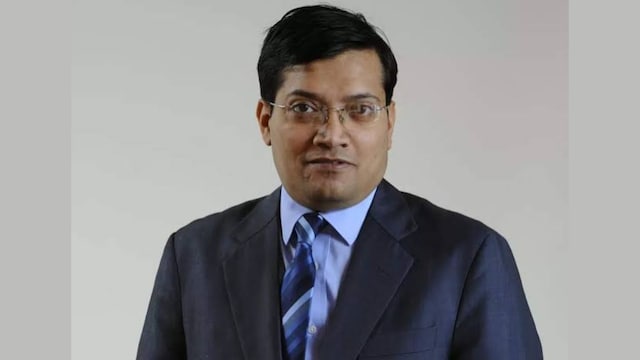
Manish Sonthalia of Emkay Investment Managers is one of the few on the street who is not very worried about the flurry of IPOs. He believes that the IPO pricing is rational, and that most recent IPOs have actually been good. He finds value in Lumax Auto, Sansera Engineering, Eicher Motors, Maruti, Voltas, and Tata Power. He is also one of the few who believe Indian IT companies currently offer “Ample Value.”
Next week will be one of transition. We move from September to October, Q2 FY27 officially comes to an end. Business updates will start trickling in, earnings season will begin, and so will the end of the monsoon season, which has been so disappointing that it feels as if it never arrived. We’ll be back with the latest brew from the street next Saturday. Until then, do take good care of yourselves, leave us feedback on how we can make this better, and subscribe to our newsletter as well!