
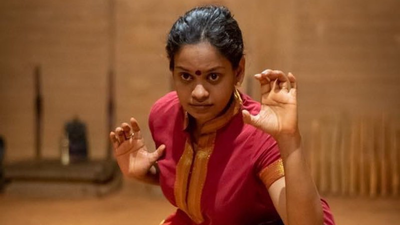
Kalarippayattu is Kerala’s oldest surviving martial tradition; some scholars place its origins at over two thousand years, though the art itself resists being pinned down by dates. It was never just a fighting system. It was a complete discipline. You trained in a kuzhi Kalari, a pit sunk into the earth, because the ground was not incidental to the practice. It was part of it.For centuries, this tradition moved quietly through family lineages in Kerala, largely invisible to the world outside. Colonial rule suppressed it. Modernity distracts from it. And yet it survived, passed from grandfather to student, from body to body, in the particular way that only embodied knowledge can travel.What’s happening now is something worth paying attention to. Women are not simply joining kalarippayattu, they are teaching it, inheriting it, and in some cases holding together lineages that would have died without them. Amrutha ET is one such woman. A third-generation practitioner from a family whose name is inseparable from the art’s modern revival, she was initiated at seven by her grandfather, Veerasree Sami Gurukkal. In a conversation with the Times of India, Amrutha, now in her 30s, spoke about inheritance, identity, and what it means to be both warrior and a nurturer in a world that still struggles to hold both ideas in the same person.
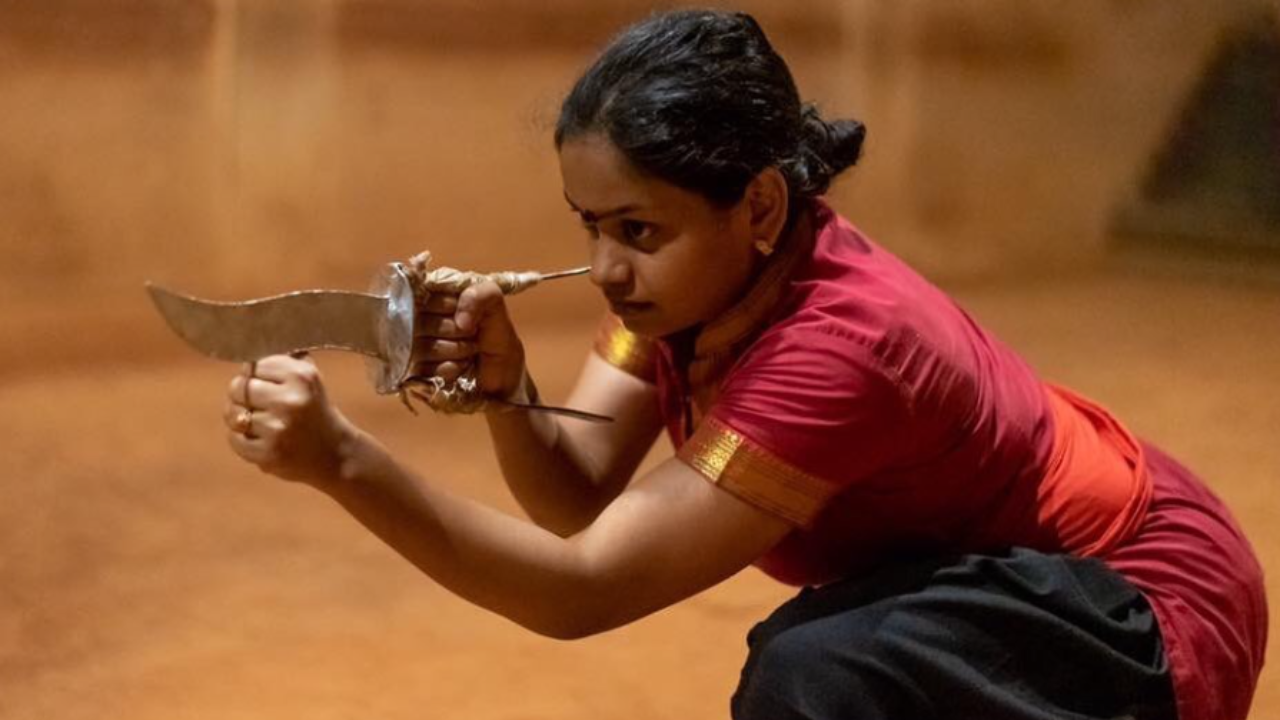
Image: https://www.instagram.com/kalariwoman_amruthaet_revathi/
What first drew you to Kalaripayattu ?
Amrutha ET: My journey didn’t begin with a casual interest; it began as a sacred inheritance. I was initiated into Kalaripayattu at the age of seven by my grandfather, Veerasree Sami Gurukkal, the founder of Hindustan Kalari Sangham.Growing up, he was my ultimate role model. He dedicated his entire life and willpower to this art. He was a master martial artist, but more importantly, a selfless healer who cared for everyone without ever thinking about money. Seeing his absolute devotion made me realize that Kalari was my destiny.
How has Kalaripayattu as a martial art form shaped you mentally and emotionally?
Amrutha ET: Kalari is a moving meditation. While it builds immense physical strength, its true mastery is over the mind. Training under my grandfather’s legacy taught me that the ultimate purpose of power is protection and compassion.Through the red earth, I learned Ekagratha (single-pointed focus) and deep emotional resilience. In a split second of sparring, you learn to face fear with absolute calmness. Kalari has shaped me to be resilient like my grandfather, who was always confident, was deeply grounded, and always approaching life with a healer’s heart.
Can you share a moment in your life when you felt truly empowered?
Amrutha ET: True empowerment hits me every single time I step into the kuzhi kalari (pit) to teach, knowing I am keeping my grandfather’s heartbeat alive.Whenever I embody Vadivu (animal posture), like the fierce lion or the majestic elephant, I am not just moving my body, I am channeling my ancestral power. Standing on that red earth alongside my sisters in the practice, leading the “Kalariwoman” movement, and proving that a third-generation woman can carry this legacy forward with grace and ferocity is where my deepest sense of sovereignty comes from.
In an age of gym culture, why do traditional practices still matter?
Amrutha ET: Modern gym culture is often about aesthetics, how your muscles look in a mirror. Kalaripayattu is about how your body feels, moves, and serves.My grandfather proved that a Kalari is not just a workout space rather it is a sanctuary for the mind, body, and soul. It incorporates traditional healing, sharpens your instincts, and builds character.
What are the common misconceptions about women practicing Kalari?
Amrutha ET: The biggest misconception is that martial arts make a woman aggressive or take away her femininity. People often separate the warrior from the nurturer.My grandfather’s life taught me that the fierce warrior and the selfless healer live in the exact same space. Kalari does not strip a woman of her grace; it fortifies it with unbreakable willpower. It balances Shakti (raw power) with fluid flexibility. Through my journey, I love showing the world that a Kalariwoman can be a fierce protector of her culture, while remaining a deeply compassionate and healing presence for her community.Kalaripayattu speaks through Amrutha in the way it only can when someone has lived inside it long enough. Her grandfather built something that in her hands, is still breathing.