

From a small rural hut in India to invitations to high-level NASA-linked programmes, Dr Anand Megalingam’s journey does not feel like a straight academic success story. It feels more like something stitched together through setbacks, sudden turns, and long stretches of uncertainty. A tractor driver’s son who once walked kilometres to school, later dropping out of college, only to return stronger in a completely different field. Today, he stands as the founder of India’s emerging private space-tech movement through Space Zone India, and his name is now appearing in international aerospace conversations. The unusual part is not just the success, but the route taken to get there, which reportedly included rejection, reinvention, and years of quiet rebuilding before global recognition arrived.Today, Dr Anand Megalingam, Founder and CEO of Space Zone, continues to lead new missions, including plans for the RHUMI Twin project, which aims for simultaneous rocket launches from Chennai, as reported by ANI.
Dr Anand Megalingam’s 6-kilometre school walk and early struggles in rural India
Dr. Anand Megalingam’s early life was far removed from anything related to rockets or aerospace engineering. He grew up in a rural farming family where his father worked as a tractor driver, and financial stability was never guaranteed. Daily life was built around necessity rather than ambition.School was not nearby. He reportedly walked nearly six kilometres every day just to attend classes. It sounds simple when written down, but those who know rural conditions understand how exhausting that routine can be over the years. It may have been during these early years that discipline formed quietly, without anyone noticing it at the time.There were no elite institutions in the background, no early exposure to space programmes, and no obvious path into science leadership. Yet, something internal seems to have developed, a kind of persistence that would later define his career in unexpected ways.
From computer science to aeronautical engineering: The dropout phase
Like many students searching for a stable career path, he initially chose Computer Science. It appeared practical and safe, something that could guarantee employment. But reports suggest he struggled to connect with the subject deeply, and his interest slowly drifted elsewhere.Eventually, he made a decision that could have ended his academic journey. He dropped out. For many, that moment would have been seen as a failure. A closed door. But in his case, it became a pause rather than an ending.He later returned to engineering, this time choosing Aeronautical Engineering, a field he was genuinely interested in. The change was not easy, and it reportedly came with pressure and uncertainty, but his performance improved dramatically. He graduated as a Gold Medalist with an outstanding 9.8 CGPA, one of the highest academic records in his institution.
PC: ANI
Early journey of Space Zone India and its first breakthroughs
After completing his studies, Dr. Anand Megalingam founded Space Zone India, now recognised as one of the growing private aerospace ventures in India. Space Zone India began with limited resources and high ambition. Early development reportedly involved trial-based innovation and strong personal commitment, with even family support playing a role in its early days.One of its most talked-about achievements is the RHUMI-H mission, described as India’s first reusable hybrid rocket launched from a mobile platform. It attracted attention within India’s emerging private space sector and was seen as a technical step forward. Later, RHUMI-1 added to its growing profile. While not without challenges, the missions helped position the company within discussions around India’s private space capabilities.
How a visa denial reshaped his innovation path
At one point in his journey, Dr. Anand applied for a US visa connected to aerospace opportunities. It was reportedly denied. For many professionals, that would have been a major setback, especially in a field where global exposure often matters.But instead of stepping away, he continued building work in India. A phrase attributed to him during this period gained attention: “Borders are for people. Innovation has no boundaries.” It reflects a mindset that appears repeatedly in his journey, where external rejection did not stop internal momentum.
From visa rejection to NASA-linked exposure
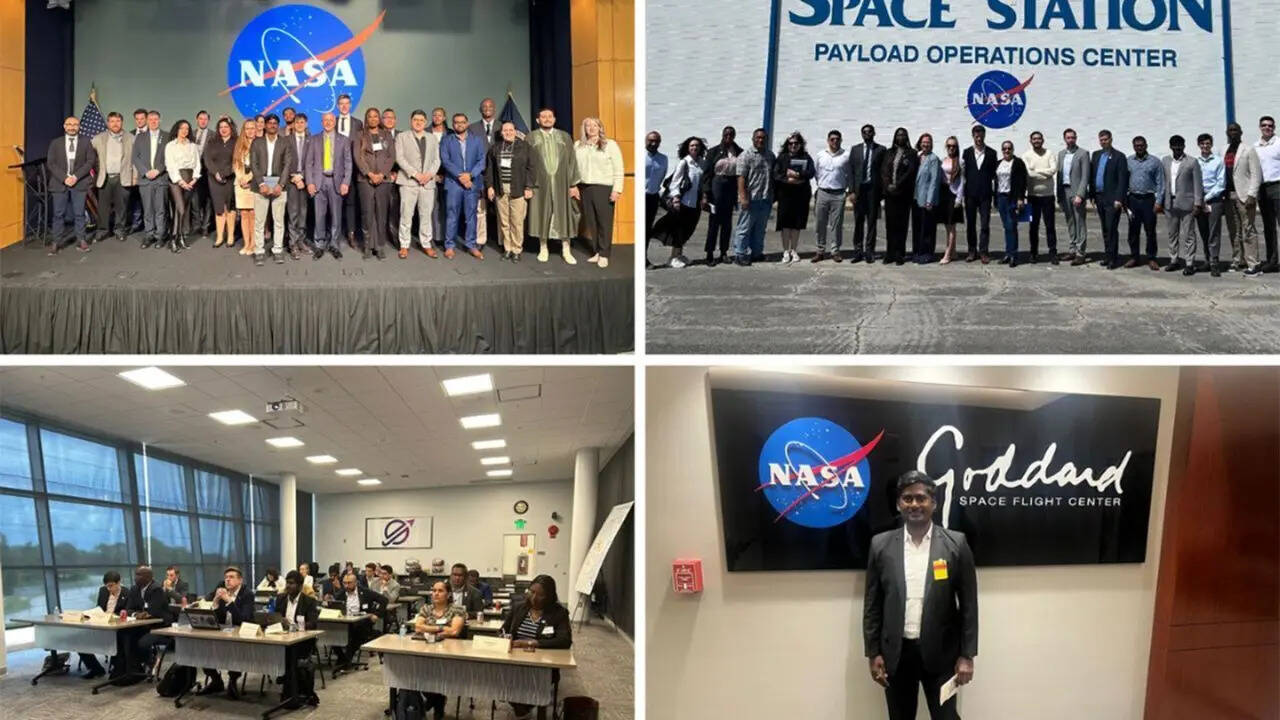
Years later, his career took an unexpected turn. He was selected by the US Department of State for an international leadership initiative involving a small group of global experts. US Department of State reportedly included him among a highly selective cohort, and the programme provided exposure to advanced aerospace ecosystems.He also engaged in training environments connected with NASA facilities, gaining insight into high-level aerospace systems, defence technologies, and mission planning frameworks. NASA reportedly played a role in providing technical exposure during this programme, allowing interaction with scientists, engineers, and space officials.