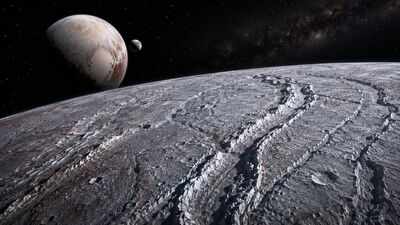
It seems like a contradiction. Mercury is the closest planet to the Sun, so it would be natural to assume it is also the hottest. In reality, that title belongs to Venus, where surface temperatures are hot enough to melt lead. The difference isn’t about distance from the Sun but about what happens after sunlight reaches a planet. While Mercury has almost no atmosphere to trap heat, Venus is wrapped in an incredibly dense blanket of carbon dioxide that acts like a giant thermal trap. The result is a runaway greenhouse effect unlike anything else in the Solar System. Understanding why Venus is hotter than Mercury helps scientists better understand planetary climates, atmospheric evolution and even the future of Earth’s own climate.
Venus is not the closest planet to the Sun, but its atmosphere makes it the hottest world in the Solar System
Mercury orbits the Sun at an average distance of about 58 million kilometres, while Venus is nearly 108 million kilometres away. Despite receiving less solar energy than Mercury, Venus has an average surface temperature of around 465°C, making it the hottest planet in the Solar System.The reason lies almost entirely in the planets’ atmospheres. Mercury has only an extremely thin exosphere made up of trace amounts of atoms knocked off its surface by solar radiation and the solar wind. This exosphere is far too thin to trap heat, meaning temperatures on Mercury swing dramatically, from around 430°C during the day to -180°C at night.According to Nasa, Venus, by contrast, has an atmosphere that is about 96.5% carbon dioxide and around 90 times denser than Earth’s. Thick layers of sulphuric acid clouds cover the planet, while the carbon dioxide traps infrared radiation escaping from the surface. As sunlight warms the ground, the heat becomes trapped, causing temperatures to remain extremely high day and night.
How the runaway greenhouse effect makes Venus the hottest planet
The extreme heat on Venus is caused by a phenomenon known as the runaway greenhouse effect.On Earth, greenhouse gases such as carbon dioxide, water vapour and methane help keep the planet warm enough to support life. Without them, Earth’s average temperature would be around -18°C instead of approximately 15°C.On Venus, however, the greenhouse effect has become uncontrolled. Scientists believe the planet may once have had liquid water billions of years ago. As the young Sun became brighter, increasing temperatures caused more water to evaporate. Water vapour itself is a powerful greenhouse gas, trapping even more heat and accelerating warming. Eventually, ultraviolet radiation from the Sun broke apart water molecules in the upper atmosphere, allowing hydrogen to escape into space while oxygen reacted with surface rocks.Over time, the oceans disappeared, leaving behind an atmosphere dominated by carbon dioxide. Today, the dense atmosphere traps so much heat that surface temperatures remain almost constant across the entire planet, regardless of whether it is day or night.
Why Mercury cools down so quickly
Mercury’s lack of a substantial atmosphere means heat absorbed during the day escapes almost immediately after sunset.Unlike Earth or Venus, Mercury has no thick blanket of gases to retain warmth. As a result, the side facing the Sun becomes intensely hot, while the side facing away rapidly loses heat into space. These enormous temperature swings are among the largest experienced by any planet in the Solar System.Mercury also rotates very slowly, taking about 59 Earth days to complete one rotation, while one Mercurian year lasts only 88 Earth days. This means some parts of the planet spend weeks under direct sunlight before enduring equally long periods of darkness.
What Venus teaches scientists about climate and planetary evolution
Venus is often described as Earth’s “evil twin” because the two planets are similar in size, mass and composition. Yet their climates could hardly be more different.By studying Venus, scientists hope to understand how greenhouse gases influence planetary climates over billions of years. Missions such as NASA’s DAVINCI and VERITAS and the European Space Agency’s EnVision aim to investigate Venus’s atmosphere, geology and history to determine how a planet that may once have resembled Earth evolved into the hottest world in the Solar System.The lessons extend beyond our cosmic neighbourhood. Understanding Venus helps researchers interpret the climates of rocky exoplanets orbiting distant stars and provides valuable insights into the long-term evolution of planetary atmospheres, including our own.