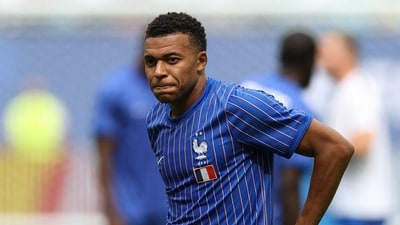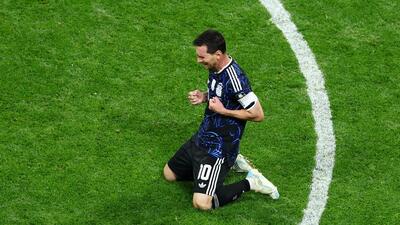
New Delhi: When Lionel Messi leads Argentina onto the pitch at the New York/New Jersey Stadium, he will be up against a legacy he helped forge running through a different shirt. He will be taking on a Spain playing a modern version of the possession-first philosophy he once perfected at Camp Nou. In the World Cup final on Sunday, he will look to prove he can beat the very idea that shaped him.
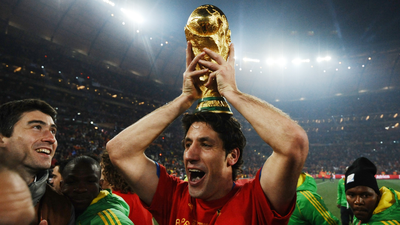
Cut Spain open and you’ll find FC Barcelona at the core. Eleven of Spain’s 26-man squad either play for Barcelona’s first team or came through its famed La Masia academy. It’s the blueprint Spain relied on during their golden era between 2008 and 2012, when a Barca-heavy squad, led by Iniesta and Xavi, won back-to-back European Championships and a World Cup in between.
Messi knows exactly what awaits him.
“It’s a great team with wonderful players and it has a distinctive playing style. It’s a team I know well and it has a football philosophy that it has applied for many long years,” the 39-year-old said after the semi-final victory against England.
For nearly two decades, he helped define that brand of football wearing Barcelona’s No.10.
Juego de posicion (positional play), short and patient circulation, and the belief that the ball should belong to you over the opponent are traits built into every player Barcelona has produced. Johan Cruyff built the foundations in the late 1980s, Pep Guardiola perfected it two decades later. Tito Vilanova kept it running much the same right after. Even now, Barca play a faster, more direct version of the same idea under Hansi Flick.
Spain have followed a similar path, even picking up the system’s boldest idea along the way. Guardiola turned its No.10 into a false 9, a centre-forward dropping deeper into the midfield to create confusion. Spain tried the same trick not long after, Cesc Fabregas playing that role in the team that won Euro 2012.
Messi was the fulcrum of it all at Barcelona, while Xavi and Iniesta made the system click by dictating tempo, finding pockets of space and making line-breaking passes. They carried that understanding in a Spain shirt, helping create one of the most dominant international sides.
Xavi, Iniesta and several others showed what the system could do. Messi showed what it could produce at its absolute peak. The irony? The perfect product wasn’t Spanish.
“As Pep says, he dominates all facets of the game. We will not see anything like it again,” Xavi said in an open letter to Messi in 2016. “The luck we have had is that he came to Barcelona. Without him, Barca would not be the same.”
Spain wanted that luck for itself. As a teenager rising through La Masia, Messi was eligible to play for Spain, and the federation tried to get him to commit to La Roja. However, Argentina got there first.
Spain went on to conquer the world regardless – without the player who might have made them unbeatable. Messi trained alongside half of it anyway in Catalunya, conquering club football along the way.
In a parallel version of this story, Messi wears red instead of light blue and white. Somewhere there’s a script where he is not required to beat his own legacy, but complete it.
Instead, over the last two decades, he has faced a different kind of legacy, forged by Argentina’s other genius. Under the shadow of Diego Maradona’s heroics, every World Cup and Copa America final loss begged the question whether Messi could ever deliver for La Albiceleste.
It took Lionel Scaloni’s arrival in 2018 to settle that question. Scaloni too is a student of Spanish football, having come through the La Rozas coaches’ coaching centre in Madrid.
In the tail-end of Messi’s career, the weight of carrying the team alone was lifted, and he was given the most freedom he’d ever had to make a difference. The result: two Copa Americas and a World Cup – an international resume that finally matched the one he created at club level.
Messi is the greatest export of a system first shaped over four decades ago. In his final hurrah, he faces the idea’s most refined version and its latest disciple Lamine Yamal, who has only commenced his journey toward greatness.
It could be 11 against one. But when has that ever been a problem with Messi?