
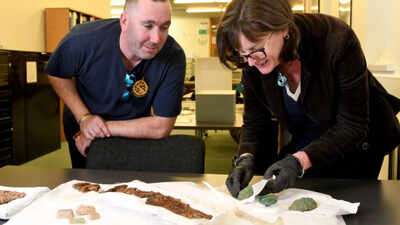
Who says jewellery are frivolous purchases? In fact, they can tell us more about history than any other artefact.Metal detectorist Daniel Crowe has discovered an extraordinary collection of Viking hoard on the Isle of Man. Dating to around AD 900, the collection includes three intricately decorated bronze brooches, a Viking sword, trading weights and scales, a bronze ladle and an axehead.The discovery has now been formally declared Treasure by the Isle of Man Coroner for Inquests, recognising its exceptional archaeological and historical significance. A selection of the objects went on public display at the Viking Gallery of the Manx Museum on 11 November 2026, allowing visitors to come face to face with the artefacts.
Jewellery that tells a story
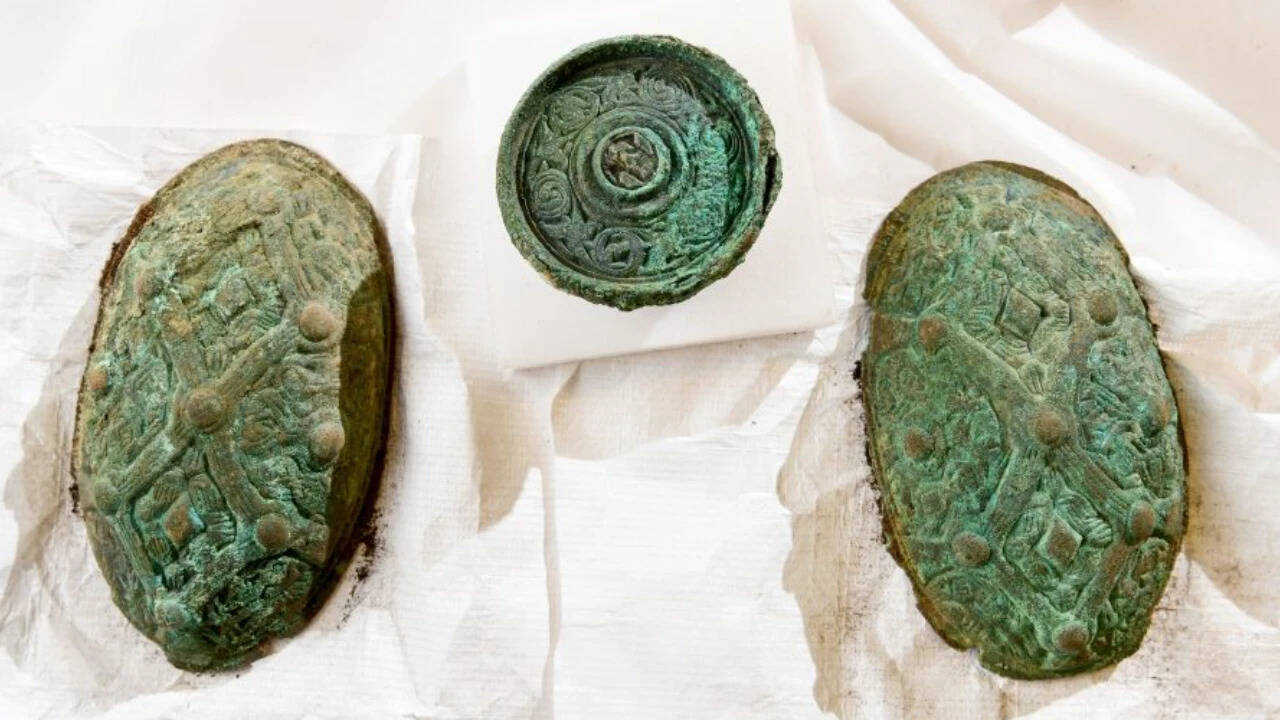
Image Courtesy: David Kneale/Manx National Heritage
Among the most significant (and shiny) objects in the collection are two oval bronze brooches decorated with elaborate patterns of interlocking animals. Such animal motifs were a distinctive feature of Viking art. Brooches were also quite the accessory back in the day, which women wore to fasten their clothing.Only one other pair of similar oval brooches has previously been found on the Isle of Man. Matter of fact, they were discovered by Crowe’s father, John Crowe himself, alongside fellow metal detectorist Craig Evans. It seems the knack for finding Viking treasures runs in the family.The newly discovered brooches could be around 50 years older than the previously identified pair. Archaeologists believe they may represent evidence of the earliest known female Viking Age burial on the island.A third brooch adds another layer of intrigue. Originally gilded, it features decorative spirals and a glass centre. It is the first of its kind to be discovered on the Isle of Man, making it a valuable addition to the island’s archaeological record.These pieces offer clues about personal adornment, clothing and the social lives of women in early Scandinavian communities. The design, materials and placement of jewellery could communicate identity, status and cultural belonging.
A sword, and the possibility of a double burial
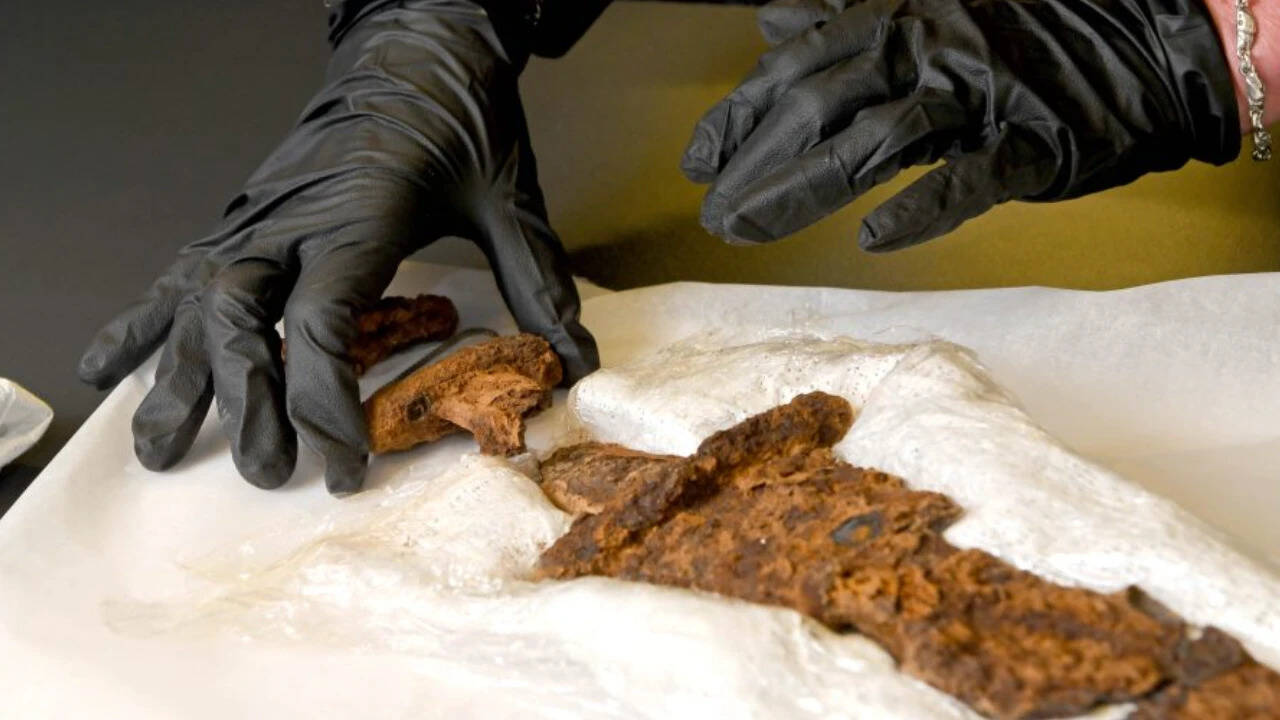
Image Courtesy: David Kneale/Manx National Heritage
The collection also contains a rather elaborately decorated Viking sword, the 13th such weapon to be discovered on the Isle of Man. Around two-thirds of the sword survives, including portions of its hilt.Although its condition might initially make it appear unremarkable, specialist X-ray analysis revealed intricate details hidden beneath layers of soil. The hilt features fine silver inlay and twisted silver wire, showing considerable attention went into its decoration. Only two other Viking swords found on the island have comparable ornamentation. The sword also appears to have been deliberately broken, possibly as part of a Viking burial ritual. Some additional damage seems to have occurred after it was buried.The juxtaposition of the weapon buried with jewellery has led archaeologists to consider whether the objects were buried with a double burial. Weapons are traditionally associated with men, and jewellery with women. They may have been buried together, although another possibility is that they came from separate graves dating to the same period.Unfortunately, the original burial site was disturbed at some point during the past thousand years, making it difficult to establish exactly how the objects were arranged or who their owners were. Nevertheless, the possibility of a double burial raises interesting questions about the people who lived and died on the island during the early Viking Age.
Trading weights reveal connections across the Irish Sea
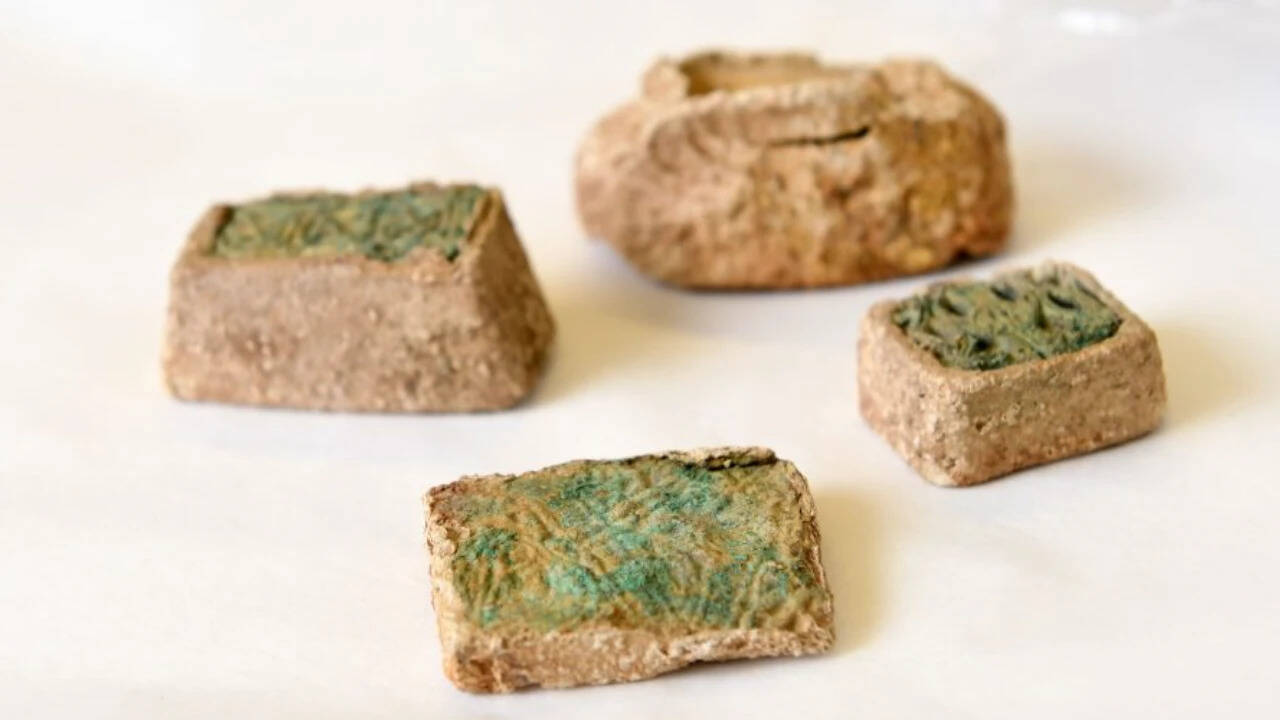
Image Courtesy: David Kneale/Manx National Heritage
While swords and jewellery tend to steal the spotlight, some of the most revealing objects in the collection are considerably less glamorous: trading weights and fragments of bronze balance scales, instruments that would have been used to weigh precious metals and coins during commercial transactions. This suggests that the people associated with the burial were connected to the trading networks that linked Viking settlements across the British Isles.The decorated lead weights are the first examples of their kind to be discovered on the Isle of Man. They are also the most intricately decorated Viking trading weights found on the island so far. One of them features a decorative bronze fitting that may have originally belonged to a small chest or religious object. Its artistic style is characteristic of Britain and Ireland at the time, suggesting that Viking settlers sometimes incorporated and repurposed objects from the communities around them.The discovery challenges the familiar image of Vikings as little more than raiders and warriors. They were also merchants, craftspeople and settlers who maintained extensive connections with neighbouring communities. Their lives involved far more than voyages and battles.The collection includes another unusual object: a bronze ladle, possibly used during feasts or ceremonies. It is another artefact type not previously recorded on the Isle of Man, offering an additional glimpse into the social and ceremonial aspects of Viking life.
A discovery preserved by careful handling
The discovery was made possible through the work of metal detectorists Daniel Crowe and Rhett Britton, who assisted with the search. Britton found the Viking axehead, part of the balance scales and additional iron objects.Crowe resisted the temptation to clean the objects after finding them; instead, leaving them in their original condition for professional examination. This helped preserve traces of archaeological evidence that might otherwise have been lost through handling or cleaning.Before conservation work began, specialists from Manx Care’s Radiology Team used imaging technology to examine the objects beneath compacted layers of soil. The scans revealed details that were not visible to the naked eye and helped conservators determine how best to uncover and preserve the delicate artefacts.
The Viking legacy of the Isle of Man
The Isle of Man has a long history of Viking settlement, with Scandinavian seafarers first arriving during the 9th century. Initially establishing trading connections, they eventually settled on the island, recognising its strategic position in the Irish Sea as an important link between Britain, Ireland and the wider Norse world. Their influence continues to shape Manx identity. The island’s parliament, Tynwald, traces its origins to the Viking Age and is recognised as one of the world’s oldest continuous parliamentary institutions.Archaeological discoveries have also revealed evidence of Viking burial traditions, including the practice of placing weapons, jewellery and personal possessions alongside the dead. Such objects reflected the identities, occupations, beliefs and social standing of the people being buried. Further conservation and research could reveal more about the objects and the people who once owned them.For now, visitors can see a selection of these 1,100-year-old treasures at the Manx Museum in Douglas. What was once hidden beneath the ground is now helping piece together a history that extends well beyond the familiar tales of Viking warriors.