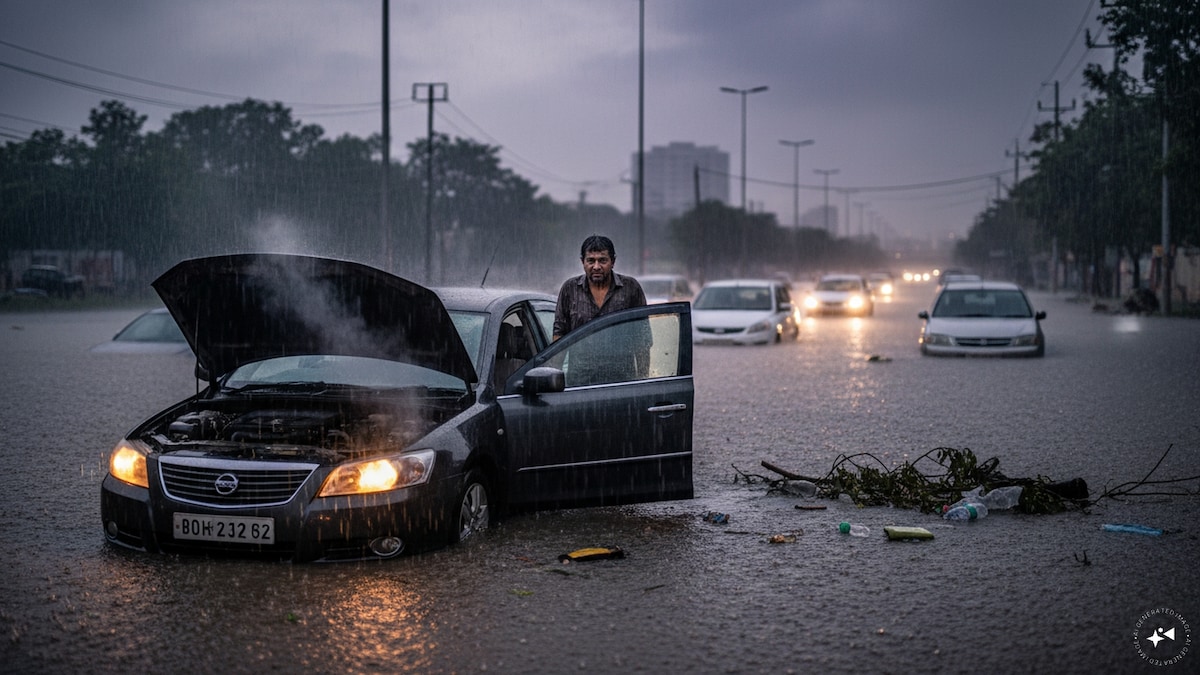
Industry experts say many vehicle owners assume all rain-related damage is covered under a standard motor insurance policy. However, that is not always the case.
Certain types of damage, especially those caused after a vehicle is driven through floodwater, may not be covered unless the policyholder has opted for additional protection.
Monsoon claims rise sharply
Motor insurers typically see a significant increase in claims during the monsoon months as flooding, poor visibility and slippery roads lead to more breakdowns and accidents.
According to Charu Kaushal, Managing Director, Allianz Partners India, an assistance and services company in India, roadside assistance calls increase by around 25-35% during the monsoon. Average claim amounts also rise by nearly one-third, from about ₹30,000 to ₹40,000, largely because repairs involving water damage are more expensive.
Narayan Rao, Head – Motor Claims at Digit General Insurance, an insurance provider, said that claims data for FY26 showed the most common claims between June and September were vehicles submerged in floodwater, accidents caused by poor visibility during heavy rain, and vehicles skidding on wet roads.
The insurer also processed several high-value flood-related claims in West Bengal, with some payouts exceeding ₹40 lakh.
Water damage is the biggest risk
Experts across insurers identify engine water ingress, or hydrostatic lock, as the most common monsoon-related claim.
This happens when water enters the engine through the air intake while driving through flooded roads. Vehicles may also suffer electrical failures after prolonged exposure to water, while storms can cause damage from falling trees or branches.
Arti Mulik, Chief Technical Officer at Universal Sompo General Insurance, an insurance company, said insurers also receive claims related to collisions caused by reduced tyre grip, inadequate braking and poor visibility during heavy rainfall.
Electric vehicles are not immune either.
Nitin Deo, Chief Technical Officer at Zuno General Insurance, an insurance company, said prolonged water exposure can damage electrical systems and, in severe cases, affect battery components.
What a standard policy may not cover
One of the biggest misconceptions among policyholders is that every flood-related repair is automatically covered.
Insurers point out that consequential engine damage often falls outside the scope of a standard own-damage motor insurance policy.
For example, if a vehicle stalls in floodwater and the owner repeatedly attempts to restart the engine, the resulting engine damage is generally treated as consequential loss and may not be payable unless the policy includes an Engine Protect add-on.
Dinesh Mosamkar, Senior Vice President – Consumer Underwriting at Tata AIG General Insurance Company, an insurance company, said standard policies also typically exclude normal wear and tear, mechanical or electrical breakdowns that are not caused by an insured event, losses arising from negligent driving, illegal vehicle use or driving without a valid licence.
Similarly, consumables such as engine oil, lubricants and coolants used during repairs are generally excluded unless the policyholder has opted for a separate consumables cover.
Add-ons that can provide wider protection
Insurance experts say policyholders should review their coverage before the monsoon rather than after an incident occurs.
Common add-ons recommended by insurers include Engine Protect, which covers engine damage caused by water ingress; Zero Depreciation cover, which reduces depreciation-related deductions during claims; Consumables Cover; Roadside Assistance; and Return to Invoice cover, which can provide better compensation in the event of a total loss.
While these add-ons increase the premium, they can significantly reduce out-of-pocket expenses if the vehicle suffers extensive flood damage.
Precautions can also determine claim outcomes
Beyond insurance coverage, insurers say driver behaviour during floods often determines whether a claim is accepted.
Insurers advise motorists to avoid driving through waterlogged roads if the depth cannot be judged. If a vehicle stalls in floodwater, owners should not attempt to restart the engine, as doing so can worsen the damage and affect claim eligibility.
Instead, they should arrange for the vehicle to be towed to an authorised garage, inform the insurer immediately, photograph the damage where possible and wait for the insurer’s survey before carrying out major repairs unless emergency measures are necessary.
Experts also recommend carrying out basic preventive maintenance before the monsoon, including checking tyre tread depth, brakes, battery, wiper blades, lights and drainage channels such as sunroof and air-conditioning outlets.