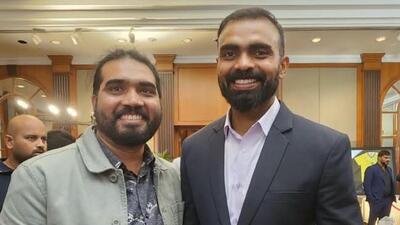
How do 42,522 contacts on a mobile phone constitute part of India’s National Sports Day? Without representing records or medals, or even the many thousand crore being sprinkled through Indian sport via khelos, policies and master plans.
But those phone contacts are as much a part of Indian sport in 2026 as the headliners we read and hear about. Those numbers are housed in a Samsung Galaxy S22 whose owner, Bengaluru-based Paul Richu, or Paul R as he is known, is a segment of contemporary India’s sporting community.
These are people currently working in Indian sport – athlete managers, coaches, parents, athletes seeking post-retirement careers, event organisers, venue managers, team owners, sports science folk, data analysts, sponsors, manufacturers, journalists, PR people, broadcast producers, technicians, start-up entrepreneurs, sports management students and teachers.
Bet you didn’t think Indian sport had that many people. To Paul, 40,000-plus is “not that big – there’s a long way to go.” What is even more mind-boggling is that these numbers are not involved in any commercial venture or part of a surrogate business, but rather a “community” which networks those in Indian sport to others like them.
The 40,000-plus are divided into around 300 community groups around specialist segments – separated by sports, its sciences, cities, the job market, coaches, lawyers, investors and overseas Indians too. Paul’s purpose is to connect the country’s sports industry folk to each other about opportunities available and information about latest developments.
When I met Paul, now 40, just after Covid at a football event, his contacts numbered 10,000. That number has grown faster than the sports market but Paul takes any wins. In the last 18 months, he reckons around “eight to nine thousand people” have found opportunities “without a single penny involved to or from anyone – that’s just the power of the community.”
For example, if sports centre needs a physio, its manager puts out the requirement within his community. Someone forwards this to the sports science group and the CVs start to reach the centre, anything between 10 and 150 CVs respond for an opening. Paul says this has also meant to some extent, “there’s no hiring friends and family because credible CVs reach you.”
His own livelihood comes from event management. Last year, he organised the first Indian Sports Photography Awards in March 2025 and this year-end it will be part of an Indian Sports Circus event in Bengaluru, the award categories increasing from 15 to 50. “Photography was my profession, but I can’t create jobs for a sports photographer. The Sports Photography Award will expose that photographer’s work to an audience…” in which there may be venue managers who see their value in promotional, social media work.
Paul grew up as a sports nut in Puttady village in Kerala’s Vandanmedu cardamon country and went to boarding school in Kodaikanal, representing Tamil Nadu’s Dindigul district across various sports. While studying for his BBS degree in Chennai, he accepted his own athletic limitations and moved first to Pune and then Mumbai, completing courses in photography and event management, interning wherever and whenever possible. Work with Getty India led to a course in picture research in London where he found himself on ground during the 2012 Olympics.
At the opening ceremony, when an unknown Indian volunteer in a red jacket walked lackadaisically with the Indian contingent, Paul said “I was boiling – I asked her why did you do it? She said, ‘I thought it was the Indian team and I could walk on.’” Hearing a handful of Indian athletes boast about ‘being Olympian’ just by getting to London hurt him too. “For them it may be good, but what did it do for us?”
He sold his photography equipment, returned home, set up a co-working space in Kochi and joined the Indian sporting madhouse first as home game media manager for the Kerala Blasters ISL team. In February 2018, five who worked in events first joined gus Positive Sports Vibe phone community, the number growing to 200, of which most have stayed to this day.
This increasing multitude – of which the cricket and football groups are active chatting 24×7 while the others fall silent post 10pm – means brazen “bro, update chahiye (need the update)” messages reach him regularly at odd hours. “I’m okay with it” he says and sets his own rule which requires he reply within 24 hours. When anyone wants to speak to him, Paul speaks his truth, “that the industry is not going to pay you much.” Some move away, others step aside and return later, “they’re passionate people,” he says. Just like him.
Everyone joining any of his groups are vetted, Paul double-checking their identify. He refuses to entertain anyone who wants his data in exchange for equity in their company and knows enough to call any job market data-crunchers’ bluff. “Right now there’s one category where there are 50,000 jobs available – PT teachers.” Schools need them, but there’s not enough in terms of wages. Every Monday, he sends out his newsletter about developments in the Indian sports industry.
He says athletes, particularly elite Indians, are being looked after, but others working in the industry “don’t have any help.” For athletes to win, “people working behind the scenes need to win, need to have jobs and opportunities and they need to have everything good for them so they can take care of athletes. If I help them, they will help athletes. Then adds, “and then I would like to see India winning Olympic golds – four in one Games. It’s my dream.” In real life you realise not every champion of Indian sport needs to wear medals around their neck.