
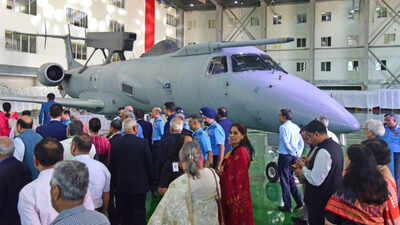
BENGALURU: Marking the culmination of a four-decade journey towards indigenous airborne surveillance capability, DRDO and IAF on Thursday dedicated the Final Operational Clearance (FOC) of the Netra Airborne Early Warning and Control (AEW&C) system to the eight personnel who lost their lives in the crash of India’s first Airborne Surveillance Platform (ASP) aircraft in Jan 1999.The dedication was announced at the Centre for Airborne Systems (CABS) in Bengaluru during the FOC declaration ceremony for Netra, India’s first indigenous AEW&C system.
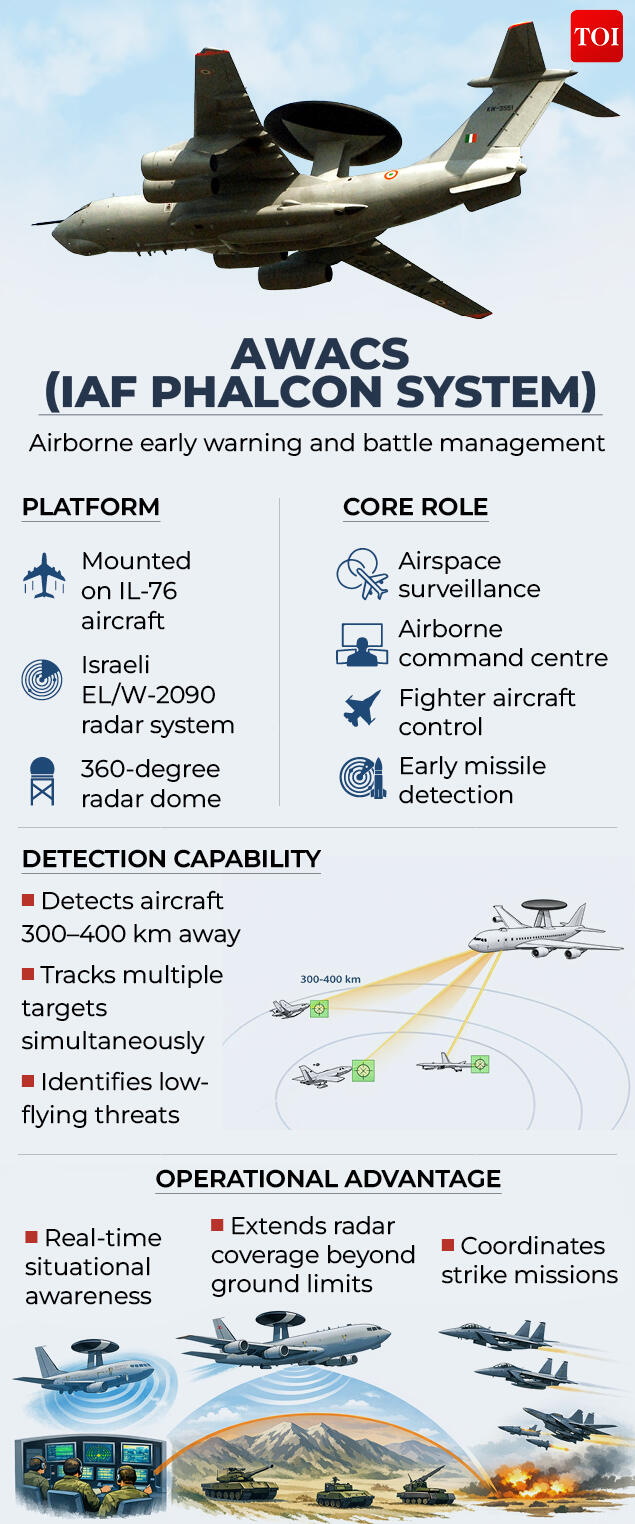
Recalling the origins of the programme, DRDO Aeronautics Cluster DG K Rajalakshmi Menon said India’s quest for an indigenous airborne early warning capability began in the early 1980s when the IAF sought a home-grown solution. Under Project Guardian, a small team of DRDO scientists and IAF officers designed and developed the Airborne Surveillance Platform on a modified HS-748 Avro aircraft fitted with a rotodome.“The ASP was the pride of India,” she said, noting that it undertook its maiden flight in Nov 1990. A naval radar sourced from Italy was integrated and flown on the platform in 1991, marking the first time a radar had been integrated and flown on an Indian aircraft.That pioneering effort ended in tragedy when the ASP aircraft crashed in Tamil Nadu during a test flight, killing four DRDO scientists and four IAF personnel. “Today, I salute the personnel who were on board and made the supreme sacrifice. Their sacrifice has not gone in vain. Their names have now been written in golden words. This FOC is dedicated to them,” Rajalakshmi said.
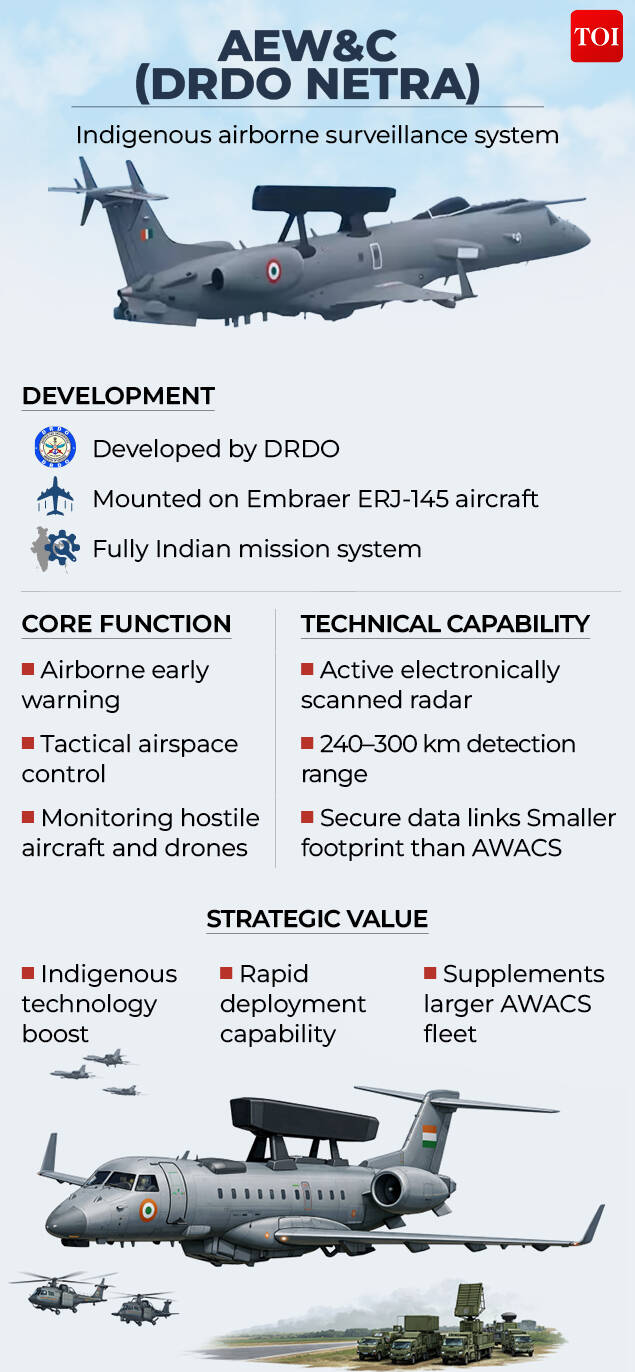
The crash, however, did not end India’s AEW&C ambitions. Drawing on the technological expertise and infrastructure generated through the ASP programme, DRDO pursued fresh proposals before securing approval for the indigenous Netra programme in 2004.The system, developed by CABS and other DRDO laboratories, was integrated onto the Embraer EMB-145 platform and inducted into IAF service in 2017. Former IAF chief Air Chief Marshal RKS Bhadauria, who was associated with the programme from its early days, said the FOC represented the fulfilment of a vision first articulated by military and scientific leaders in the 1980s.
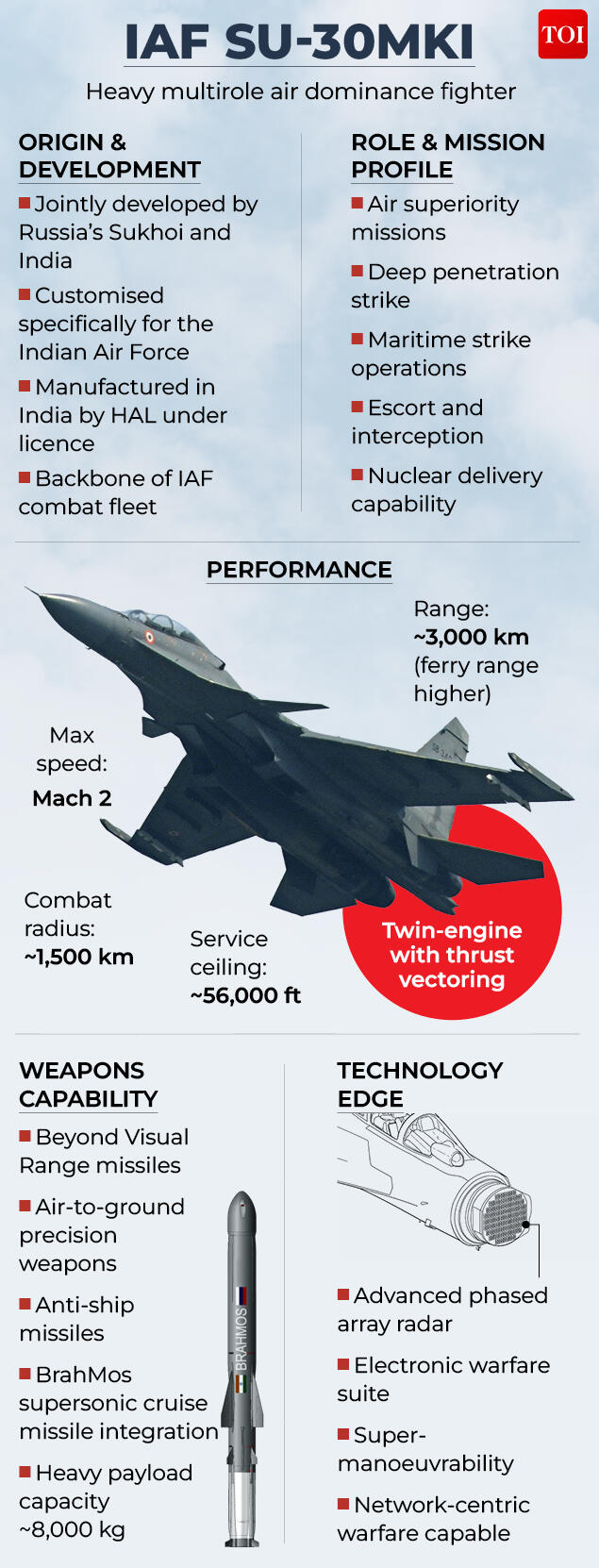
“It may have taken time, effort and even a generation, but whenever India has taken up a technological challenge, we have eventually succeeded. This FOC, achieved with indigenous radar, electronics, electronic support measures and radar warning systems, is a testament to that belief,” he said