
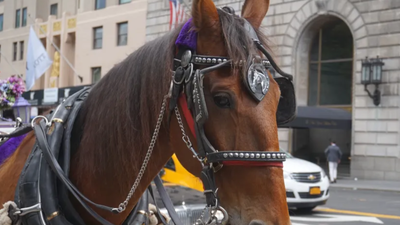
New York City’s plan to end its horse-drawn carriage industry is facing an immediate legal challenge, with the union representing carriage drivers and owners taking the fight to federal court just minutes after Mayor Zohran Mamdani signed the ban into law. According to reports by the Associated Press, NBC New York and Bloomberg Law, the lawsuit argues that the legislation threatens workers’ livelihoods and takes away valuable business assets without guaranteeing compensation. Filed on November 19 in Manhattan federal court, the proposed class-action lawsuit names the Transport Workers Union of America, TWU Local 100, a carriage licence owner and two drivers among the plaintiffs. It seeks to have the legislation declared unconstitutional and prevent the city from enforcing it.At the centre of the dispute is Romanch’s Law, which will bring New York City’s horse-drawn carriage operations to an end by June 1, 2028. The legislation also means existing carriage licences will expire on May 31, 2028, effectively ending an industry that has been part of the city’s identity for more than 160 years. The union’s legal challenge centres on the financial consequences for people who have invested in the business. City-issued carriage licences, commonly known as medallions, represent significant assets, with some owners having paid hundreds of thousands of dollars to secure them. The plaintiffs argue that eliminating these licences without guaranteed compensation amounts to an unconstitutional taking of private property. They have also raised concerns about the city’s legislative procedures and restrictions on transferring carriage horses to operators in places where the industry remains legal.The dispute comes as the Mamdani administration attempts to establish a transition programme for approximately 200 people whose livelihoods depend on the industry. A framework announced earlier this month includes plans to explore medallion buybacks, alongside employment assistance for drivers and stable workers.The administration intends to introduce a Horse Carriage Worker Industry Program in partnership with city agencies. It is expected to offer career counselling, professional training, educational opportunities, tuition assistance and connections with potential employers. A comprehensive transition plan is due by April 1, 2027, as required under the legislation. However, compensation for business owners has not been guaranteed and remains subject to further consideration by the city.The mayor’s office is also examining alternatives to traditional carriage rides, including electric carriages and electric pedal-assist bicycles, through a feasibility study. Meanwhile, the administration has indicated that it will work with animal rescue organisations and sanctuaries to arrange retirement options for the horses. Under the new law, carriage horses cannot be transferred for slaughter or continued use in another horse-drawn carriage business.The legislation gained momentum following the death of 18-year-old tourist Romanch Mahajan, who lost his life in a carriage accident in Central Park on June 17, 2026. The incident renewed public scrutiny of the industry, particularly concerns surrounding passenger safety, unpredictable traffic conditions and the welfare of horses navigating increasingly crowded city streets. The law was subsequently named in his memory.On October 22, the New York City Council approved Romanch’s Law in a 40-7 vote, with Council Member Christopher Marte sponsoring the measure and Speaker Julie Menin supporting its passage. Animal welfare organisations have long campaigned to end the practice, arguing that the demands of operating horse-drawn carriages in a modern urban environment create risks that cannot be adequately addressed through regulation alone.However, industry representatives maintain that existing licensing requirements, veterinary inspections, working-hour restrictions and weather-related suspensions provide safeguards that allow the business to operate responsibly. They argue that the city should strengthen these measures rather than eliminate the industry altogether.The city’s Law Department has confirmed that it is reviewing the lawsuit. With the union seeking to block the legislation before its implementation deadline, the case could become a significant legal test of the city’s authority to phase out a longstanding commercial tradition while addressing the property and employment rights of those affected. For now, the June 2028 deadline remains in place, but the future of New York’s iconic horse-drawn carriages may ultimately depend on what the federal court decides.