MetLife Stadium gave Neymar his first cap in 2010 and his final goodbye on Sunday.
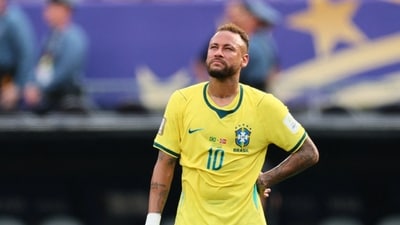
Sixteen years apart, the iconic venue, home to the NFL’s Giants and Jets, witnessed two completely different chapters of one of football’s most captivating careers. In 2010, after being overlooked for Brazil’s FIFA World Cup squad in South Africa, the teenage Neymar made his senior debut and scored, instantly reinforcing the belief that he was Brazil’s next Pele. On Sunday, he found the net once again against Norway, but this time the goal came from the penalty spot in stoppage time during a losing cause, as the 34-year-old walked off in tears following Brazil’s Round of 16 exit.
That image perhaps captures the Neymar paradox better than any statistic ever could. The numbers were extraordinary. The ending wasn’t.
Statistically, Neymar retires as Brazil’s all-time leading scorer with 80 goals in 130 appearances, a mark he took from Pelé in 2023 and one that had stood since the 1960s. Only Cafu, with 142 caps, has represented Brazil more times. His late strike against Norway also made him only the second Brazilian man, after Pelé, to score in four different FIFA World Cups, a small slice of history salvaged from an otherwise painful farewell.
But numbers rarely tell the whole story. Scratch beneath the raw totals and the comparison with Pelé quickly shifts. O Rei won three World Cups — still the only player in history to achieve that feat — and lifted his first trophy at just 17. Across four editions, he scored 12 World Cup goals, but more importantly, his legacy was built on winning football’s greatest prize, not merely starring in it.
Brazil, meanwhile, have not won the World Cup since 2002, and Neymar was expected to end that drought.
After being left out of the 2010 squad by then-coach Dunga, who felt he was talented but untested, Neymar finally graced the World Cup stage on home soil in 2014. Overall, he featured in four editions, becoming only the ninth Brazilian to do so. Across 15 World Cup appearances, he scored nine goals and registered three assists — 12 direct goal involvements, averaging 0.8 per game. He attempted four shots per match and contributed to a goal every 102 minutes, reflecting a blend of creativity and finishing.
MUST READ: The penalty that defined Brazil’s World Cup: Was Carlo Ancelotti right to overlook Vinicius Jr?
Yet, beyond the numbers lies a far more painful reality. Those four World Cup campaigns ultimately delivered heartbreak, injuries and, now, retirement without the one trophy Brazil craved most.
The comparison with Ronaldo Nazário only deepens the contrast. O Fenômeno scored 15 World Cup goals across four tournaments, still the highest tally by any Brazilian, with many of those strikes arriving in the knockout rounds, including both goals in the 2002 final. Neymar’s output never quite carried the same decisive weight. While he frequently dazzled in the group stage, injuries repeatedly robbed him of the defining moments.
A fractured vertebra against Colombia ended his 2014 campaign just before the infamous 7-1 semifinal humiliation against Germany. Later came the torn ACL, recurring ankle and calf injuries, each gradually chipping away at what once looked like an unstoppable career.
That 2014 semifinal perhaps remains the defining split in Neymar’s international journey.
Before it, he was Barcelona’s brightest star, Brazil’s undisputed talisman and the player many believed would eventually rival Lionel Messi and Cristiano Ronaldo. After it, injuries became the recurring storyline, with every comeback shorter and every return raising more questions than answers.
Perhaps that was why Carlo Ancelotti initially had no intention of taking Neymar to this World Cup.
The veteran had struggled for fitness at Santos and then suffered another calf injury before the tournament. But Brazil rallied behind him. Former players publicly backed his inclusion, while a tearful Neymar’s viral plea — “Hey Ancelotti, what about me?” — resonated across the country. Eventually, senior players inside the dressing room also urged the Italian to reconsider.
Ancelotti relented, not necessarily because he believed Neymar was physically ready, but because he recognised the respect the forward commanded within the squad and wanted to preserve dressing-room harmony.
Neymar finally ended his 981-day wait for another Brazil appearance against Scotland, coming off the bench in the final group-stage match. Ancelotti resisted using him during the tense Round of 32 win over Japan, later revealing he would only have featured if the game had gone into extra time. Against Norway, he managed just over 20 minutes after being introduced in the 67th minute.
In many ways, this World Cup summed up Neymar’s final years: held together by a fragile calf, limited to two substitute appearances and fewer than 50 minutes on the pitch. It was the clearest evidence yet that his body had finally stopped cooperating with his ambition.
Yet none of that erases what he achieved. Two Olympic medals, including Brazil’s historic gold on home soil in Rio in 2016. A national scoring record that dethroned Pelé after six decades. Countless unforgettable moments in the yellow shirt.
Neymar was never quite the serial winner Pelé became, or the ruthless finisher Ronaldo was. But for well over a decade, he remained the one Brazilian every defence feared most.
He perhaps summed it up best himself. “I tried and I tried. Now it’s over.”
Brazil’s next generation now inherits one of football’s most iconic shirts, and one very specific void that still remains unfilled.