“Your risk-reward is favourable,” Kumar said, pointing to India’s demonstrated ability to manage crude oil prices as high as $120 a barrel without derailing the economy. He added that the country has weathered two energy shocks in recent years while keeping its financial footing.
Kumar’s comments come as the April-June 2026 quarter earnings wrap up, with companies across financials, metals, automobiles, chemicals, textiles and real estate beating estimates. Oil marketing companies (OMCs) were the main laggards, and a sharp depreciation in the rupee earlier this year had rattled foreign investors — a trend Kumar says is now reversing.
Rupee stabilisation seen as a turning point
Kumar’s team studied the last two or three cycles of sharp rupee depreciation, which typically prompted foreign investors to pull money out of emerging markets, including India. Once the currency stabilises, a reflation trade tends to follow.
He pegs 97 to the dollar as the level at which the rupee is now stabilising, helped by measures from the Reserve Bank of India (RBI). Combined with an improving earnings cycle, Kumar believes this sets up a strong recovery for the Nifty, India’s benchmark stock index.
Midcaps seen outperforming largecaps
While largecap stocks are typically the first to attract foreign institutional money in a reflation trade, Kumar said the bigger opportunity lies further down the market. Smallcap and midcap stocks, which corrected the most during the downturn, tend to see money flow back in once the earnings cycle turns.
“Their outperformance to large caps is far superior,” Kumar said, adding that while largecaps may deliver the headline 17-20% gain, investors’ ability to generate additional returns, or alpha, will come from midcaps.
Consumption themes: Autos, FMCG and e-commerce
Kumar named consumer discretionary spending as a theme he expects to persist for six to eight quarters, describing the Goods and Services Tax (GST) 2.0 reform as a phenomenal success that has helped fast-moving consumer goods, or FMCG, companies post double-digit revenue growth.
Within autos, he pointed to a demand revival at Eicher Motors and continued strength at Bajaj Auto, which he described as a clear earner of foreign exchange. He also cited Maruti Suzuki, which posted strong revenue but weaker profit this quarter due to margin pressure — a trend he expects to normalise in coming quarters.
Kumar also flagged e-commerce platforms as behaving increasingly like FMCG companies. He named FSN E-Commerce Ventures, which owns Nykaa, as one of his top picks, along with PB Fintech, the parent of Policybazaar, which he said has expanded from insurance into lending and wealth management.
“I would not be surprised to say the Nifty will become more like a NASDAQ,” Kumar said, referring to the growing weight of platform companies in the index.
Power sector called a “bedrock” for growth
Kumar dismissed concerns about overvaluation in the power sector, pointing to India’s plan to build 100 gigawatts of nuclear energy capacity, of which he said state-run NTPC will account for roughly 30%. He said this shifts such companies from being viewed as regulated utilities to growth stocks, with a corresponding re-rating in valuation multiples.
He also expects the power sector’s expansion to boost demand for capital goods companies, an effect he said is already visible in results from Siemens and ABB.
Cautious on private banks, bullish on NBFCs
Kumar said he is not bullish on private sector banks, citing declining return on equity, or ROE — a measure of how efficiently a company uses shareholder money to generate profit — as the sector’s products become more commoditised. He noted that HDFC Bank‘s ROE has fallen to around 15% from roughly 25% in the past.
Instead, he said the profit pool is shifting toward non-banking financial companies (NBFCs), fintech firms and wealth managers. Within NBFCs, Kumar favours auto and commercial vehicle financiers, which he expects to see stronger tailwinds than gold financing companies.
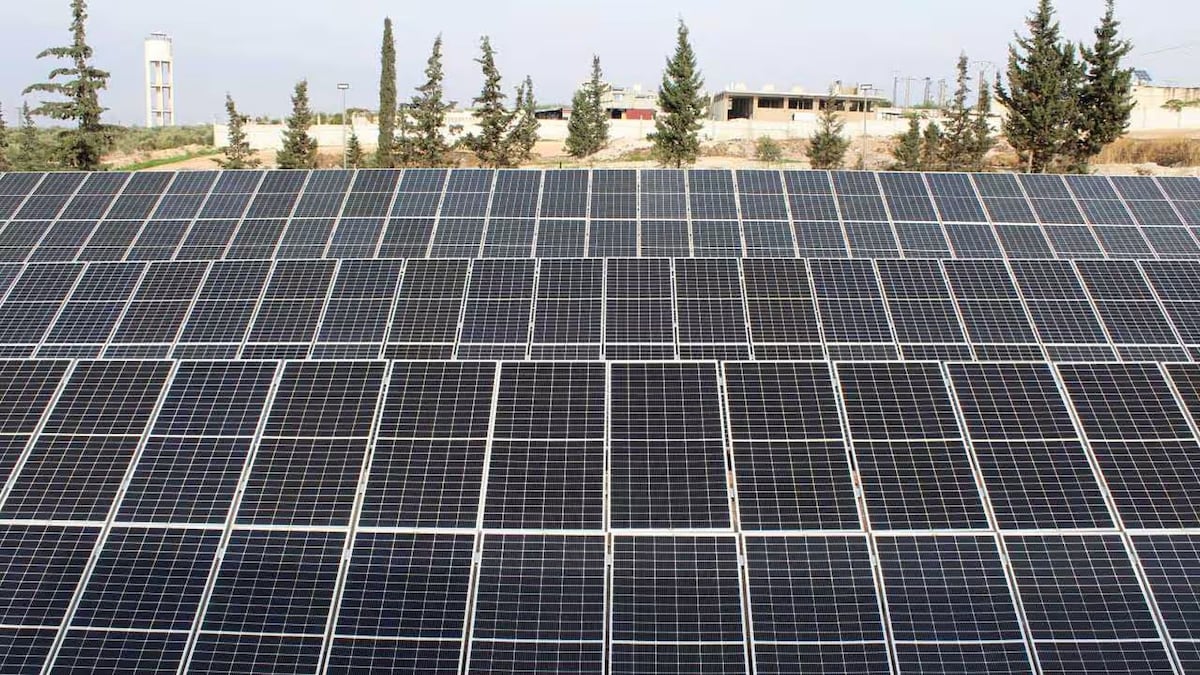
Asked about risks from a possible El Niño weather pattern affecting rural consumption, Kumar said his firm’s macro research does not currently flag major concerns, pointing to government measures on inflation management and rising adoption of solar panels under schemes like PM Surya Ghar as supporting rural demand for appliances, electric vehicles and two-wheelers.
For the full interview, watch the accompanying video
Catch all the latest updates from the stock market here