
India have won 65 medals in wrestling at the Asian Games, 11 of them came in the Greco-Roman discipline with Nitesh Siwach ending the nation’s long wait for a silver in the category. On Thursday, 23-year-old beat Mongolia’s Gankhuyag Ganbaatar 9-0 to earn a victory by technical superiority in the Men’s Greco-Roman 97kg semifinals, before losing to Japan’s Yuri Nakazato in the final to clinch the silver.
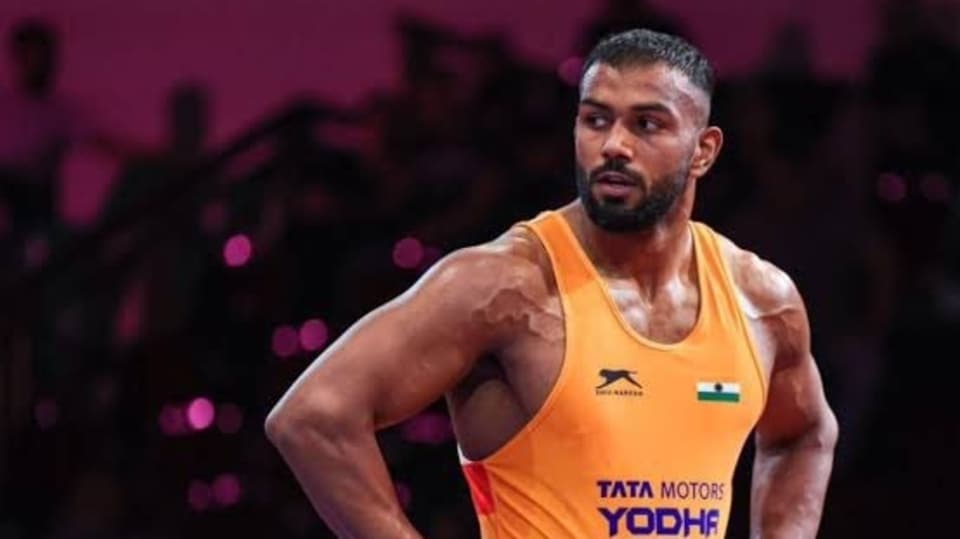
The medal haul holds a historical significance for India in Greco-Roman wrestling as Nitesh became the first silver-medallist in the discipline since Maruti Mane (Men’s 97kg) and Sajjan Singh (Men’s 87kg) finished second in the 1962 Jakarta Games, the same edition where India won its only-ever gold medal in the category — Ganpat Andalkar (Men’s +97kg).
India have since won five other bronze medals in Greco-Roman wrestling at the Asiad, including at the 2026 Games in Aichi-Nagoya, with Sunil Kumar finishing third for the second straight time in the Men’s 87kg. The remaining 54 Asian Games wrestling medals have come in freestyle wrestling.
So, what exactly is Greco-Roman wrestling, the discipline in which India have enjoyed limited success, and how different is it from freestyle wrestling?
Freestyle vs. Greco-Roman wrestling: what are the differences in terms of rules?
The primary difference lies in the grappling holds. In Greco-Roman, wrestlers are only allowed to hold above the waist, unlike in freestyle, where athletes can attack the entire body, including the leg. They are even allowed to use the legs to execute holds on a rivals’ legs.
This perhaps creates a vast difference in how the two disciplines are fought. In Greco-Roman wrestling, wrestlers are not required to bend their legs in defence and hence must remain standing, chest-to-chest, unlike in the freestyle format, where the legs are bent at almost 90 degrees. Hence, Greco-Roman wrestling will be dominated if the athlete is under the control of his opponent, while in the other format, there are always gaps to attack the legs.
The Greco-Roman format requires the athlete to be more precise; it requires more strength, and hence, a lot of work goes into the preparation.
A wrestling bout has two three-minute periods, with a 30-second break between them. In Greco-Roman wrestling, a wrestler may be placed in a ground position once per period if the referee deems them passive. The passive wrestler will then have to start from face down on the mat. The opponent will get 20-30 seconds to grab them around the waist and either lift or turn them onto their back to score points.
However, in freestyle wrestling, ground positions are less common and typically occur only in specific situations, such as when a wrestler tries to escape the mat.
Also, a technical superiority win in Freestyle is awarded when an opponent has a 10-point advantage, whereas in Greco, it is awarded when an opponent has an 8-point advantage.