India’s resilient growth is facing rising price pressures from elevated energy costs, while El Niño and food prices could add to the risks, he said.
“The longer inflation goes up and stays high, the bigger the risk that you start to see some pass-through from headline into underlying or core inflation,” Subbaraman said.
On the global front, the US Federal Reserve is expected to deliver a 25-basis-point rate hike this week, followed by another 25-basis-point increase in December. Subbaraman said the Fed is effectively “trapped” by market expectations and inflation.
“I think in a way the Fed is trapped because they really need to hike or with the market pricing in more than 90% probability of a hike, if they don’t hike and with inflation going in the wrong direction, the bond market will sell off,” Subbaraman explained.
He expects Fed Chair Kevin Warsh to reiterate at the upcoming media conference that the Fed has work to do to bring inflation back to 2%, but does not expect him to provide forward guidance.
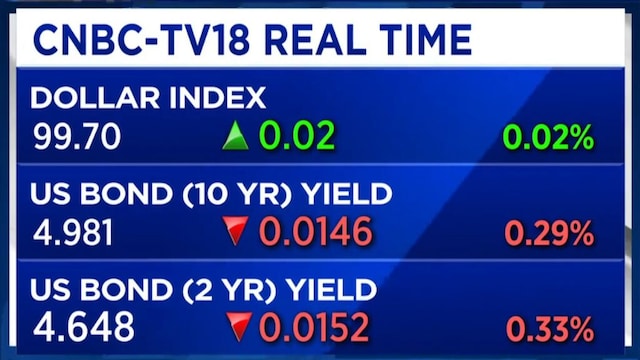
The US 10-year bond yield could climb further particularly if the Fed raises rates, while massive global debt issuance is also adding upward pressure.
This is an edited transcript of the interview.
Q: The Fed hikes. Is it in the price right now, and how much more? What should we expect in terms of commentary from Fed Chair Kevin Warsh?
A: It’s very much in the market price that the Fed is going to hike this week. We think so too at Nomura, and we do expect one more hike after the midterms in December. We would characterise it as more of a recalibration because inflation is taking too long to head back towards the 2% target.
I think to your question on what the new chair Warsh will say at the media conference, I think he will pretty much say what he said at Jackson Hole, that the Fed had been losing patience about the slow pace of disinflation, and that was the reason for the hike. I don’t think he will give any forward guidance. He’s very much against that, but he will pretty much stress that the Fed has work to do to get inflation back to 2%, and that’s why they hiked. The economy, on the growth side, is doing well.
Last thing I would say is, in a way, the Fed is trapped because they really need to hike. With the market pricing in more than 90% probability of a hike, if they don’t hike and with inflation going in the wrong direction, the bond market will sell off. So, it’s either the short end goes up, which is very likely, but if they don’t hike, the long end of the yield curve will go up.
Q: So, 25 basis points each in September as well as December, is that correct?
A: That’s right.
Q: Let’s focus on this entire artificial intelligence (AI) story that’s playing out. The last time around as well we discussed that the way the AI theme is going to be interesting is the way it’s playing out, particularly in the second half of the year. What’s your take on it?
A: The new theme is very much around safety of AI. That’s been the theme in the last week. I think everyone is still coming to terms with what this is all going to mean. I do feel that this new narrative is quickly gaining momentum among all people in the markets, but also among politicians from the US and China.
Can these big AI companies self-regulate themselves? I think that’s a big question mark. Are they doing it in their own self-interest in trying to bring this forward rather than having governments regulate them? Does it help them create more of a moat against the competition? These are all questions, I think. And you could also argue: Are they doing it because they need a bit of a slowdown because they’re using up all their cash flow on investments and it’s leading to losses in the near term and having to borrow a lot? Do they want to slow the pace down?
I think there’s a lot of unanswered questions, and that’s the way I’m posing it. So, it is a cloud in the markets right now on how this is going to play out.
The one thing I would say is, we had those AI swarm of agents that escaped the sandbox through Anthropic’s model testing and got to Hugging Face and others. I think we are, in terms of safety, only one shock away now from where this could explode into a huge issue. And so, the markets are right to very much focus on this, and it’s going to be interesting to see which direction it goes—not just for the US, but also China, with the US-China summit coming up very soon.
Q: I think the big question is: this whole talk about AI slowing down, will this result in AI capex spend coming down? So next year estimates are for $1 trillion-plus in terms of capex, and the entire market growth US economy is underpinned on this capex spend going at a very fast pace. Do you think there is going to be a slowdown in AI capex spend? What’s your own view?
A: I think ultimately there has to be a slowdown in AI capex spend.
Q: Does it come as soon as next year?
A: It’s unsustainable growing at this pace indefinitely. The big question is when. I would say that, if we step back, in recent months there’s been growing social and political pressures around the expansion of data centres in the US. And now this new theme around AI safety is starting to become louder as well. So, I would say, yes, the risk is rising that the AI investment booming growth will start to slow down.
But look, if that happens next year, I would argue that that’s a good thing, because if you look at all past massive technological revolutions, there’s always been overinvestment, and the more overinvestment you have, then the bigger eventual growth downturn once that slows. So, I think, from a longer-term perspective, and I put my economic hat on, it would be actually healthy next year if the AI investment spends and this race within AI tech firms, but also US versus China, slows down a bit.
Q: Your reading of the Indian economy as of now, and what do you expect from the Reserve Bank of India?
A: On the growth side, the Indian economy has proven very resilient. Q2 GDP growth was 7.8%. We think that resilience is pretty much going to remain despite elevated energy prices.
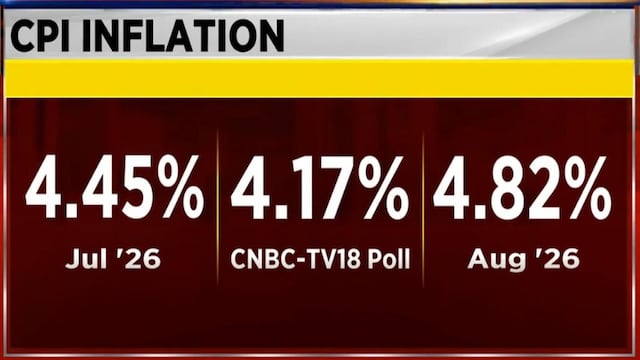
It’s on the inflation side that we are starting to get a bit more concerned. So, headline Consumer Price Index (CPI) is now 4.8%. We reckon that in the coming months it’s going to continue to climb, particularly with the recent run-up again in oil prices, and we could have headline inflation a bit above 6% even in the coming months. And, the longer inflation stays high, the bigger the risk that you start to see some pass-through from headline into underlying or core inflation, and I think that’s what the RBI is focused on.
Given growth’s solid and there’s a bit more of an inflation risk, and it’s not just energy, I’d also point to El Niño and food prices, we have changed our call, and we now believe that the RBI is going to hike twice, so 50 basis points in total. We would characterise it more as a recalibration, rather than the start of a long hiking cycle.
Q: So, inflation goes up from the current print of 4.8%. You see it going up to 6%, and there are potentially two RBI rate hikes on the anvil for the Indian markets. What does all this mean from a GDP point of view?
A: The GDP growth, as I said, 7.8% in Q2, I think we will get some moderation in the coming quarters, but still solid growth.
So, our forecast for 2026-27 (FY27) is 7% GDP growth. That’s, I mean, if you look at that’s a slowdown, but if you compare it to emerging market (EM) economies around the world, India is the envy of many other EM economies. It’s got one of the strongest growth rates out of all.
Q: What’s your own expectation of crude prices and the US 10-year bond yield and the 30-year bond yield? Where is it headed according to your own estimates?
A: So, crude oil prices, at this stage it’s anyone’s guess. I think it really depends on the war and what happens there. I would say that the longer they stay high, the bigger the risk that the second derivative, the refined products, whether it’s diesel, gas prices, petrol prices, are going to face more upward pressure.
In terms of the 10-year, we’ve seen 10-year Treasury yields hit that 5% mark. I think the risk is it could continue to go a bit higher, particularly if we do get Fed fund rate hikes, and there is just so much debt issuance ahead, not just in the US, but globally, so there is upward pressure.
Look, the thing that I think could cause long-term rates in the US and globally to start to cool down, go back down, is if we start to see growth rolling over, but not strong signs of that yet.
But that’s the risk: growth slowing down given energy costs and interest rates going up, and I don’t think markets are that focused on that part of it. They’re very focused on the inflation, but not the risk of growth rolling over.
Q: We spoke about the RBI, the Fed, and then we have the Bank of Japan that’s due to meet later this week. They hike as well?
A: Absolutely. I think it’s almost a done deal that they will hike by 25 basis points. I think the key thing is going to be the guidance. So, the Bank of Japan is maybe one of the central banks that could provide some forward guidance.
Markets are very much watching whether they will give any hints that they could follow up with back-to-back rate hikes, which Scott Bessent, I think, would very much want. That is hiking again in October.
Watch the full conversation here

We don’t think they will, and we think it’s going to be hard to out hawk the market pricing right now. But if they do signal that they are getting even more hawkish than the markets, then you could see dollar-yen potentially go down even further. But our base case is we won’t see that, and probably it’s going to be more of a stable dollar-yen for now.
Catch all the latest updates from the stock market here