
The National Stock Exchange (NSE) is confident of its growth outlook, with its commodity derivatives business gaining traction. The exchange’s commodity options premium turnover jumped nearly 10-fold to around ₹8,300 crore in October 2026 from ₹880 crore in January 2026.
Sriram Krishnan, Chief Business Development Officer at NSE, said the exchange could become a strong alternative platform for market participants if its maintains the current growth momentum.
The exchange is looking to build on this momentum by introducing new products and strengthening its presence in the commodity derivatives segment. Krishnan said NSE is focusing on products such as Electronic Gold Receipts (EGR), which were launched in May 2026.
The exchange expects activity on the platform to pick up, particularly during the festive season, as investors look for alternatives to physical gold. NSE aims to use the EGR platform, backed by domestically recycled gold, to contribute towards reducing India’s gold imports
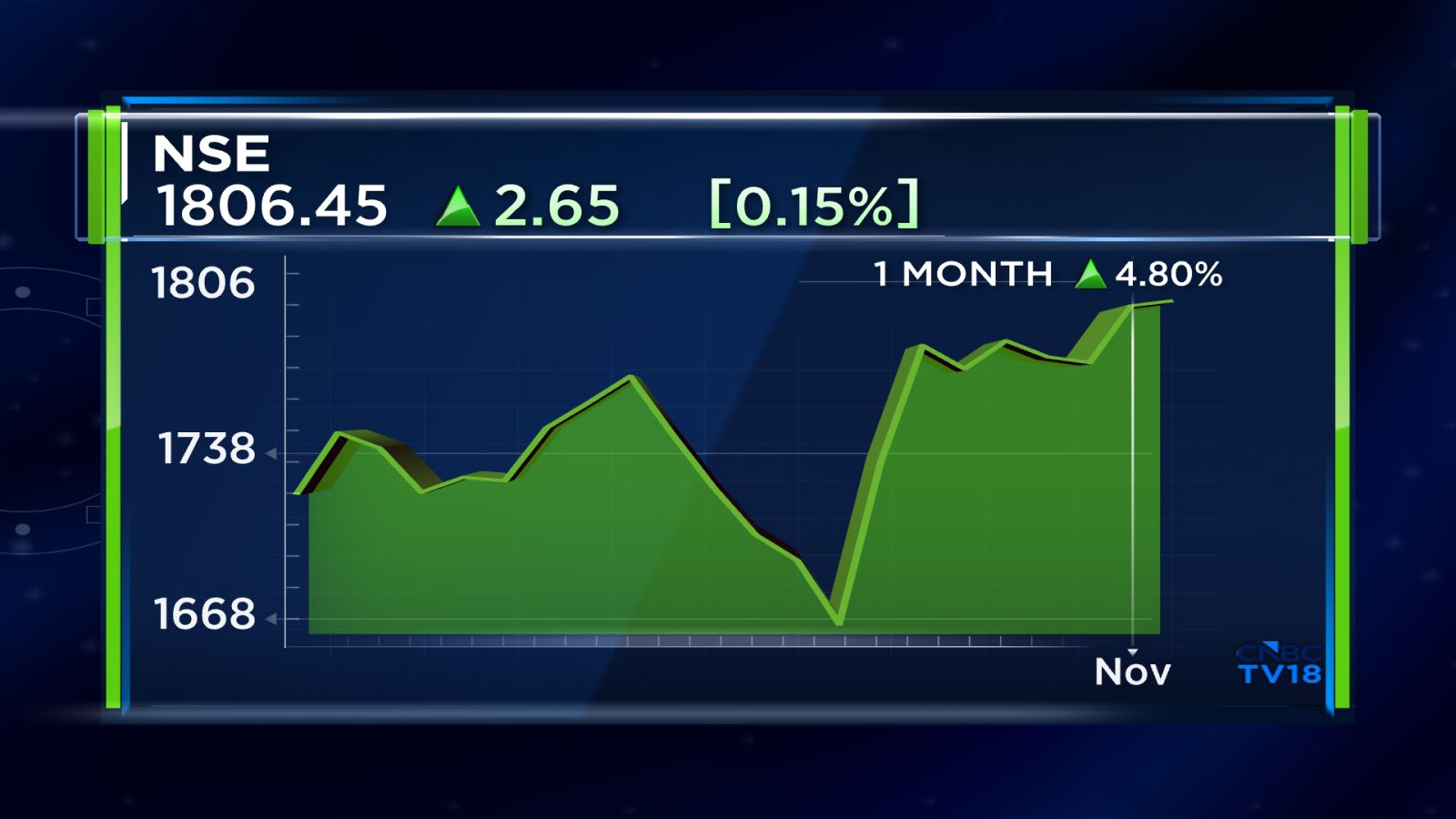
The recently listed stock was trading at ₹1,803.80 on the NSE at 10:47 am.
Ian Desouza, Chief Financial Officer of NSE, said data fees, index licensing and other non-trading businesses already account for 15-20% of revenue and are growing at a mid-to-high-teens rate.
In the July–September 2026 quarter (Q2FY27), National Stock Exchange of India Ltd (NSE) reported total income of ₹4,554 crore and a net profit of ₹2,578 crore.
This is an edited transcript of the interview.
Question
How would you sum up Q2? October volumes have recovered sharply. Is the impact on the closing auction session (CAS) largely behind you, or do you expect another pickup in activity after December 7?
Answer:
Krishnan: The way we look at it is that CAS was never a problem. CAS was only an enabler for foreign investors, particularly those running ETFs and index funds, to trade on rebalancing days at the closing price because they do not want tracking errors. The concerns raised by market participants were around settlement price discovery for expiring index options, which is a completely different issue. However, SEBI has now announced the new rules, which will come into effect from December 3. We think that’s great news, and market participants are obviously very happy about it. We also believe this gives market participants an opportunity to understand how CAS works better. Over time, along with the CAS segment and the new method coming into effect, we could also see some changes in the securities lending and borrowing programme. There could be further initiatives from SEBI on ease of doing business, particularly for foreign investors. There is a lot of discussion these days about the possibility of the government reviewing long-term capital gains tax. Other measures could also be explored. All of this, particularly during the festive season, is encouraging news. We are confident that the future ahead is bright.
Question
Since you mentioned LTCG, there is a proposal to potentially waive LTCG tax for foreign investors. Do you think this could meaningfully bring FIIs back to Indian markets, or are there other factors that could keep them away?
Answer:
Krishnan: There are several factors that attract investors to any market across the world. First, the structural performance of companies and their earnings growth. Second, geopolitics and any positive or negative impact on a particular country or geography. Third, a country’s dependence on key exports or imports to drive its economy and economic growth. For example, India is heavily dependent on oil. Therefore, whenever oil prices rise, it has a somewhat negative impact on the country. We have to work harder to overcome such difficult periods. What the government has been consistently doing over the past several months and years is focusing on the right measures. We have full confidence in the regulators and policymakers that the right decisions will be taken in this instance as well. Of course, during the festive season, to hear positive developments such as a potential reduction or elimination of long-term capital gains tax for foreign investors is encouraging and can be a significant sentiment booster. There is no doubt about that. However, a decision has not yet been taken, so we will have to wait and see what happens. Whether this measure is introduced or some other initiatives are announced, one thing is certain: we are very confident about the future. India has been a steadily performing economy, and nobody denies that.
Question
NSE has been expanding into commodity derivatives, with corporate bond index futures also in the pipeline. How do you plan to build liquidity in the commodity derivatives segment? Exchanges are essentially a network business, and NSE already has that network on the equity side. What is the timeline for launching corporate bond index futures?
Answer:
Krishnan: The corporate bond index futures product is awaiting approval from the Reserve Bank of India. Once we receive that approval, we will be able to launch the product quickly. We are also in discussions with SEBI to explore whether market-making can be permitted to develop the product and make it successful. Coming to the question on commodity derivatives and NSE’s progress, the premium turnover of commodity options on NSE was around ₹880 crore for the entire month of January 2026. The same figure for October 2026 was around ₹8,300 crore. We have therefore grown nearly tenfold in nine months. That is the pace of growth we have witnessed in 2026. If we maintain the same momentum in the coming months, we can safely conclude that NSE Commodities will become a good alternative platform for market participants. We are also looking to introduce newer and more exciting products. For example, the EGR was launched in May 2026. With Dhanteras coming up in a few days, we expect to see a significant increase in activity, as investors may choose NSE EGR instead of physical gold, following the Prime Minister’s guidance. The NSE EGRs created so far have been sourced entirely from domestically recycled gold. Our objective is to reduce the country’s gold imports. We are confident that NSE EGR will make a small but meaningful contribution initially and eventually grow into a transformative product.
Question
Mr Desouza, around 75% of your operating revenue comes from transaction charges, with weekly index options alone accounting for approximately 42% of revenue. How much can data fees, index licensing and other non-trading businesses change the revenue mix by 2030?
Answer:
Desouza: It’s difficult to predict. However, to give you some context, these businesses currently contribute around 15-20% of our revenue, and they are growing at a higher rate of around mid-to-high teens. If that growth continues, we expect them to remain an important part of the business. It is difficult to predict what percentage of our revenue they will contribute in the future.
Question
Mr Krishnan, with operating margins above 75%, where do you see the next leg of earnings growth coming from if trading activity continues to moderate?
Answer:
Krishnan: This would be a challenge for any exchange anywhere in the world. If market conditions deteriorate and volumes decline, it becomes challenging. That is the cyclical nature of this industry. Therefore, one has to look at how efficiently an exchange can operate. From that perspective, NSE is one of the finest exchanges in terms of operational efficiency. Our costs are very much under control at all times. Technology is our biggest cost line. This tells you a lot about how frugal we are across other expense lines, including employee costs, which are probably the second-biggest expense. In a way, NSE is able to deliver its services to the market community at a very low cost because of the technology platform and the strength it has built over the years. NSE has also been successful because of its innovation, thought leadership and efforts to democratise everything it has done over the years. If we continue on the same path, we have every reason to believe that, with diversification across the various new products we are planning to introduce, we should be able to sustain our growth.
National Stock Exchange of India’s current market capitalisation is ₹4,46,985 crore.
Watch accompanying video

NSE confident of growth outlook as commodity options turnover jumps 10-fold in nine months
Follow our live blog for more updates on Q2 results

Minda Corp expects sunroof business to generate ₹300-400 crore revenue from FY29-30
Nov 4, 2026

Lloyds Metals Q2 results: Net profit jumps 88.1% to ₹1,046 crore, revenue rises 55.3% to ₹5,673 crore
Nov 3, 2026

Subros Q2 results: Net profit rises 9.6% to ₹44.6 crore, revenue jumps 36.3% to ₹1,199 crore
Nov 3, 2026

GNG Electronics Q2 results: Net profit rises 73% to ₹56.3 crore, revenue jumps 42% to ₹625 crore
Nov 3, 2026