
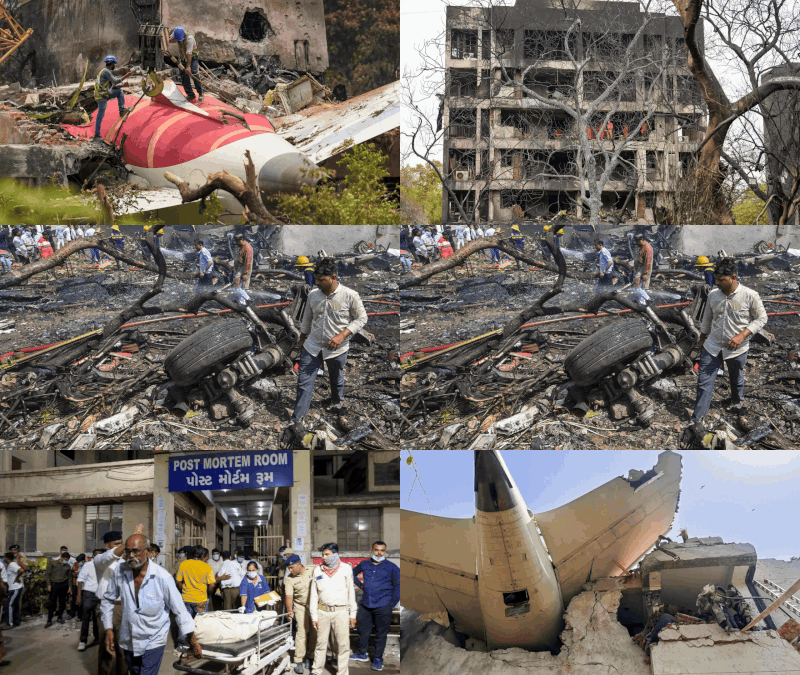
NEW DELHI: One year has passed since Air India Flight AI171 crashed moments after take-off from Ahmedabad, claiming 260 lives and leaving behind hundreds of grieving families still searching for answers. The wreckage has long been cleared. Life around the crash site has gradually returned to routine. But for many families, June 12, 2025 remains frozen in time.
.
Many wait for answers with a pain almost as acute as the loss itself: What caused the plane to fall? Could it have been prevented? Will the final investigation bring closure? As the nation marks the first anniversary of the Ahmedabad Air India crash, the tragedy remains far more than an aviation disaster. It is a story of dreams cut short, families learning to live with unimaginable loss and questions that continue to linger long after the wreckage was cleared.The impact of AI171 extended far beyond the passengers and their families. Several Air India employees who worked alongside the crew members on board say they too struggled with the aftermath of the disaster. An airline staffer, speaking on condition of anonymity, told TOI that the tragedy left many employees traumatised and some resigned within months of the crash.“The trauma of the Air India crash affected us as well. Many crew members resigned within three to four months. We were all dealing with trauma and were not even provided with mental health support,” the employee said.For Parth Patel, who lost his mother Hemangini, uncle Rajnikant and aunt Divya in the disaster, the anniversary is a reminder not only of loss but also of the questions that continue to linger.“Everyone is calling this a tragedy. That is wrong. It was a massive systemic failure. A year has passed and we still do not have a final report or any real accountability. The promises of justice remain only words on paper,” Patel told TOI.
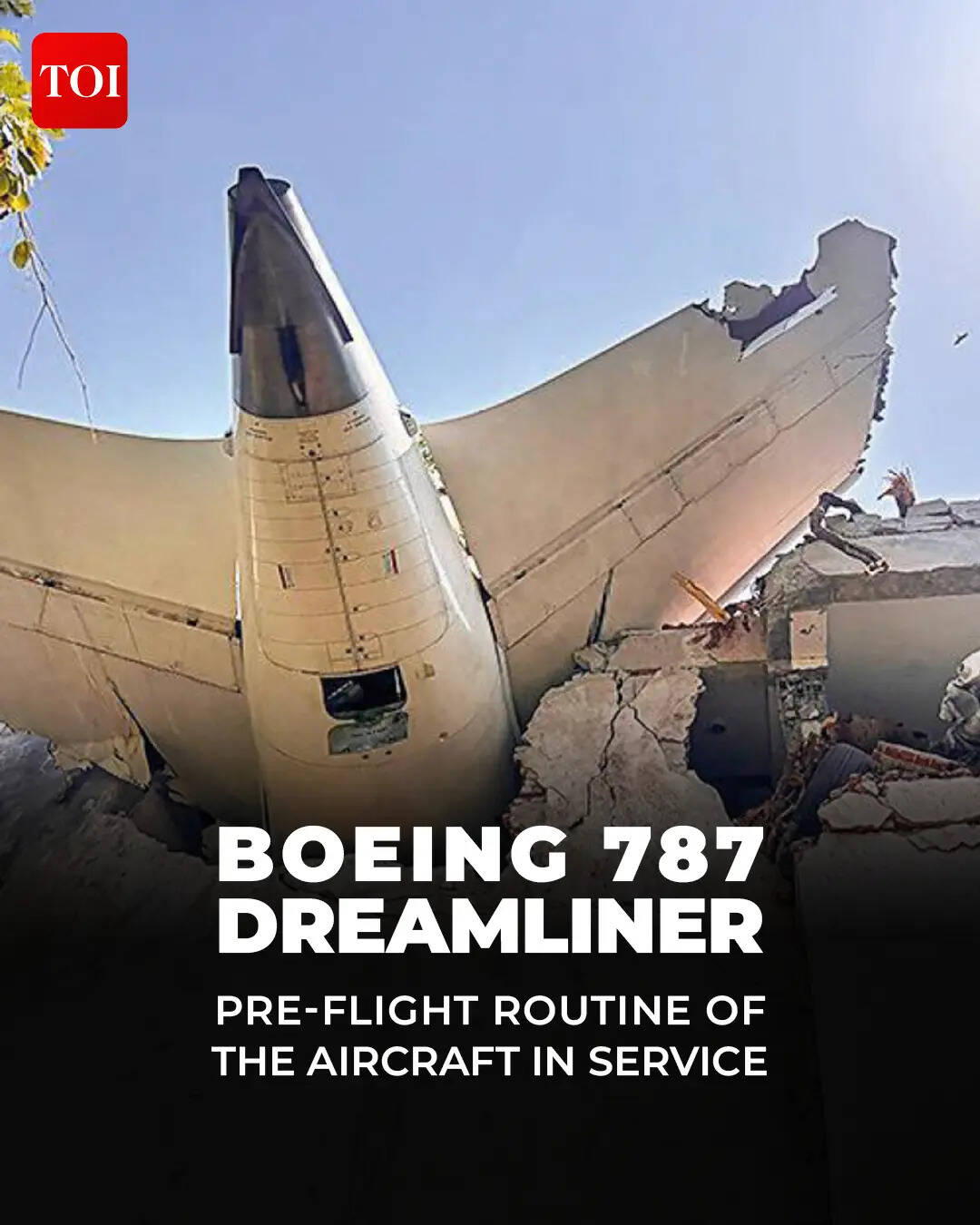
Across India, countless families carry similar stories of interrupted futures, unfinished conversations and loved ones whose absence is felt in the smallest moments of everyday life.The wreckage has been cleared and life around the site has largely returned to routine. But for the families of the 260 victims, time has not healed all wounds.
An ordinary day, a routine flight
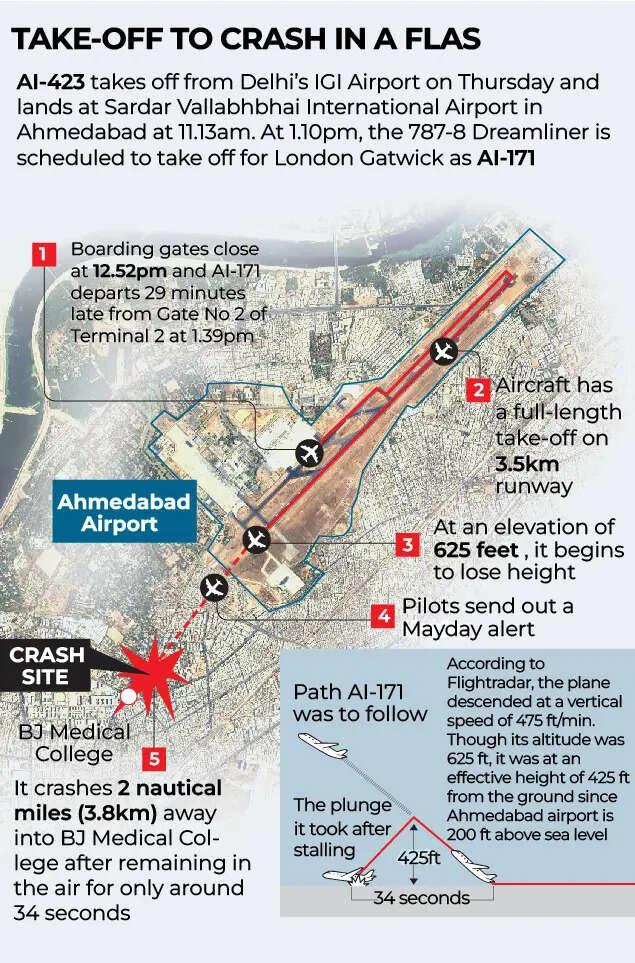
For most people in Ahmedabad, the day began like any other summer afternoon. At Sardar Vallabhbhai Patel International Airport, Air India flight 171 prepared for a routine journey to London Gatwick. Families said goodbye, passengers settled in.At 1:38pm the Boeing 787 lifted off. Less than a minute later, it was gone.The Dreamliner crashed into the BJ Medical College hostel complex in Meghaninagar moments after takeoff, creating one of India’s worst aviation disasters.
.
For residents living near the airport, the first sign that something had gone terribly wrong was the sound: a massive roar, then thick smoke. “When we went to the crash site, dead bodies and debris were scattered all over,” an eyewitness who lived nearby recalled. Another, whose office stood barely 200 metres away, described chaos — a loud blast, choking smoke, fire and confusion that made everything invisible.Within minutes, images of thick black smoke rising above Ahmedabad began flashing on television screens and phones across the country. Rescue teams, firefighters, police, disaster response units and medical staff converged as families scrambled for news. The aircraft carried 242 people; the crash also killed medical students, doctors and residents in the densely populated hostel area. By evening, the scale of the disaster had become horrifyingly clear.
How 32 seconds changed everything
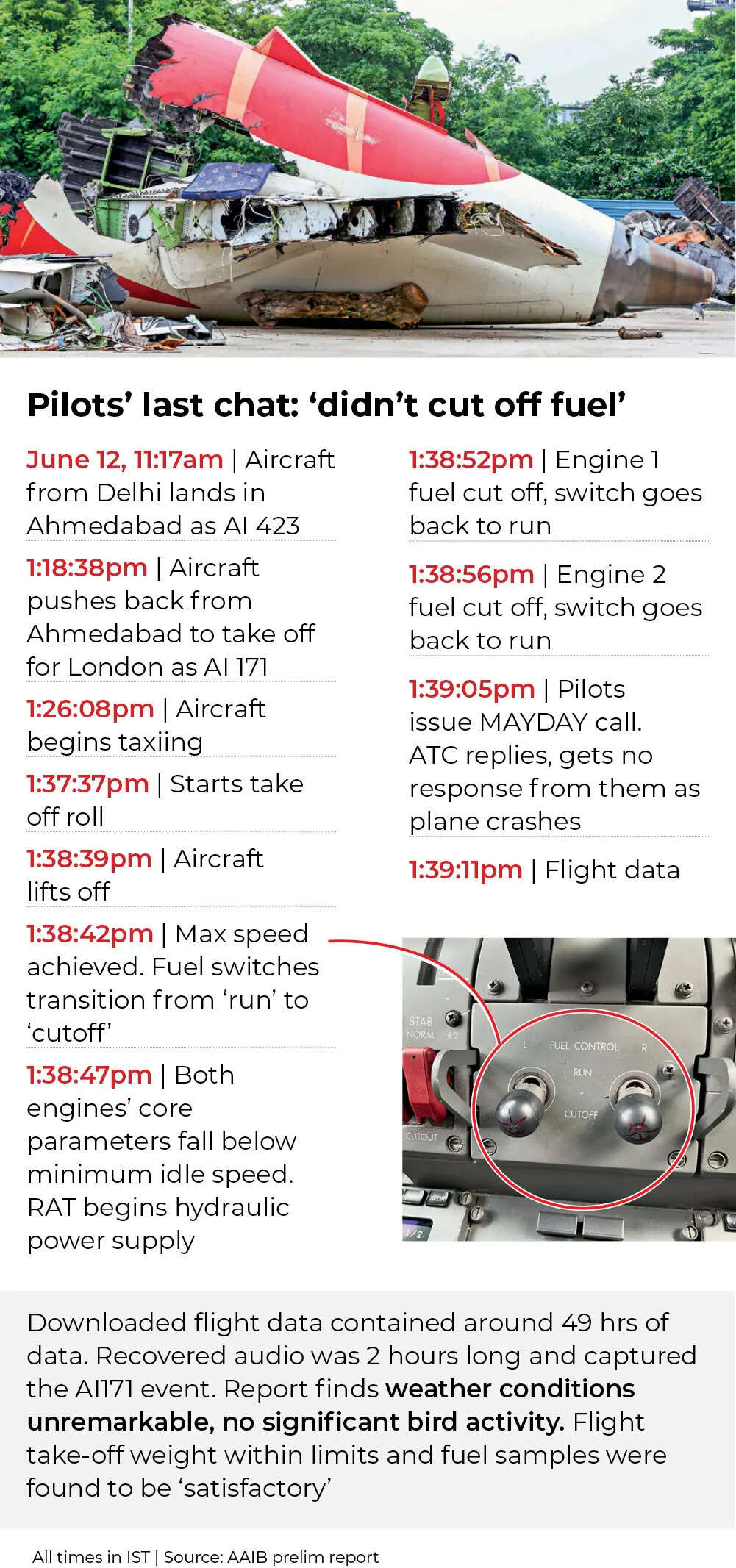
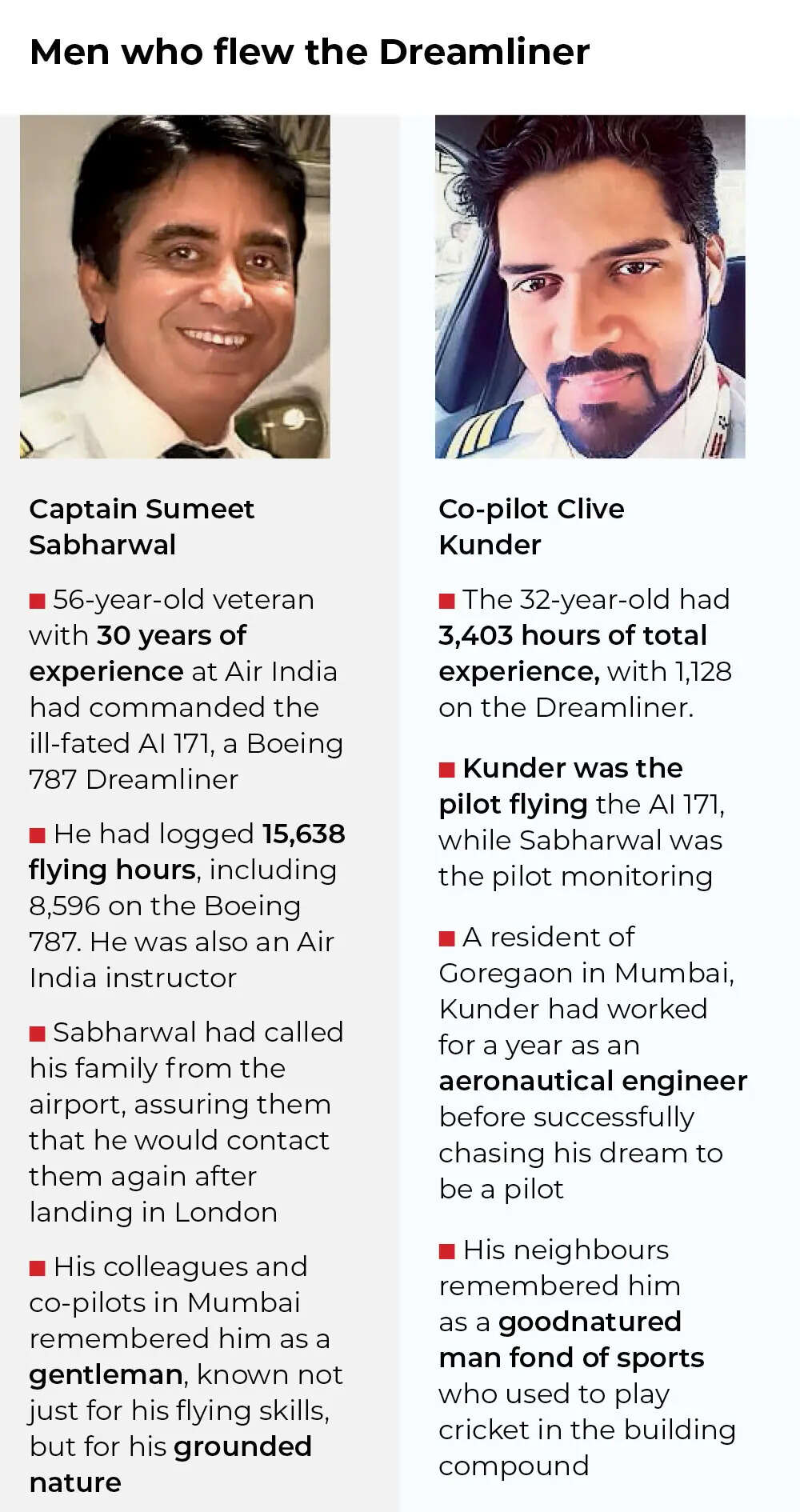
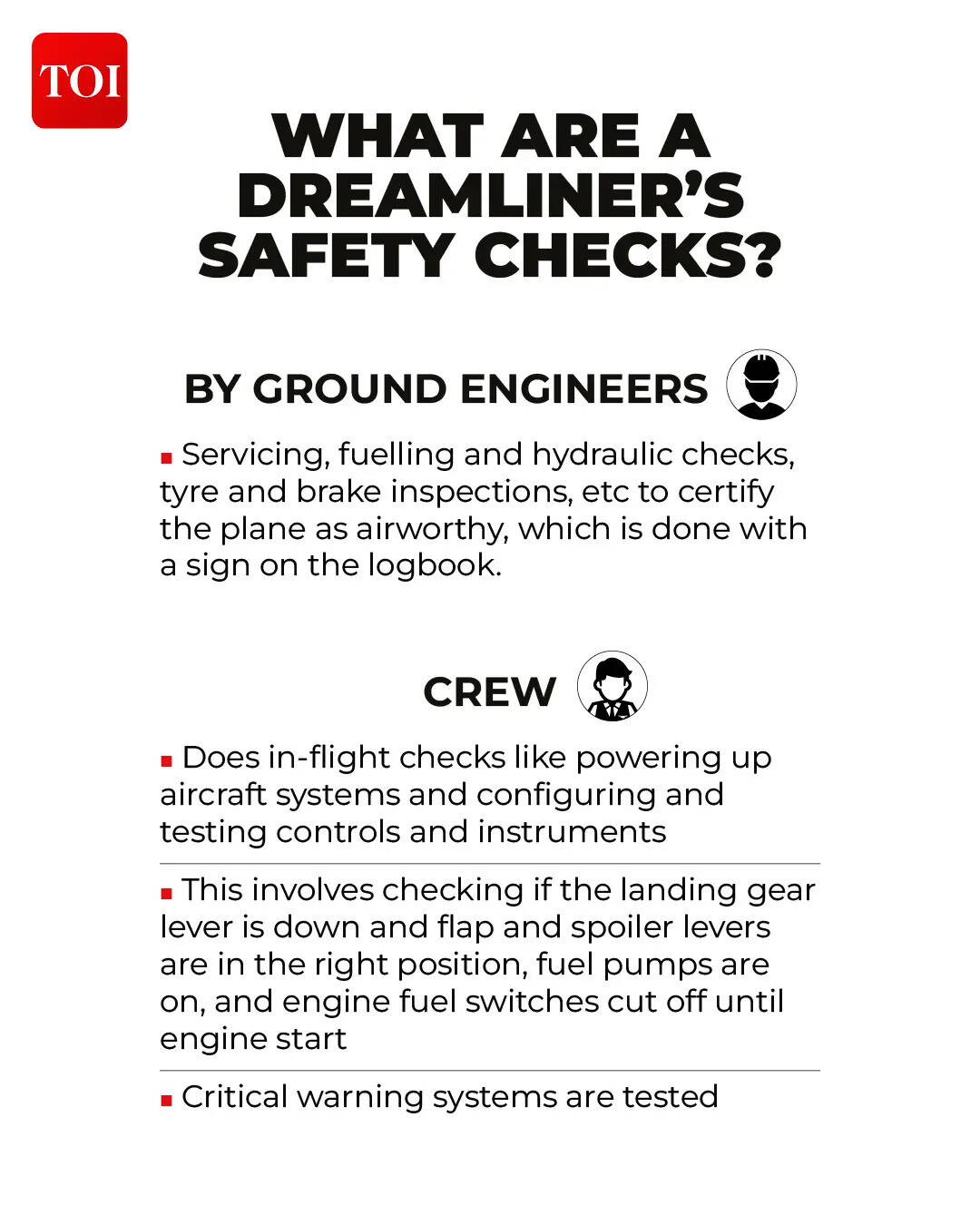
Captain Sumeet Sabharwal and First Officer Clive Kunder performed routine checks as the flight took off. Just three seconds into the flight, something went terribly wrong.The fuel control switches for both engines transitioned from “RUN” to “CUTOFF”, just a second apart. Fuel supply to both engines was interrupted, causing engine power to drop and the aircraft to crash.
.
According to the preliminary report released by the Aircraft Accident Investigation Bureau (AAIB), one pilot was heard asking, “Why did you cut off?” to which the other replied, “I didn’t.”The conversation, recorded after the fuel control switches moved from RUN to CUTOFF, triggered widespread debate among aviation experts and the public over what may have happened in the cockpit during the aircraft’s final moments.Within seconds, the aircraft’s Ram Air Turbine (RAT), an emergency system designed to provide hydraulic and electrical power during critical failures, automatically deployed as engine parameters dropped below minimum levels.The pilots quickly moved the fuel switches back to the RUN position. Fuel supply to the engines resumed and recovery sequences began. But it was too late.At 1:39:05pm, the pilots transmitted a final distress call: “MAYDAY, MAYDAY, MAYDAY.”It was the last communication from the cockpit.Six seconds later, the aircraft crashed less than two kilometres from the airport. At 1:39:11pm, flight data stopped recording.However, the preliminary report stopped short of assigning blame or drawing conclusions. Released under International Civil Aviation Organization (ICAO) guidelines, the document was intended to establish technical facts and reconstruct the sequence of events rather than determine responsibility.
.
The report also referred to a 2018 advisory issued by the US Federal Aviation Administration regarding the possible disengagement of the locking feature on fuel control switches used on several Boeing aircraft, including the Dreamliner. Air India had not carried out the suggested inspections as the advisory was not mandatory.Investigators further observed that the aircraft’s throttle control module had been replaced in 2019 and again in 2023, though no previously reported defects related to the fuel control switches were found.A year later, what caused the switches to move and ultimately led to the loss of AI171 remains one of the central questions investigators are still working to answer.
The lives on flight AI171
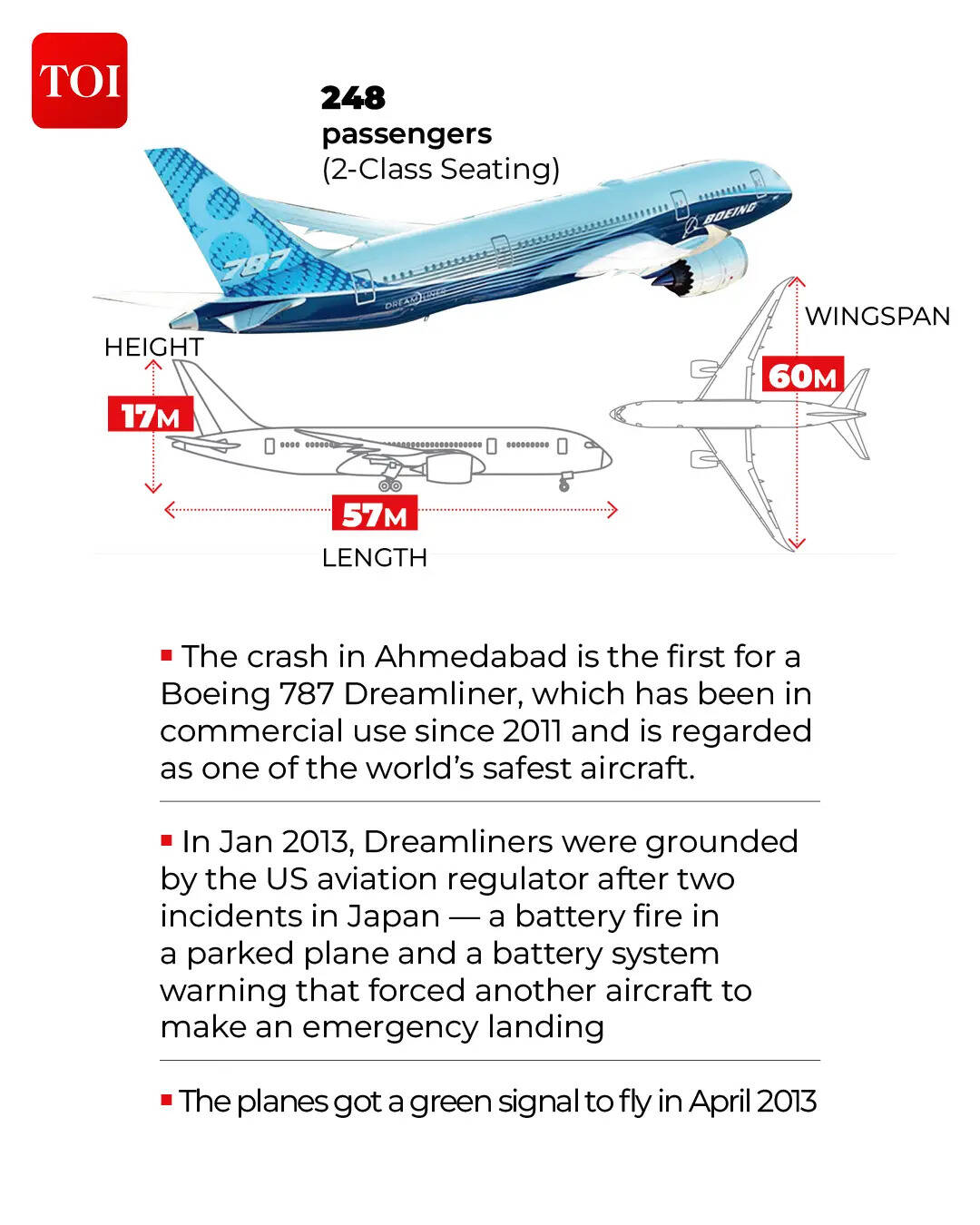
The aircraft carried 242 people on board, including 230 passengers, two pilots and 10 cabin crew members. Some passengers were travelling to reunite with their families. Others were chasing educational opportunities, returning home or preparing for the next chapter of their lives.
.
Behind every seat number on the flight was a story.Seat 35J. British national Ramesh Patel had travelled to India for a short visit. “He came here for nine days … he just wanted to eat some fruits … he did not come back home. This was his first trip. I spoke to him 3-4 times a week, but when he video-called on Tuesday, I was working, and I thought I would call him back but I was never able to,” his daughter Priti Pandya said.Seat 27A. Sanket Goswami from Mehsana was travelling to London to pursue higher education.“My nephew lost his only son. He was going to London to study. He was an enthusiastic boy. He has a younger sister,” a relative said.Seat 2D. Gujarat former chief minister Vijay Rupani was going to London to meet his daughter.“I still feel as if he is with us. His memories will stay with us always … We used to celebrate all the festivals together … I cannot believe this has happened,” his neighbour Kiranben said after the tragedy.Seat 25G. Among those on board was Chandu Baguane who died in the crash.. For years, Chandu had worked as a labourer in London, building a life centred on supporting his loved ones back home. Originally from a village near Ahmedabad, he was preparing to return to the United Kingdom on AI171 after completing the final rituals and spending precious time with his family.
Those left behind
Across India and overseas, families spent the first hours after the crash desperately trying to reconnect with loved ones. Phones rang unanswered. Messages went undelivered. Hope slowly gave way to fear.Many rushed to Ahmedabad in search of information, clinging to reports that survivors might still be found.What followed were days of uncertainty.Families waited outside hospitals, emergency centres and DNA collection facilities as authorities worked to identify victims. For many, acceptance proved difficult.At BJ Medical College, Dean Dr Meenakshi Parikh recalled one father refusing to believe DNA testing was necessary. “My eyes are the DNA test,” he told officials, insisting he would recognise his family no matter what condition they were in.Parikh still remembers the moment. “I could see where he was coming from,” she later said.For many families, the passage of time has not erased the loss. It has simply taught them how to live alongside it.And for those left behind, some conversations remain unfinished.
Seat 11A: The man who survived
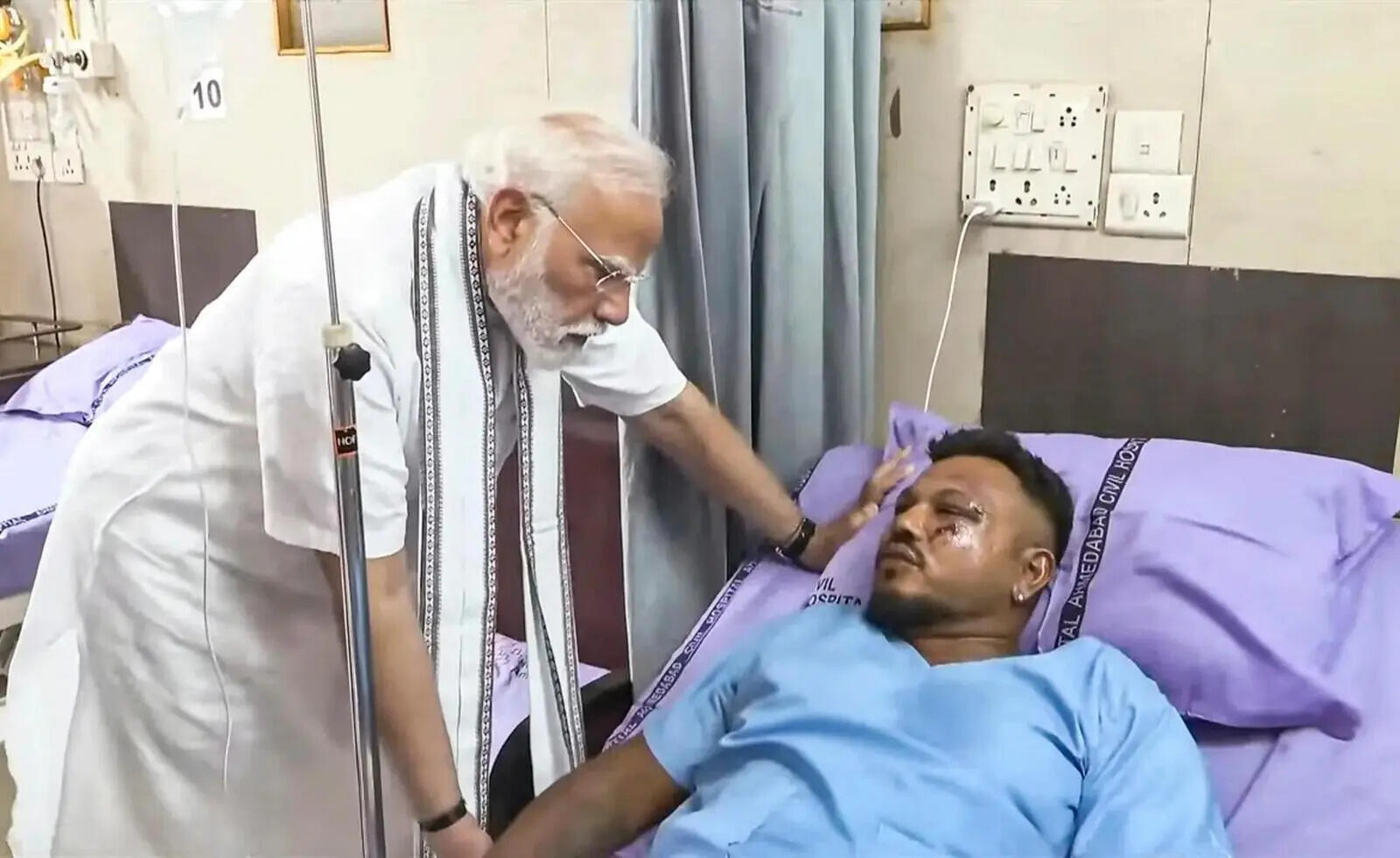
Among the 242 passengers and crew was 40-year-old Viswashkumar Ramesh, seated in 11A, next to an emergency exit.Videos of Ramesh stumbling away from the wreckage became one of the defining visuals of the tragedy. Yet behind what many described as a miracle lies a story of grief, trauma and survival.Recalling the final moments of the flight, Ramesh said he sensed something was wrong almost immediately after take-off.“At first, I thought I was dead,” Ramesh recalled. “Later, I realised I was still alive and saw an opening in the fuselage near my seat. I managed to unbuckle myself. I used my leg to push through that opening and crawled out.”Videos from the crash site showed him emerging from the debris, injured and disoriented, shouting in Gujarati, “Plane fatyo che!” (“The plane has exploded”).But survival came with an unbearable loss.Seated across the aisle in 11J was his younger brother, Ajaykumar Ramesh who did not survive.Days later, still bandaged and limping, he carried his brother’s coffin during the final rites at their ancestral village in Diu.“Viswash, along with the father, broke down multiple times during the final rites,” a relative told reporters.
.
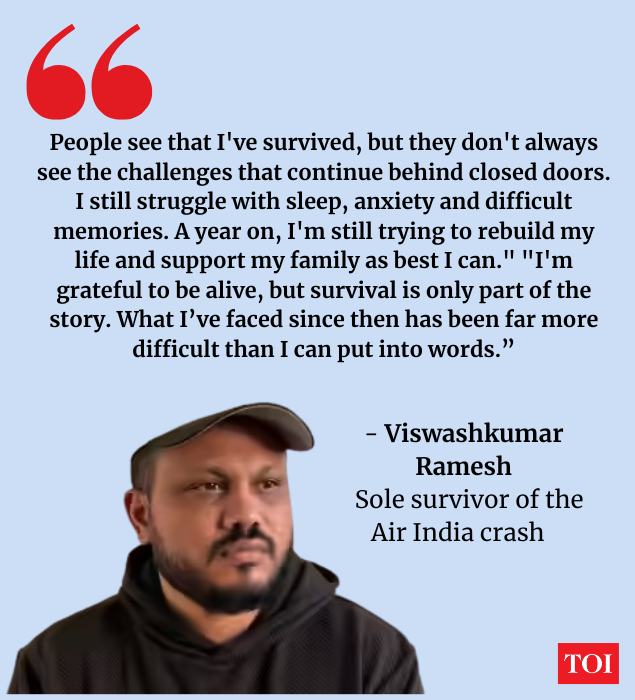
Another family member, Dhiru Soma, said the survivor was struggling to come to terms with the loss. “He is not relieved to have survived. He feels more pain over his brother’s death.”A year later, Viswashkumar Ramesh continues to battle physical pain, financial hardship and the psychological scars left by the crash that changed his life forever.Remembering his brother, Ramesh said the loss remains the most difficult part of his journey.
.
“For me, the hardest thing is knowing that my brother isn’t here. We were together that day and I still think about him every day. As grateful as I am to be alive, a part of me was lost that day too. What I’ve had to live through since then has been far more difficult than I can put into words,” he told TOI.Marking the first anniversary of the crash, Ramesh said the day serves as a painful reminder of everything he and dozens of other families lost that day.Vishwas continues to struggle with mobility, cannot drive and largely remains confined to his home. The fishing business he operated with his late brother has suffered significantly.
Lives claimed on ground
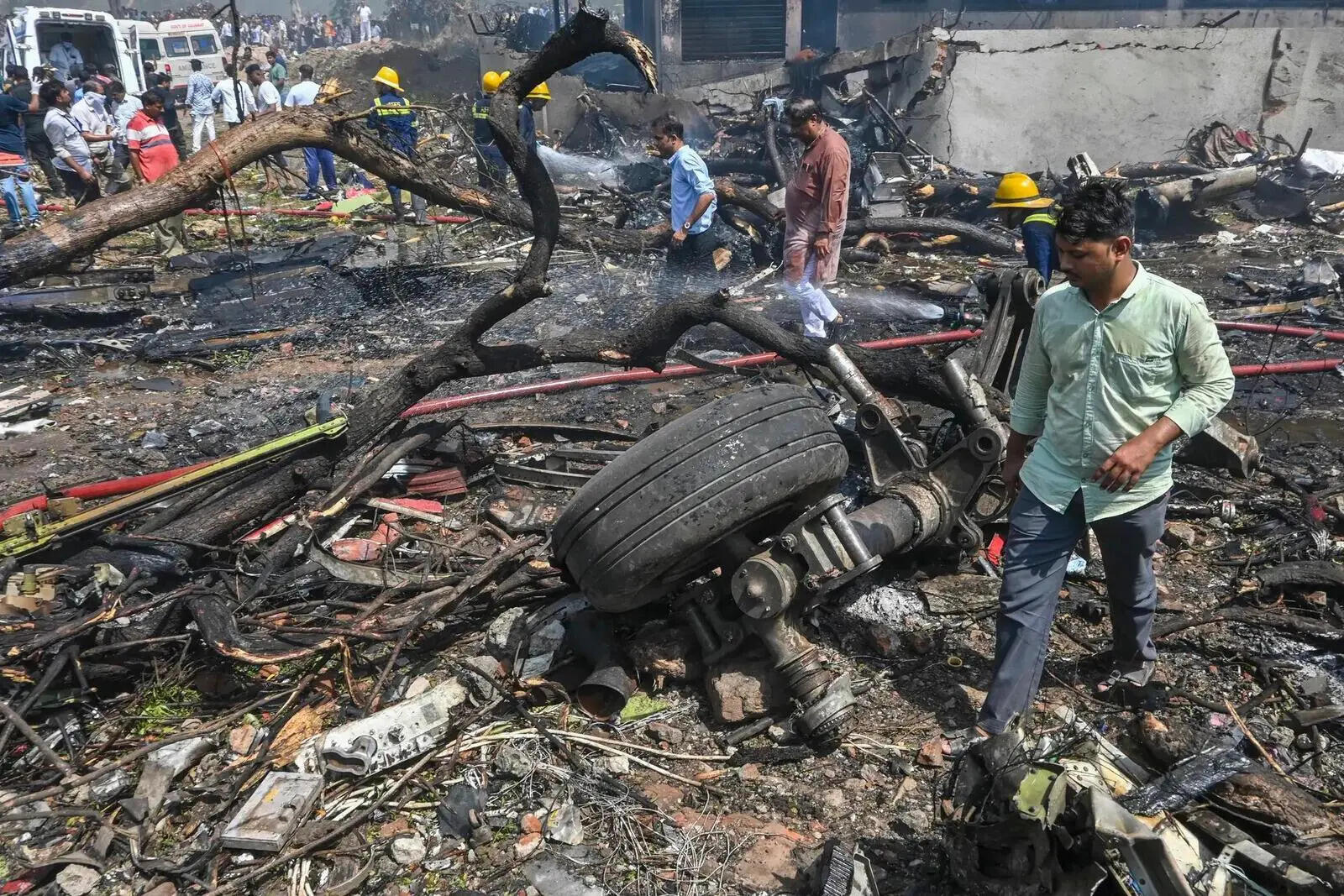
Some victims of flight AI171 never bought a ticket.They never entered the airport.Yet they became part of one of India’s deadliest aviation disasters.Just seconds after take-off, AI171 slammed into the hostel complex of BJ Medical College in Ahmedabad. It was packed with students, doctors, hospital staff and families.
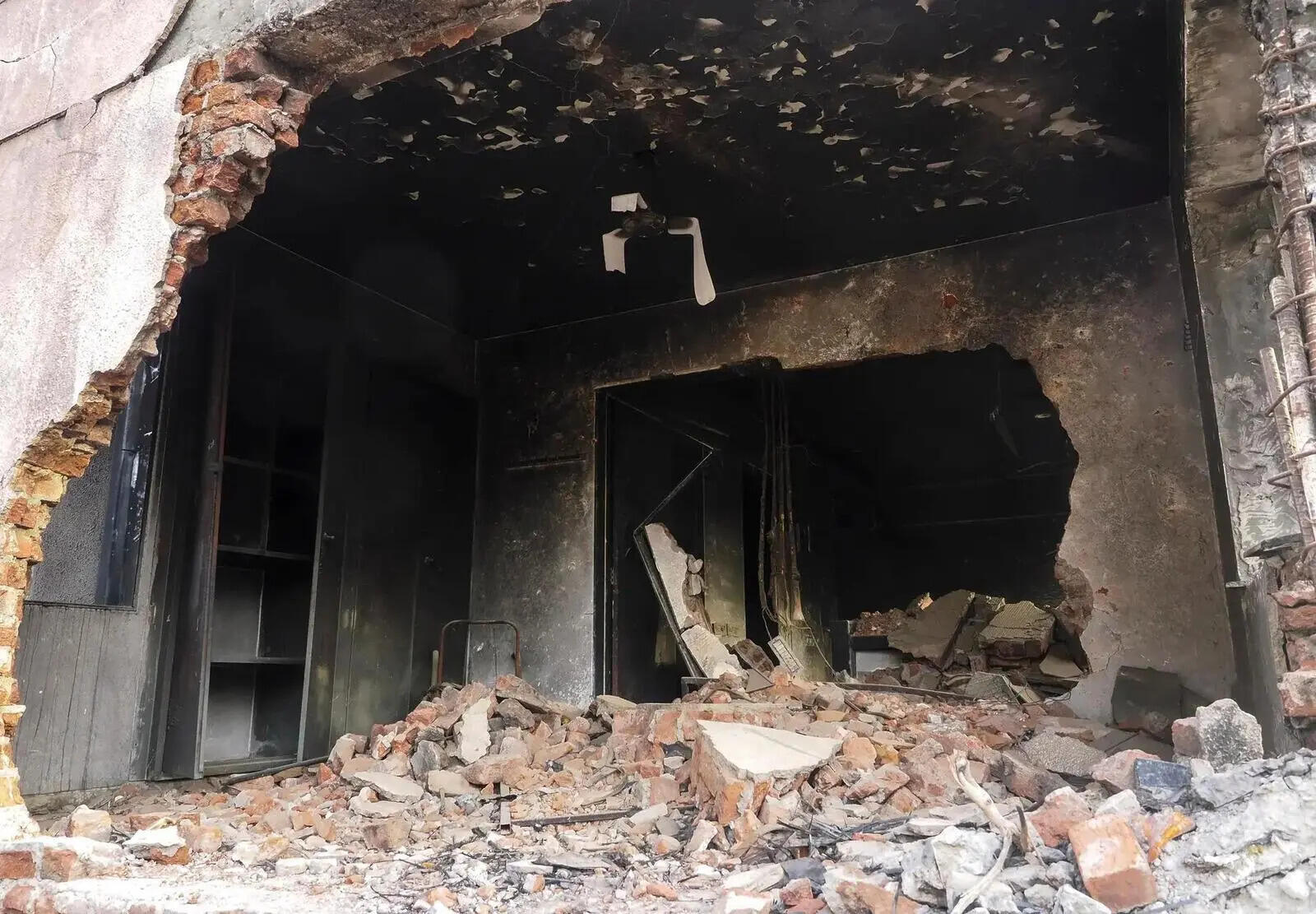
The plane tore through the college hostel and residential complex, leaving behind twisted metal and concrete, shattered rooms. Many of those inside the hostel had only moments to react.Some were having lunch.Others were studying, resting or preparing for their next classes.19 lives on the ground were lost, pushing the overall death toll in the tragedy to 260.
What are the families still asking for?
A year has passed since the Ahmedabad Air India crash, but for many families, time is measured differently. It is measured in birthdays missed, festivals observed in silence and phone numbers that can no longer be called.For many families, the most urgent question remains unanswered: what exactly happened in the final moments of AI171?Devarsh Patel, who lost both his parents in the crash, says the absence of clarity continues to overshadow everything else.“We want closure, and the data from the black box must be given to the relatives so that we can learn about the reason for the crash. Even after a year, the agencies have failed to do so,” he told TOI.Others questioned why the findings have not been fully made public. Anil Vyas, who lost his daughter Komi, said transparency cannot be partial.“We are demanding that the entire data be made public,” he said.For some, the wait has turned into a matter of right rather than closure. Ahmedabad resident David Christian, who lost his son Rozar and daughter-in-law Rachana, said the unanswered questions continue to define their grief.“We deserve to know the cause of the crash,” he said.Edwin Pateliya from Vadodara, who lost his daughter Elcena Makwana, said the delay itself has become part of the trauma.“My wife Agnes and I want to know the truth,” he said.And for Mohammad Shethwala, now in the UK, who lost his wife and two-year-old daughter in the crash, the anniversary only sharpens the absence of answers.“I have not had any proper answers on why this happened. The one-year anniversary is very difficult,” he said.Parth Patel, who lost three members of his family, said accountability cannot end with payouts.“Everybody thinks compensation has been offered and the matter is finished. It is not,” he said. “A family’s grief cannot be reduced to a corporate line item. We want transparency, responsibility and justice.”Rajesh Avaiya said that the support must go beyond formal payments.“The authorities should be taking our calls, answering our emails and offering strong support,” he said.
Belongings still missing
Several families have still not received the personal belongings.“We have not received the mobile phones of my parents despite writing multiple emails,” he said. “The phones contain private information. We are simply not getting answers,” Devarsh Patel told TOI. Others point to inconsistencies in recovery and identification of belongings. Families said items such as bags, phones and jewellery have either not been returned or remain unaccounted for.“We identified my brother’s phone, but the airline asked for proof of purchase,” said Avaiya. “Even after sending it, there is no response.”
.
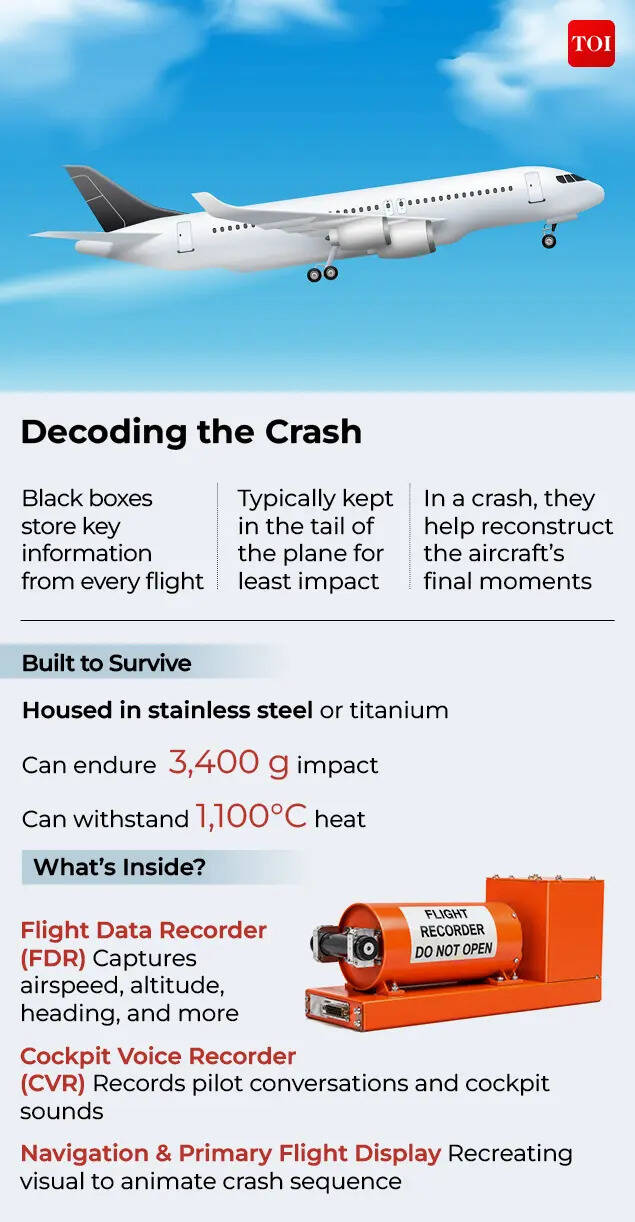
In April, several families jointly wrote to authorities demanding the release of cockpit voice recorder (CVR) and flight data recorder (FDR) information, saying it was essential to understand the cause of the tragedy and prevent similar disasters in the future.The letter, addressed to Prime Minister Narendra Modi and aviation authorities, said families were not seeking speculation but truth.According to Air India, interim compensation of Rs 25 lakh has been paid to 96% of families of the deceased, while ex gratia payments of Rs 1 crore have been completed for 91%.The airline also said over 22,000 personal items were recovered from the crash site, with a majority returned to families, while some remain pending due to documentation issues or disputes.However, compensation and paperwork cannot provide the closure they seek.
Where does the probe stand?
For many families, the first anniversary of the AI171 crash is not only a moment of remembrance but also a reminder that key questions remain unanswered.Under international aviation rules, accident investigations are expected to be completed within a year. However, authorities are yet to release the final report into the Ahmedabad crash.According to Bloomberg, India’s Aircraft Accident Investigation Bureau (AAIB) is expected to miss that deadline as crucial technical examinations, including analysis of the aircraft’s engines in the United States, are still underway.
.
.
Instead, investigators are expected to issue a status update explaining the progress made and the reasons for the delay.The investigation involves multiple international agencies and manufacturers, including the US National Transportation Safety Board (NTSB), Boeing and GE Aerospace. Engineers are continuing to examine the aircraft’s engines and related systems using specialised equipment available in the United States.The preliminary report released last year reconstructed the final moments of the flight and revealed that both engine fuel control switches moved from ‘RUN’ to ‘CUTOFF’ seconds after take-off, cutting fuel supply to the engines. While investigators documented the sequence of events, the report did not establish why the switches moved.Investigators are also examining several other aspects of the crash, including the deployment of the aircraft’s Ram Air Turbine (RAT), the condition of the flight recorders, why the Emergency Locator Transmitter did not activate after impact and whether any maintenance-related issues played a role.For families who lost loved ones, the wait for the final findings has become part of the grief itself.“We want closure, and the data from the black box must be given to the relatives so that we can learn about the reason for the crash,” Devarsh Patel, who lost both his parents in the disaster, told TOI.One year after AI171 crashed moments after take-off from Ahmedabad, the wreckage has long been cleared. But for many families, the search for truth remains unfinished.